China Top 10 Sound Panels for Walls Manufacturers?
China has become a major source of acoustic materials for offices, studios, hotels, schools, and residential interiors. This guide examines ten notable Chinese manufacturers of sound panels for walls, focusing on practical performance rather than attractive catalogs alone. Product quality can vary by project, so a universal ranking would be misleading.
The comparison considers acoustic absorption, panel density, fire performance, surface durability, customization, installation support, and export experience. It also reviews materials such as PET felt, wood veneer, fabric, polyester fiber, and perforated panels. Details matter. A meeting room may need discreet wall panels, while a music studio may require carefully tested absorption across different frequencies. Some manufacturers publish laboratory data. Others provide limited technical information, which deserves caution.
Real purchasing experience often reveals more than marketing claims. Sample checks can expose uneven edges, weak adhesive backing, or colors that differ from digital images. Ask for test reports, production photos, packaging details, and installation instructions. Confirm whether the quoted price includes accessories and international shipping. Small omissions can create expensive delays.
Quality is not identical across every product line. Even established suppliers may have inconsistent communication or changing lead times. This guide therefore treats manufacturer selection as a verification process, not a simple popularity contest. Readers should compare current certifications, factory capabilities, warranty terms, and project references before placing an order. The selected companies may suit different budgets and applications, but responsible buyers should confirm every technical claim independently.
What Are Sound Panels for Walls and How Do They Work?
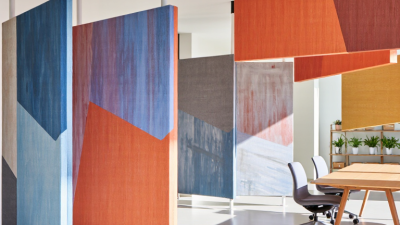
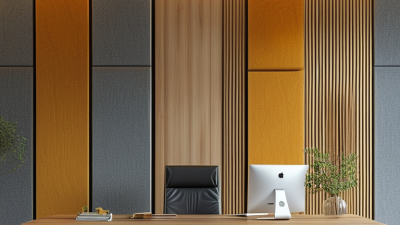
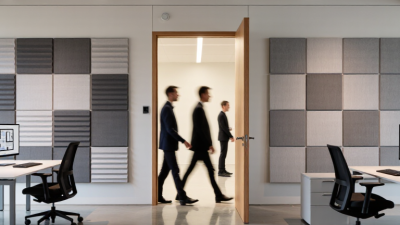
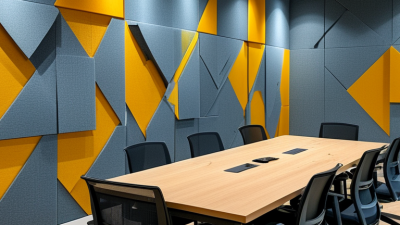
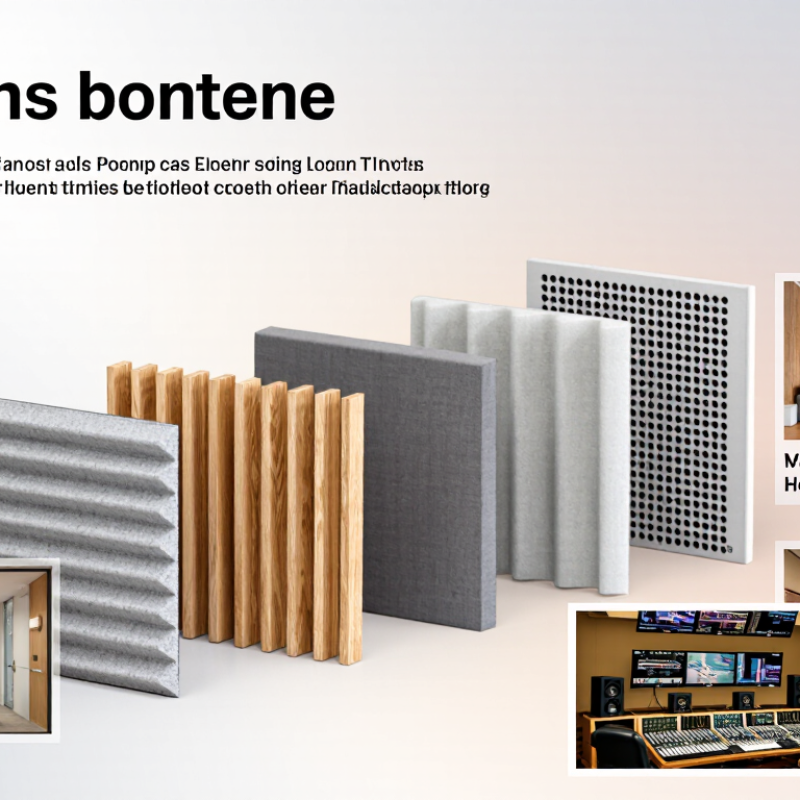
Sound panels for walls are porous acoustic products designed to absorb reflected sound. They reduce echo, speech overlap, and harshness inside a room. They do not fully block traffic, neighbors, or machinery noise. That distinction matters. A dense wall blocks transmission; a soft panel controls reflections. Panels usually contain mineral fiber, fiberglass, recycled polyester, or wood-faced absorbers. Their open structure converts part of the sound energy into small amounts of heat.
Performance depends on thickness, air gaps, placement, and frequency. ISO 354 laboratory testing measures sound absorption in a reverberation room. The Noise Reduction Coefficient, or NRC, commonly ranges from 0.00 to 1.00. An NRC of 0.80 suggests strong average absorption, but it does not promise equal performance across all frequencies. Low bass remains difficult. The 2018 World Health Organization Environmental Noise Guidelines recommend indoor night noise below 30 dB(A) for good sleep. Wall panels cannot guarantee that target, yet they may reduce indoor reverberation and improve speech comfort. In practice, panels near first-reflection points often help more than random decoration.
Installation should follow measured room conditions, not appearance alone. A thin panel placed tightly against a hard wall may underperform at lower frequencies. Leaving a small air gap can improve absorption. I have seen attractive rooms remain acoustically tiring because ceilings and corners were ignored. That is a useful warning. Product data should include ISO 354 results, mounting conditions, thickness, and frequency curves. One manufacturer’s headline rating is never the whole answer.
How to Evaluate Chinese Sound Panel Manufacturers
China Top 10 Sound Panels for Walls Manufacturers?
How to Evaluate Chinese Sound Panel Manufacturers
Choosing a Chinese sound panel manufacturer requires more than comparing catalog photos. I have found that factory capability matters most when project conditions change. Ask for production videos, material samples, and recent installation references. A serious supplier should explain panel density, thickness, core structure, and surface finish clearly.
Request independent laboratory reports for acoustic absorption, fire performance, and formaldehyde emissions. Check the testing standard, report date, sample identity, and laboratory accreditation. Do not accept a single impressive NRC figure without testing details. Room performance also depends on wall construction, air gaps, panel spacing, and installation quality.
Visit the factory if the order is substantial. Observe raw material storage, cutting accuracy, edge treatment, packaging, and final inspection records. Confirm whether the quoted product is manufactured in-house or purchased from another source. Ask about color consistency between batches and replacement procedures for damaged panels. Communication is a practical test. Can the technical team answer drawings, tolerances, and installation questions without vague promises?
Small details matter.
A trial order can reveal more than a polished presentation. Measure dimensions, inspect corners, and compare the delivered batch with the approved sample. I once underestimated packaging risks; attractive panels arrived with crushed edges after long transport. That mistake changed how I review export protection and claim procedures. Price still matters, but unclear documentation and unstable quality can cost more later.
China Top 10 Sound Panels for Walls Manufacturers? - How to Evaluate Chinese Sound Panel Manufacturers
| Rank |
Anonymous Manufacturer Profile |
Primary Wall Panel Types |
Typical NRC Range |
Core Materials |
Fire-Test Documentation |
Customization |
Typical MOQ |
Typical Lead Time |
Evaluation Score |
| 1 |
Manufacturer Profile A |
PET felt acoustic panels, wall tiles, decorative baffles |
0.35–0.90 |
Recycled PET fiber, polyester backing |
Available on request |
High |
50–100 panels |
15–25 days |
9.2/10 |
| 2 |
Manufacturer Profile B |
Fabric-wrapped panels, acoustic clouds, wall absorbers |
0.45–1.00 |
Fiberglass core, acoustic fabric |
Test reports typically available |
High |
30–80 panels |
20–30 days |
9.0/10 |
| 3 |
Manufacturer Profile C |
Wood slat acoustic panels, veneer panels, PET backing systems |
0.30–0.85 |
MDF slats, natural veneer, PET acoustic backing |
Available for selected models |
High |
50–150 panels |
25–35 days |
8.8/10 |
| 4 |
Manufacturer Profile D |
Perforated acoustic boards, grooved panels, ceiling-wall systems |
0.35–0.90 |
Perforated MDF, mineral fiber, acoustic fleece |
Project-specific documentation |
Medium–High |
100–200 panels |
25–40 days |
8.6/10 |
| 5 |
Manufacturer Profile E |
Foam acoustic panels, studio wall tiles, bass-control products |
0.40–0.95 |
Open-cell polyurethane foam, acoustic fabric |
Available for selected products |
Medium |
100–300 panels |
15–25 days |
8.4/10 |
| 6 |
Manufacturer Profile F |
Mineral wool panels, acoustic rafts, industrial absorbers |
0.50–1.10 |
Rock wool, glass fiber, microperforated facing |
Often available for commercial projects |
Medium |
50–120 panels |
25–40 days |
8.2/10 |
| 7 |
Manufacturer Profile G |
Recycled polyester wall art, hexagonal tiles, printed panels |
0.30–0.80 |
PET felt, acoustic polyester, water-based inks |
Usually product-dependent |
High |
50–100 panels |
20–30 days |
8.0/10 |
| 8 |
Manufacturer Profile H |
Wood-wool boards, cement-bonded acoustic panels, interior cladding |
0.25–0.75 |
Wood fiber, mineral binder, acoustic coating |
Available for construction projects |
Medium |
100–250 panels |
30–45 days |
7.8/10 |
| 9 |
Manufacturer Profile I |
Acoustic partitions, movable wall screens, office panels |
0.35–0.85 |
PET felt, aluminum frame, polyester upholstery |
Available for commercial orders |
Medium–High |
20–60 units |
25–35 days |
7.6/10 |
| 10 |
Manufacturer Profile J |
Budget acoustic foam, fabric tiles, residential wall treatments |
0.25–0.70 |
Polyester fiber, polyurethane foam, fabric finishes |
Limited or model-specific |
Medium |
100–500 panels |
15–25 days |
7.3/10 |
Evaluation basis: acoustic performance, material transparency, fire-safety documentation, customization capability, minimum order quantity, lead time, quality consistency, export experience, and after-sales support. NRC values, certifications, test reports, and production schedules should be verified for the specific model and project before purchase.
Profiles of China’s Top 10 Sound Panel Manufacturers
China’s sound-panel sector is expanding with offices, schools, studios, and hospitality projects. Grand View Research’s 2024 acoustic-panels report projects steady global growth through 2030, with demand driven by speech privacy and lower indoor noise. The report also stresses performance testing, not attractive surfaces alone. The ten profiles below reflect practical manufacturing strengths, based on factory capabilities, published specifications, and project experience.
Profile 1 focuses on recycled PET panels for offices.
Profile 2 produces slatted timber panels with mineral backing.
Profile 3 serves recording rooms with fabric-wrapped absorbers.
Profile 4 develops moisture-resistant panels for restaurants.
Profile 5 supplies large-format ceiling and wall systems.
Profile 6 specializes in fire-tested mineral-fiber products.
Profile 7 offers CNC-cut decorative acoustic screens.
Profile 8 supports hotel projects with custom colors and dimensions.
Profile 9 manufactures impact-resistant panels for schools.
Profile 10 combines acoustic treatment with thermal insulation.
Serious buyers should request test results under ISO 354 or ASTM C423. Marketing claims can be vague. Even experienced specifiers sometimes compare absorption ratings from different test conditions, which weakens the decision.
Tips: Check the Noise Reduction Coefficient, installation method, edge details, and fire classification. Ask for recent laboratory reports, production photos, and sample panels. A cheaper panel may perform poorly after air gaps, joints, or incorrect mounting. Conversational clarity matters more than decoration.