
Please ensure Javascript is enabled for purposes of website accessibility

What Are Acoustic Art Panels and How Do They Work?

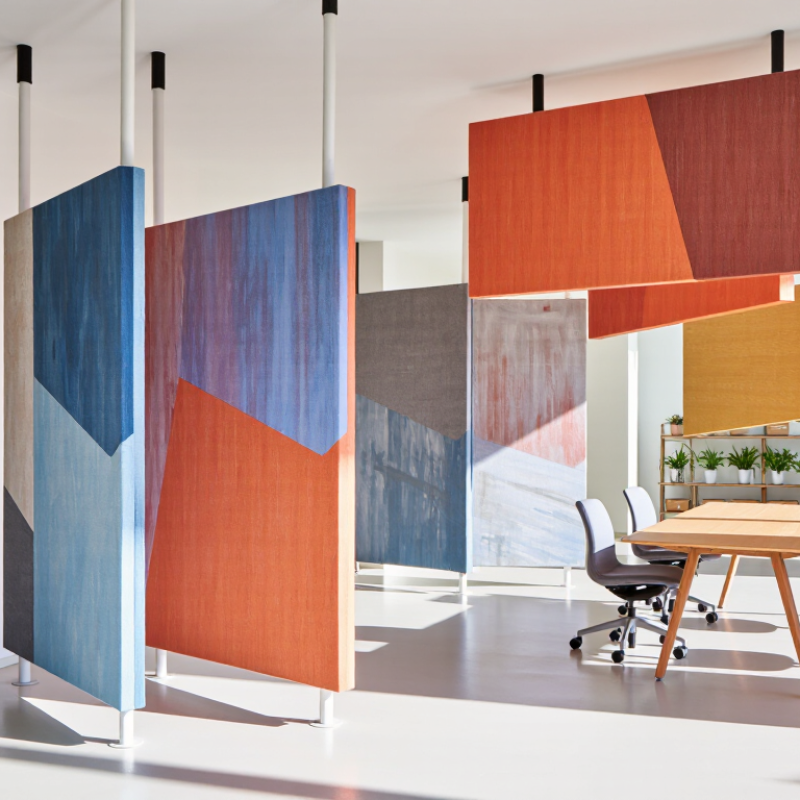
Acoustic art panels are designed to make noisy rooms feel calmer without making them look clinical. They combine sound-absorbing materials with printed artwork, textured fabric, or custom graphics. In practice, they may hang on walls, float from ceilings, or frame meeting-room surfaces. Their purpose is simple: reduce unwanted reflections and improve speech clarity.

The science depends on absorption, not magic. When sound reaches a porous panel, part of its energy enters the material and becomes a small amount of heat. Less energy returns to the room as echo. ASTM C423 measures sound absorption in a reverberation room, while the Noise Reduction Coefficient, or NRC, offers a practical performance reference. Higher values generally indicate stronger absorption across tested frequencies. However, NRC is not a complete room diagnosis. Panel thickness, air gaps, placement, and low-frequency performance also matter.

Professional guidance supports this careful approach. The World Health Organization’s Environmental Noise Guidelines for the European Region identify indoor noise as a concern for sleep, communication, and wellbeing. ANSI/ASA S12.60 also highlights the importance of controlling reverberation in learning spaces. These sources do not claim that acoustic art panels solve every noise problem. They cannot stop loud music from passing through a wall. They cannot replace good room planning.

That limitation matters. A beautifully printed panel can still perform poorly if it is too thin or badly positioned. Start with the room’s size, surfaces, noise sources, and intended use. Then compare tested absorption data, not attractive promises. In the right setting, acoustic art panels can turn a hard, echoing room into a clearer and more comfortable space. The result is practical, though never perfect.
What Are Acoustic Art Panels and How Do They Work?

Definition and Core Purpose of Acoustic Art Panels

What Are Acoustic Art Panels and How Do They Work?

Acoustic art panels are decorative wall or ceiling elements designed to absorb unwanted sound. They combine a printed surface with a porous acoustic core, often made from fibrous or recycled materials. Unlike hard walls, these materials capture part of the sound energy instead of reflecting it across the room.

Their core purpose is to reduce reverberation, echo, and listening fatigue. In a meeting room, this can make speech clearer. In a restaurant, it may soften clattering dishes and overlapping conversations. The panel does not fully soundproof a space. It mainly improves sound behavior inside that space. Its effectiveness depends on thickness, surface area, placement, and the room’s existing finishes. Professional acoustic assessments usually consider these details before installation.

Tips: Place panels where sound reflections are strongest, such as opposite speakers or beside conversation areas. Leave small air gaps behind panels when suitable; this can improve low-frequency absorption. Avoid covering every wall without measuring first. Too much absorption may make a room feel unnaturally dull. Results can also disappoint when panels are chosen only for their artwork. Visual appeal matters, but acoustic performance should lead the decision. A simple hand clap can reveal echo, though it cannot replace proper testing.

What Are Acoustic Art Panels and How Do They Work?

Acoustic art panels combine decorative artwork with sound-absorbing materials. Their porous core converts part of the sound energy into a small amount of heat, reducing reflected sound, reverberation, and echo inside a room.

The chart shows typical sound absorption coefficients by octave-band frequency. Higher values indicate that more incident sound energy is absorbed rather than reflected. Actual performance varies with panel thickness, air gap, mounting method, and test conditions.

How Acoustic Art Panels Control Sound Within a Room

Acoustic art panels combine printed artwork with sound-absorbing materials. They help control reflections inside a room, especially on hard walls, ceilings, and glass surfaces. When sound strikes a panel, its porous core converts some sound energy into small amounts of heat. This reduces echo and improves speech clarity.

In a meeting room, untreated voices may bounce from the walls like rubber balls. Panels soften those reflections, so conversations sound less tiring. They work best across the middle and higher frequency ranges, where speech and sharp noises are most noticeable. Low bass needs thicker treatment or additional acoustic planning.

Panels are not magic. A room can still feel loud if the ceiling, floor, and corners remain untreated. I would measure the space before choosing panel coverage.

Tips: Place panels near strong reflection points, such as side walls beside speakers or across from a conference table. Use a simple clap test first. A long ringing sound suggests excessive reflection. Keep panels spaced slightly from the wall when possible; the air gap can improve absorption. Avoid covering every surface without professional advice. Some liveliness makes a room feel natural, and removing too much sound can make speech feel strangely flat. Consider panel thickness, density, mounting height, and the room’s daily use. A classroom, restaurant, and recording space need different acoustic targets.

Key Materials and Structural Elements Used in Their Construction

What Are Acoustic Art Panels and How Do They Work?

Acoustic art panels combine visual design with sound absorption. Their main job is controlling reflected noise inside a room. They do not block sound completely. Instead, they reduce echoes and improve speech clarity.

The visible surface is usually a tightly stretched fabric or printed textile. This layer allows sound waves to pass through. Behind it, a porous mineral fiber or polyester-fiber core traps moving air. As sound travels through the fibers, friction changes some acoustic energy into small amounts of heat. The core’s thickness and density affect which frequencies the panel absorbs.

The frame provides shape and protects the inner material. Many panels use lightweight timber or metal edges. A rigid backing may support the structure, but an overly solid backing can reduce absorption. This detail is often overlooked. An air gap behind the panel can improve low-frequency performance because sound has more space to move before reaching the wall.

In real rooms, placement matters as much as material choice. Panels near reflective walls can reduce harsh flutter echoes. Ceiling-mounted units may help in open offices or dining areas. A panel covered with non-breathable plastic may look attractive but perform poorly. That is a practical weakness worth checking. Room size, furniture, ceiling height, and noise sources all influence results, so visual judgment alone can be unreliable.

What Are Acoustic Art Panels and How Do They Work? — Key Materials and Structural Elements Used in Their Construction
Panel Type or Element Common Materials Typical Structural Construction Primary Acoustic Mechanism Indicative Specifications Typical Application
Fabric-Wrapped Absorber Mineral wool, fiberglass, or polyester-fiber core; acoustically transparent fabric; timber or metal frame A porous core is enclosed in a rigid frame and covered with breathable fabric. The rear may include an air gap or backing board. Sound enters the porous core, where friction converts part of the sound energy into low-level heat. 25–100 mm core thickness; typical NRC approximately 0.55–1.00, depending on thickness, facing, and mounting Offices, classrooms, studios, conference rooms, restaurants, and public interiors
PET Felt Panel Recycled or virgin polyethylene terephthalate fiber, commonly formed into dense felt sheets Single-layer molded felt or a cut-and-layered panel with decorative shapes, grooves, or perforations Fiber porosity dissipates mid- and high-frequency sound; surface geometry can increase effective area. Typically 9–24 mm thick; acoustic performance varies widely with density, profile, and air space Decorative wall treatments, ceiling clouds, partitions, and lightweight acoustic artwork
Wood-Slat Absorber Timber or wood veneer slats, acoustic felt backing, mineral wool or polyester-fiber absorber Spaced slats are fixed over an absorptive backing, usually with a cavity between the panel and the wall. Open joints allow sound to reach the absorber, while the slats provide a durable decorative surface and limited scattering. Common slat depths: 20–40 mm; total system depth often 40–100 mm; performance depends strongly on open area and cavity depth Feature walls, hospitality interiors, meeting rooms, libraries, and home media spaces
Perforated Wood Panel Perforated plywood, medium-density fiberboard, or veneered wood; mineral wool or fibrous backing A panel with regularly spaced holes or slots is mounted in front of an absorber and may include a sealed or partially sealed cavity. Perforations couple the room air to the backing absorber. The panel can also create a resonant absorption effect when designed as a cavity system. Typical perforation open area: approximately 5–20%; performance depends on hole size, spacing, backing, and cavity depth Auditoriums, music rooms, lecture spaces, cultural venues, and architectural interiors
Acoustic Foam Panel Open-cell polyurethane or melamine foam Lightweight, open-cell foam is cut into flat, wedge, pyramid, or convoluted profiles. Air movement through the open cells produces viscous and thermal losses, particularly at mid and high frequencies. Common thickness: 25–75 mm; thinner panels generally provide limited low-frequency absorption Control rooms, equipment enclosures, small studios, and technical spaces where a lightweight solution is suitable
Ceiling Cloud Fabric-wrapped fiberglass, mineral wool, PET felt, or suspended perforated panels A horizontal or angled panel is suspended below the ceiling, exposing one or both sides to the room. Absorbs reflected sound from the ceiling zone and increases the effective exposed surface area through the surrounding air gap. Common thickness: 25–100 mm; suspension gaps of 150–300 mm can improve lower-frequency performance Open-plan offices, restaurants, classrooms, atriums, and rooms with hard ceilings
Acoustic Picture Panel Printed acoustically transparent fabric, porous absorber core, rigid frame, and optional protective backing A decorative image or graphic is printed on breathable fabric stretched over an absorptive core. Provides broadband porous absorption while integrating visual artwork into the interior design. Common depth: 40–100 mm; acoustic results depend on the core, fabric openness, frame, and wall clearance Reception areas, hospitality spaces, healthcare interiors, offices, and educational environments
Air Gap and Mounting Frame Timber battens, metal rails, spacers, brackets, or suspension hardware The panel is installed with a controlled gap between its rear surface and the wall or ceiling. The air cavity increases particle velocity at the absorber and can improve absorption at lower frequencies compared with direct mounting. A practical air gap is often 50–150 mm; exact improvement depends on panel thickness and mounting configuration Wall-mounted absorbers, ceiling systems, floating panels, and retrofit installations
Diffuser or Scattering Surface Solid timber, plywood, molded composite, or irregular architectural forms Uneven wells, angled faces, slots, or geometric profiles distribute reflected sound in different directions. Reduces strong discrete reflections and helps preserve useful room liveliness without relying only on absorption. Effective frequency range is determined by feature depth and spacing; deeper features generally affect lower frequencies Recording rooms, performance spaces, listening rooms, and rooms requiring balanced reverberation
Backing and Safety Layer Nonwoven scrim, perforated backing, rigid board, fire-rated fabric, or protective acoustic membrane A rear or intermediate layer supports the absorber, limits fiber release, protects the assembly, or contributes to fire performance. Maintains the panel’s structure and can influence airflow resistance, which affects porous absorption. Material selection should follow the required fire, moisture, impact, and indoor-air-quality standards Commercial buildings, schools, healthcare facilities, transport areas, and high-traffic interiors
Note: Acoustic performance is installation-dependent. Values such as NRC are normally determined through standardized laboratory testing, and results can change with panel thickness, air gaps, room position, edge treatment, and mounting method.

Types, Designs, and Placement Options for Different Spaces

Acoustic art panels combine sound absorption with visual design. Their porous cores convert part of sound energy into small amounts of heat, reducing reflections and reverberation. Common types include fabric-wrapped mineral fiber, PET-felt, perforated wood, and suspended baffles. Each behaves differently. Thick mineral fiber usually absorbs more mid-to-high frequencies, while perforated wood can add warmth without looking industrial.

Design should match the room’s acoustic problem. A large printed panel suits a reception wall or meeting room. Modular hexagons work well across broad office surfaces. Ceiling baffles help spaces with exposed concrete ceilings, where sound can bounce overhead. In classrooms, ANSI/ASA S12.60 recommends reverberation times of 0.6 seconds or less in smaller rooms. That target is practical, but real rooms often miss it.

Placement matters more than decoration alone. Install panels at ear height near speech-reflection points, especially beside meeting tables and across from presenters. Use ceiling units above collaborative zones. Leave some hard surfaces exposed, or the room may feel acoustically dull. ASHRAE guidance commonly places open-plan office background noise around 40–45 dBA, though local conditions vary.

Measure before buying. ISO 3382-2 provides methods for measuring reverberation time, but a single measurement may not reveal every listening position. My practical mistake has been treating attractive wall coverage as complete treatment. It is not. Furniture, occupancy, and panel spacing can change the result.

Benefits, Limitations, and Maintenance Considerations

Acoustic art panels combine porous cores with decorative fabric or printed surfaces. They reduce reflected sound, not the sound produced at its source. ASTM C423 testing reports a Noise Reduction Coefficient, or NRC, based on absorption across selected frequencies. An NRC of 0.80 does not mean the panel removes 80% of every sound. Low bass usually remains difficult to control. The World Health Organization recommends about 35 dB LAeq for indoor classrooms during teaching, showing why reverberation deserves practical attention.

Their benefits are clearest in meeting rooms, restaurants, studios, and open offices. Speech becomes less tiring, and voices need less effort. Yet panels cannot block traffic, machinery, or conversations through thin walls.

Placement also matters. A few panels on one wall may leave ceiling reflections untouched. Room measurements are better than visual guessing, though budgets often force compromises. That is a real limitation.

Tips: Cover strong reflection points first, especially ceilings and walls beside speakers. Check the panel’s ASTM C423 report, fire classification, and humidity suitability. Leave access around lights and ventilation. Dust fabric gently with a soft brush or low-suction vacuum. Avoid soaking it; moisture can stain the finish or weaken the core. Inspect corners yearly. Maintenance is simple, but neglected panels become visibly tired and acoustically less trustworthy.