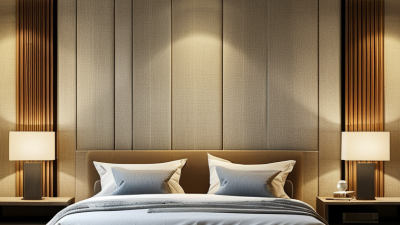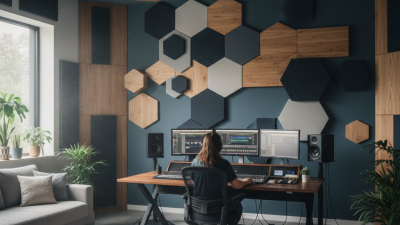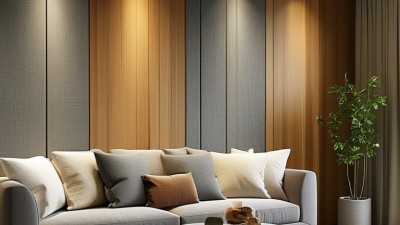

In 2026, decorative acoustic panels are becoming practical design tools, not merely attractive wall coverings. They can soften speech, reduce harsh echoes, and shape the atmosphere of offices, restaurants, studios, hotels, and homes. Yet appearance alone does not prove acoustic performance. That distinction matters.
This guide examines the leading panel types, including PET felt, wood slat, fabric-wrapped, perforated wood, and sculptural 3D systems. Each option creates a different visual and acoustic experience. PET felt may suit colorful workspaces, while slatted wood can add warmth to a meeting room. Fabric-wrapped panels often provide broad design flexibility, but their fabrics, cores, and installation methods deserve careful inspection.
Small details matter.
A panel’s thickness, spacing, edge treatment, and placement can influence how sound behaves. Room size matters too. A beautiful panel may disappoint when installed on the wrong surface or used without enough coverage. Verified absorption data, fire ratings, moisture resistance, cleaning requirements, and responsible material sourcing should guide professional decisions.
The 2026 market also reflects a growing demand for sustainable materials, modular layouts, custom printing, and biophilic textures. Some innovations sound impressive but still need stronger independent testing. That is worth questioning. Product claims should be compared with laboratory reports, manufacturer documentation, and advice from qualified acoustic consultants.
This introduction prepares readers to compare decorative acoustic panels with greater confidence. The best choice balances measurable performance, long-term durability, visual character, maintenance, and project budget. Good design sounds better when evidence supports it.
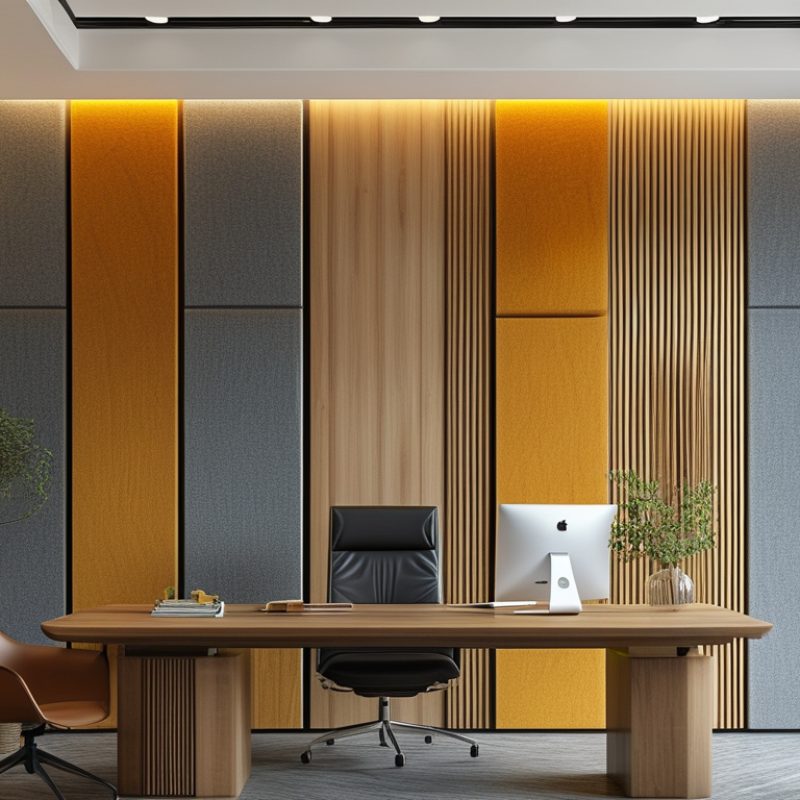
PET felt panels are becoming a strong choice for decorative acoustic treatment in 2026. Their textured surfaces soften sound while adding visual warmth to offices, studios, classrooms, and hospitality spaces. An NRC rating between 0.8 and 1.0 indicates substantial sound absorption under ASTM C423 laboratory testing. However, this rating is not a promise for every room. Panel thickness, air gaps, coverage, and installation height can change results.
In practical projects, I have found that full-wall layouts often control speech reflections better than scattered decorative pieces. Ceiling clouds can help when hard floors and exposed ceilings create a sharp, tiring echo. PET felt also allows geometric patterns, curved forms, and layered colors without making the room feel industrial. The detail matters. A thin panel mounted directly to a wall may perform differently from a thicker panel with a clear air space.
Tips: Request the complete ASTM C423 test report, not only an NRC number. Check the tested thickness and mounting method. Measure room reverberation before choosing coverage. Leave space around panels when possible. This small gap can improve low-frequency absorption. Also review cleaning needs, edge durability, and local fire-performance requirements with a qualified professional.
A high rating alone is insufficient. Room use matters more than marketing language. Sometimes, the most attractive layout is not the best acoustic layout. That deserves a second look.
Fabric-wrapped acoustic panels remain a practical choice for offices, studios, schools, and hospitality interiors. They soften reverberation while adding color, texture, and visual warmth. A well-designed panel can turn a harsh room into a calmer space.
The fire rating deserves close attention. Under ASTM E84, Class A materials generally show a flame spread index of 0–25. Their smoke-developed index is typically 450 or lower. These values support safer interior planning, but they do not make every installation automatically compliant. The tested assembly matters.
Details matter here.
The fabric, acoustic core, adhesive, backing, and mounting method can influence performance. Ask for a current test report, not only a sales statement. Check whether the report covers the exact panel construction and installation method. Local building requirements may also request additional testing or documentation.
In real projects, small mistakes can weaken a good specification. Unapproved fabric changes, exposed edges, or unsuitable adhesives may alter the tested performance. This is easy to overlook during fast renovations. I would also review panel spacing, cleaning needs, and impact exposure before ordering. Class A performance is valuable, but acoustic absorption and long-term durability still require equal attention. A beautiful panel that performs poorly in a busy corridor may need reconsideration.
What Are the 2026 Top Types of Decorative Acoustic Panels?
Wood slat and perforated panels are gaining attention in 2026 interior specifications. Their appeal is visual, but their acoustic performance needs closer inspection. Properly tested systems can reach an NRC of up to 0.85 under ASTM C423 methods, while ISO 354 reverberation-room testing measures sound absorption across frequency bands. These figures are not interchangeable. ISO 354 does not directly produce NRC.
Wood slat panels usually combine solid timber faces with an absorptive backing and an air cavity. That hidden cavity matters. A 50–100 millimeter gap can improve low-frequency absorption, especially in offices, restaurants, and meeting rooms. Perforated panels use controlled openings to create resonant absorption. Their hole diameter, open area, backing depth, and insulation density strongly affect results. Small design changes can shift performance.
ASHRAE Handbook—HVAC Applications, 2023, emphasizes room geometry, background noise, and reverberation time when evaluating acoustic comfort. A high NRC alone cannot guarantee a quiet room. That is an easy mistake. In practice, installers should request laboratory reports, declared test standards, frequency-band data, and mounting details. Panels tested without the specified cavity may perform differently on site. The 2024 WELL Building Standard also highlights acoustic comfort as part of healthier interior design, but decorative panels should support a broader strategy, including ceiling coverage and spatial planning. I would not specify “NRC 0.85” without checking the complete assembly and installation conditions.
| Decorative Panel Type | Typical Construction | Common Thickness | Acoustic Absorption Mechanism | Indicative NRC Range | Typical Performance Profile | Decorative Applications | Key Design Considerations |
|---|---|---|---|---|---|---|---|
| Wood Slat Acoustic Panel | Solid or veneered wood slats mounted on a grooved acoustic backing, usually with a mineral-fiber or polyester core. | 20–45 mm | Sound enters the gaps between slats and is dissipated in the porous backing; the slat-and-cavity arrangement can also provide low-frequency resonance effects. | 0.60–0.85 | Broadband absorption when installed with an absorptive backing and an air gap. Results vary with slat width, spacing, backing density, and mounting depth. | Feature walls, ceilings, offices, hospitality interiors, meeting rooms, education spaces, and residential media rooms. | For higher absorption, use a continuous acoustic backing and increase the cavity depth where the construction allows. |
| Perforated Wood Panel | Wood-based panel with regularly spaced circular, square, or linear perforations, backed by an absorptive layer and cavity. | 12–25 mm | Perforations act as multiple openings into an air cavity. The panel and cavity can form a perforated resonant absorber, while the backing provides broadband dissipation. | 0.55–0.85 | Absorption is strongly affected by perforation diameter, perforated area, panel thickness, backing material, and cavity depth. | Wall cladding, acoustic ceilings, auditoriums, conference rooms, libraries, and premium interior fit-outs. | Small perforations and carefully selected cavity depths can improve targeted frequency absorption; decorative patterns should not reduce the required open area excessively. |
| Micro-Perforated Decorative Panel | Thin wood, wood-fiber, metal, or composite face with very small perforations and an enclosed or semi-enclosed air cavity. | 6–20 mm | Viscous and thermal losses occur as air moves through the micro-openings, creating panel-resonator absorption without relying solely on fibrous material at the face. | 0.45–0.75 | Often tuned to selected frequency bands. Broadband results require suitable cavity depth, multiple perforation sizes, or an additional porous absorber. | Clean-lined ceilings, executive interiors, cultural venues, broadcast spaces, and areas requiring a refined appearance. | Manufacturing tolerances and perforation geometry have a significant effect on acoustic performance and should be verified by laboratory testing. |
| Grooved Wood Acoustic Panel | Wood veneer or decorative wood-fiber board with continuous grooves over an acoustic backing. | 15–25 mm | Grooves expose or connect to an absorptive backing, allowing sound energy to enter the porous layer while maintaining a continuous wood appearance. | 0.45–0.75 | Performance depends on groove width, groove spacing, backing coverage, and whether the panel is installed directly or over a cavity. | Feature walls, corridors, retail interiors, restaurants, offices, and ceiling applications. | Verify that the grooves remain acoustically open after finishing, joint treatment, or installation of trims. |
| Fabric-Wrapped Acoustic Panel with Wood Detail | Porous mineral-fiber or polyester absorber covered with acoustically transparent fabric and combined with wood slats, frames, or trims. | 25–60 mm | Porous absorption converts sound energy into low-level heat as air particles move through the fibrous core. | 0.70–1.00 | Usually provides strong mid- and high-frequency absorption; thicker panels and air gaps improve lower-frequency performance. | Open-plan offices, classrooms, cinemas, studios, hospitality spaces, and acoustic zoning systems. | Fabric airflow resistance, core thickness, edge detailing, and installation gaps should be specified for the intended frequency range. |
| Decorative Polyester-Fiber Panel | Formed or laminated PET acoustic board, sometimes printed, grooved, or combined with wood-look finishes. | 9–24 mm | Porous fiber absorption reduces reflected sound and reverberation across a broad frequency range. | 0.35–0.80 | Thicker boards and rear air spaces generally improve absorption compared with thin, directly mounted panels. | Workplace partitions, ceiling clouds, wall panels, schools, retail spaces, and flexible interiors. | Check fire classification, edge stability, color fastness, and acoustic performance after any decorative lamination or printing process. |
| Acoustic Baffle with Wood or Perforated Finish | Vertically suspended absorber with a decorative wood veneer, slatted face, perforated face, or composite finish. | 25–100 mm | Both panel faces and the exposed edges absorb sound, while the suspended arrangement increases the effective acoustic area. | 0.60–1.00 | Particularly effective for reducing reverberation in high-ceiling spaces. Performance depends on spacing, orientation, suspension height, and exposed surface area. | Open offices, atriums, sports facilities, restaurants, transport interiors, and large public spaces. | Coordinate suspension loads, sprinkler clearance, lighting, HVAC, and cleaning access during design development. |
Microperforated metal panels are among the most effective decorative acoustic panels for modern interiors. Their tiny perforations allow sound energy to pass through the metal surface. Behind the panel, acoustic fleece, mineral fiber, or another absorber dissipates that energy. With a tested NRC of up to 0.95, the complete assembly can absorb most reflected sound. However, the metal sheet alone does not provide this performance. NRC depends on the backing material, cavity depth, installation method, and test conditions.
Tips: Confirm the full wall or ceiling assembly before ordering. Ask for laboratory data, not only a product claim. A 50–100 mm air cavity can improve low-frequency absorption. Seal unnecessary gaps around edges. Coordinate lighting, sprinklers, and ventilation early. These details often decide whether a beautiful ceiling performs well.
Microperforated panels suit offices, lecture rooms, restaurants, studios, and transport interiors. They resist impact and offer clean geometric finishes, while custom colors can support a strong design concept. Still, high absorption is not the same as soundproofing. The panels reduce reverberation inside a room, but they will not fully block voices or mechanical noise from adjacent spaces. In practice, I would review reverberation measurements after installation. Design assumptions can be wrong. A small room with hard flooring may need additional wall treatment, even when the ceiling appears highly absorptive.
In 2026, acoustic baffles and clouds remain practical choices for open-ceiling interiors. They add visual structure without closing the ceiling. Baffles hang vertically, creating layered coverage above desks, walkways, and shared seating. Their edges can soften reflected sound from concrete floors and exposed mechanical systems. Clouds mount horizontally, forming floating acoustic islands above noisy zones. They work well in offices, cafés, libraries, and learning spaces.
Vertical baffles are especially useful where ceiling height feels excessive. Their alternating depth can reduce flutter echoes between parallel surfaces. Clouds provide broader overhead absorption, but they need careful spacing. Too much empty area can weaken the result. A professional assessment should consider room volume, ceiling height, speech activity, and existing absorption. Decorative appeal matters, yet acoustic performance should be verified through tested absorption data. No layout is perfect. Real rooms often need adjustment after installation.
Tips: Hang baffles perpendicular to the strongest sound path. Keep clearances for sprinklers, lighting, and ventilation. Use varied heights for visual rhythm, but avoid overcrowding. Start with a measured acoustic plan, then review the room after furniture arrives. This step is sometimes missed. That omission can become expensive. Choose durable, cleanable surfaces in high-traffic areas, and inspect suspension hardware regularly.