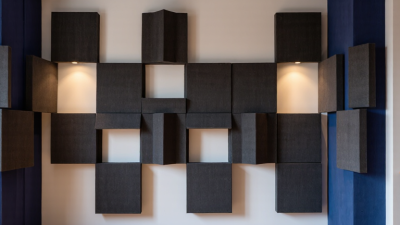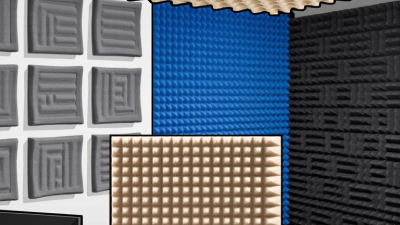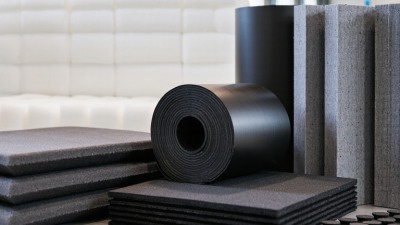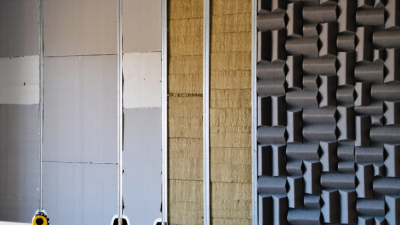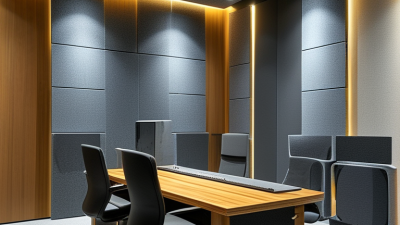

Acoustic Foam is commonly used to reduce reflections and reverberation inside a room. Its porous, open-cell structure allows sound waves to enter, where some sound energy is converted into small amounts of heat. This can make speech clearer and recordings less harsh. It does not usually stop sound from passing through walls, floors, or doors. That distinction matters: absorption improves a room’s sound, while sound isolation requires different construction methods.
In a home studio, foam panels may be placed near first-reflection points, where sound from speakers would otherwise bounce toward the listener. In a busy office, they can soften echo around desks and hard surfaces. The change is often easiest to notice during a voice call or a hand clap. Not magic. Results depend on room size, panel thickness, coverage, and placement. Thin panels are generally less effective at controlling low-frequency sound, so they cannot solve every acoustic problem. A room may still sound uneven, even after treatment.
Before buying, consider what you want to improve and check the manufacturer’s material and fire-safety information. Product performance varies, and marketing claims do not replace measured specifications. For more demanding spaces, a qualified acoustics professional can assess the room and recommend a balanced treatment plan. Foam can help, but it is only one part of the picture. Its limits deserve attention, too.
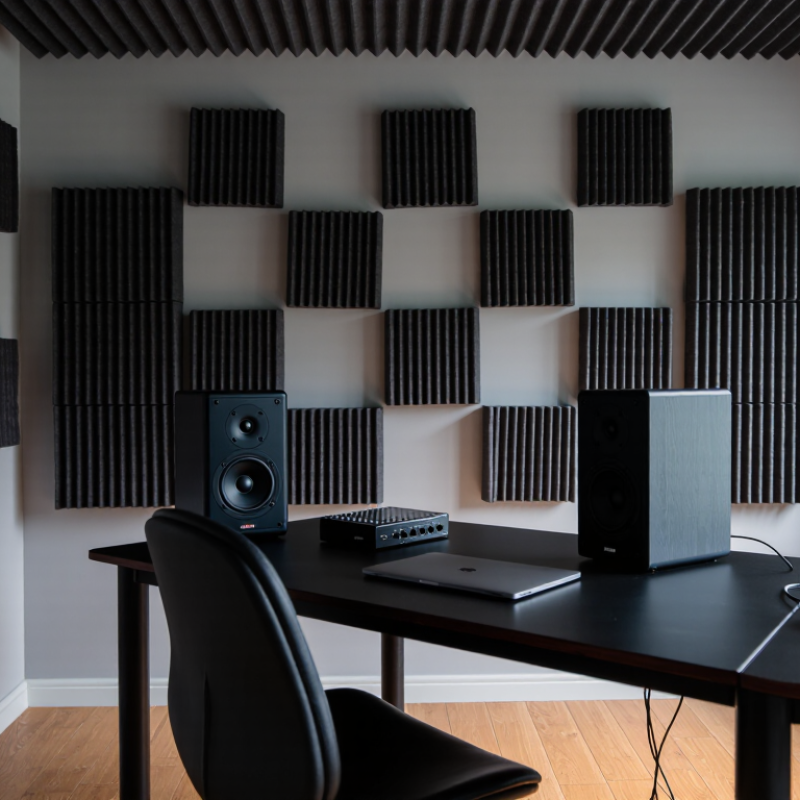
Acoustic foam is a lightweight, porous material, often made from open-cell polyurethane or melamine. Its visible wedges and ridges increase the exposed surface, but the shape alone does not control sound. Air enters the tiny connected pores, where movement loses some energy through friction and becomes a small amount of heat. The result is less reflected sound inside a room. Not silence.
A practical example is a voice recording in a bare room. A clap may produce a sharp flutter between hard walls; foam placed at reflection points can soften that echo and make speech clearer. It mainly absorbs mid- and high-frequency sound. Thin panels do much less to deep bass, which has longer wavelengths and can pass around them. Acoustic foam also does not block sound from reaching neighbors; that requires different construction and sealing. It is easy to expect too much from a neat foam pattern. Placement, panel thickness, room size, and furnishings all matter, and a room can still sound uneven after treatment. That part is easy to miss.
| Topic | What It Means | Practical Takeaway |
|---|---|---|
| What acoustic foam is | A lightweight, porous sound-absorbing material, commonly made from open-cell polyurethane or melamine foam. | It is designed to manage sound reflections inside a room, not to create a soundproof barrier. |
| How it works | Sound waves enter the foam’s connected pores. As air moves through the structure, some acoustic energy is converted into small amounts of heat through friction and other losses. | Less sound energy returns to the room as reflections, helping reduce reverberation. |
| Main purpose | To control echo and reflected sound within a room. | It can make speech and recorded audio sound clearer in suitable spaces. |
| Common applications | Recording rooms, podcast spaces, rehearsal rooms, home theaters, and offices with noticeable echo. | Use it where reflected sound is a problem; the right amount and placement depend on the room and its use. |
| Frequency performance | Thin foam generally absorbs mid- and high-frequency sound more readily than low-frequency sound. Performance varies with thickness, density, shape, mounting, and product design. | For bass problems, thin foam alone is usually insufficient; room dimensions and purpose-built low-frequency treatment also matter. |
| Sound absorption ratings | Absorption results depend on the specific material and test method. A Noise Reduction Coefficient (NRC), when provided, summarizes absorption across a defined set of test frequencies. | Compare tested product data under the same standard; do not assume all foam has the same performance. |
| Acoustic treatment vs. soundproofing | Absorption reduces reflections inside a space. Sound isolation aims to limit sound transmission between spaces and generally relies on suitable construction, sealing, and mass. | Foam on a wall does not, by itself, block most sound from entering or leaving a room. |
| Placement and coverage | Placement should address relevant reflection paths and the room’s listening or recording setup. More coverage is not automatically better. | Plan treatment around the room and verify the result by listening or measuring; avoid blocking vents, lights, or required exits. |
| Safety and maintenance | Fire performance and installation requirements vary by material and location. Foam can collect dust and may be damaged by heat or unsuitable cleaning methods. | Check the product’s fire and installation documentation, follow local requirements, and use the care instructions provided. |
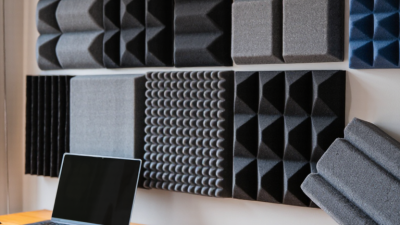
Acoustic foam helps control reflections inside a room. When sound leaves a speaker or a voice, it can bounce off hard walls, ceilings, and desks. These delayed copies overlap with the direct sound, making speech less clear and music seem harsh.
Foam’s porous, open-cell structure lets sound enter, where friction converts some acoustic energy into heat. In practice, it is most effective at reducing mid- and high-frequency reflections. It does not block outside noise or replace bass traps; low frequencies have longer wavelengths and need different treatment.
Placement matters. A few panels at reflection points can make a room sound calmer, though too much foam may leave it dull. That trade-off is easy to miss.
Tips
Clap once and listen for a lingering flutter or sharp echo. Start small. Place panels at likely reflection points, such as the wall beside your listening position.
Record a short voice test before and after, using the same distance and volume. Results vary with room size, furnishings, and panel thickness, so adjust by listening rather than covering every surface.
Acoustic foam is commonly used in recording studios, podcast rooms, and music practice spaces. It softens echoes that can blur speech or make instruments sound harsh. In a small vocal booth, panels near the microphone can reduce sharp reflections from nearby walls. The result is often a cleaner recording, though room shape and microphone placement still matter.
Offices and meeting rooms use foam to make conversations easier to follow. It can help reduce reverberation from hard desks, glass partitions, and bare walls. Classrooms, lecture rooms, and home theaters may also use it to control reflections. Small rooms benefit, too. A few panels around a listening area can improve clarity without covering every surface.
Foam works best when placed where sound reflections are strongest, such as side walls near a speaker or behind a microphone. It absorbs some sound energy; it does not block noise passing through walls. Not a cure-all. Covering too much of a room may make it sound unnaturally dull, and I have seen placement chosen for appearance rather than acoustics. Consider the room’s use, panel thickness, and fire-safety rating before installation.
Why Is Acoustic Foam Used?
Benefits and Limitations of Acoustic Foam
Acoustic foam absorbs some sound energy inside a room, helping reduce reflections and flutter echo. In a small office, it can make speech clearer and soften the sharp slap of sound between bare, parallel walls. Its performance depends on thickness, shape, placement, and sound frequency; thin foam is generally less effective at absorbing low bass. ASTM C423 measures sound absorption in a reverberation room, and its Noise Reduction Coefficient averages results at 250, 500, 1,000, and 2,000 Hz. That rating describes absorption, not how well a material blocks sound passing through a wall.
Foam has limits. It will not reliably stop traffic noise, footsteps from upstairs, or loud music next door; those problems usually involve sound transmission and may require sealing gaps or adding mass to walls. The World Health Organization’s Night Noise Guidelines for Europe set 40 dB Lnight,outside as a health-based target. Foam inside a room cannot guarantee that outdoor noise level. It can improve the room’s sound, but it is not soundproofing. A useful distinction.
Tips: Treat one reflective area at a time, then listen again from your usual seat. Avoid covering every surface without testing; an overly “dead” room can feel unnatural, and bass may remain uneven. Foam placement is not a substitute for measuring the actual problem.
Acoustic foam changes how a room reflects sound; it does not block noise through walls. Its effect depends on thickness, surface area, and location. Thin, lightweight foam mainly absorbs mid- and high-frequency reflections, while thicker panels and an air gap can improve lower-frequency absorption. Check laboratory results rather than judging by appearance: ASTM C423 reports absorption by frequency, and the Noise Reduction Coefficient averages results at 250, 500, 1,000, and 2,000 Hz. One rating can conceal weak bass performance.
Placement matters. A practical starting point is to treat strong reflection points on side walls and ceilings, where a mirror can reveal the speaker’s reflection from the listening position. Foam placed randomly may dull a room without fixing flutter echo or uneven bass. Corners often need thicker, purpose-designed absorbers; ordinary thin foam is not a reliable bass trap. A common mistake—and an easy one—is covering every wall before listening again.
Room estimates help set expectations. Sabine’s equation, used in room-acoustics engineering, estimates reverberation time as 0.049 times room volume in cubic feet divided by absorption in sabins. In a 3,000-cubic-foot room, adding 50 sabins changes an idealized 1.5-second estimate to about 1.0 second. This is a model, not a promise: real rooms have uneven absorption, furniture, and leaks. Measure or compare carefully. The first treatment may improve clarity, but it can also make a room feel unnaturally dry.
How foam thickness and placement affect sound absorption
Acoustic foam absorbs some reflected sound energy, helping reduce room reflections and reverberation; it does not soundproof a room. The chart shows approximate, representative absorption coefficients for open-cell foam of different thicknesses, mounted directly on a wall. Thicker foam generally absorbs more effectively at lower frequencies. An air gap behind the foam can improve low-frequency absorption; actual results vary with material, mounting, and test conditions.