Choosing the best sound proofing material from China requires more than comparing prices or product photos. A quiet room begins with a clear diagnosis. Is the problem traffic noise, machinery vibration, voices, or echo? Each source travels differently. Mass-loaded vinyl can add weight to walls. Mineral wool can reduce airborne noise inside cavities. Acoustic foam can control reflections, but it rarely blocks loud noise by itself. This distinction is often missed.
Dr. Trevor Cox, Professor of Acoustic Engineering, explains, “Sound is not just something we hear; it is something we feel and experience.” His point matters when evaluating Chinese suppliers. A useful sound proofing material should match the building structure, installation method, and target noise level. Look for measured acoustic data, density information, fire-performance details, and consistent production records. Ask whether samples were tested under comparable conditions. A shiny panel is not proof of performance.
In practical projects, small gaps can defeat expensive materials. Door seals, pipe openings, wall joints, and weak ceiling connections deserve attention. China offers many capable manufacturers, but quality can vary between batches. Request independent test reports and inspect the backing, edges, and surface finish. Do not choose only by the lowest quotation.
There is no perfect material. Sometimes, the recommended solution is not the right one. A layered system may work better than one thick product. Careful design, accurate installation, and honest testing usually matter more than marketing language.
What Is the Best Sound Proofing Material from China?
Types of Soundproofing Materials Made in China
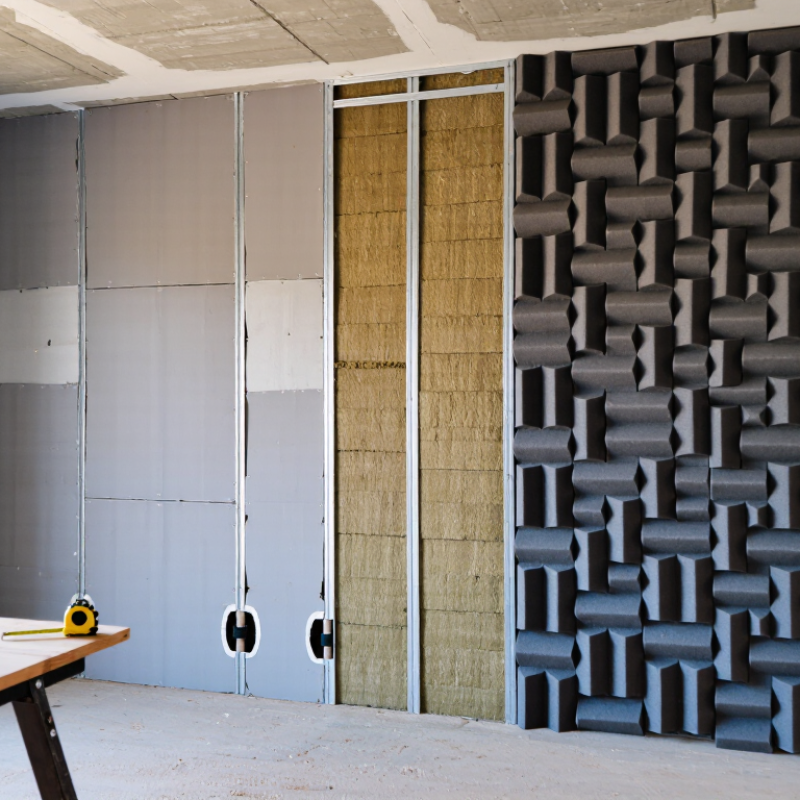
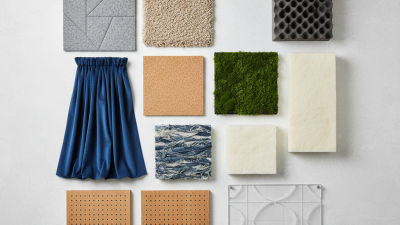
Chinese manufacturers produce several practical soundproofing materials for homes, studios, offices, and factories. Acoustic foam absorbs reflected sound and reduces echo, but it cannot block loud noise through a wall. Its open-cell surface works well around microphones, speakers, and hard ceilings. PET fiber panels offer a cleaner appearance and resist moisture better in many indoor spaces.
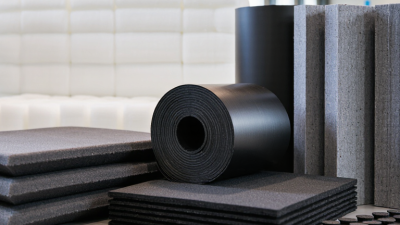
Mineral wool boards provide stronger sound absorption inside partitions and suspended ceilings. They are often selected for their density, fire performance, and stable structure. Mass-loaded vinyl adds weight to walls, floors, and vehicle panels. It blocks airborne noise when installed without gaps. Acoustic curtains can soften sound near windows, although they rarely replace a properly sealed window.
Material selection should follow the noise problem. For impact noise, resilient channels and isolation layers may help more than foam. For voices, dense wall systems and sealed joints usually perform better. Ask suppliers for density, thickness, acoustic test results, fire ratings, and formaldehyde information. Testing standards can vary, so compare documents carefully.
Installation changes the result dramatically. A small opening around a socket can weaken an otherwise strong wall. I have seen attractive panels deliver little improvement because the door remained hollow and unsealed. That is an easy mistake. Chinese production can be consistent, but quality control still deserves inspection through samples, batch checks, and clear specifications. Some solutions look excellent on paper, yet perform poorly in a real room.
What Is the Best Sound Proofing Material from China?
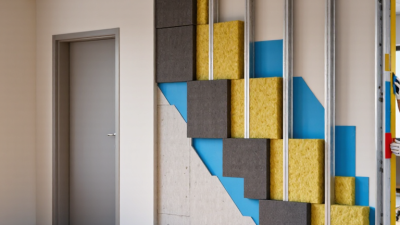
Chinese soundproofing materials reduce noise through mass, absorption, decoupling, and airtight construction. Heavy layers, such as mass-loaded vinyl or dense gypsum boards, limit airborne sound. Mineral wool and PET panels absorb reflected energy inside walls, ceilings, and machinery rooms. Resilient channels and rubber underlays interrupt vibration paths. Sealed joints matter too. A small gap can weaken an otherwise expensive system.
The World Health Organization’s Environmental Noise Guidelines for the European Region (2018) recommends keeping nighttime road-traffic noise below 45 dB outdoors. In practice, achieving that target requires more than adding a soft wall panel. Laboratory ratings under ISO 10140 and ISO 717-1 help compare wall and floor assemblies, but field performance can differ. China’s GB/T 19889 series provides related building-acoustic testing guidance.
On construction projects, Chinese suppliers commonly combine mineral wool, laminated boards, acoustic membranes, and resilient supports. This layered approach works better than choosing one “best” product. A 10 dB reduction is often perceived as roughly half as loud, although room size and frequency change the experience. I have seen specifications fail because installers ignored door seals and service penetrations. That is the uncomfortable part. Material quality matters, but detailing and workmanship may matter more. Buyers should request tested assembly data, density, thickness, fire performance, and installation instructions before comparing prices.
Typical sound absorption performance of commonly manufactured building materials
Mineral wool and fiberglass generally provide the highest sound absorption among these materials, with typical Noise Reduction Coefficient (NRC) values around 0.90–0.95. PET acoustic panels and acoustic foam are also effective for reducing reflected noise. Gypsum board and mass-loaded vinyl mainly improve sound insulation by adding mass, rather than absorbing sound. Actual performance depends on thickness, density, installation, air gaps, sealing, and the complete wall or ceiling assembly.
Values shown are representative typical NRC values for standard material categories; certified results vary by product and test method.
Choosing soundproofing material from China requires more than comparing thickness and price. The first question is the noise path: airborne voices, impact footsteps, or mechanical vibration. Each problem needs a different solution. Dense barriers reduce airborne transmission, while resilient layers help separate floors, walls, and ceilings. In practice, a 10-millimeter panel may outperform a thicker product when it seals joints properly. Small gaps can ruin large investments.
Independent testing is essential. ISO 10140 provides laboratory methods for measuring airborne sound insulation, while ASTM C423 evaluates sound absorption. These tests measure different performance areas. Do not confuse absorption with sound blocking. The World Health Organization’s 2018 Environmental Noise Guidelines recommend indoor bedroom noise below 30 dB(A) at night for good sleep. This target shows why real room conditions matter more than impressive catalog claims. Ask Chinese suppliers for current test reports, laboratory accreditation, frequency data, and installation details.
The World Health Organization’s 2018 Environmental Noise Guidelines recommend indoor bedroom noise below 30 dB(A) at night for good sleep.
Material safety also deserves attention. Check fire classification, formaldehyde emissions, moisture resistance, density, and temperature stability. Mineral-based products may perform well in fire conditions, but they can require careful handling. Flexible membranes save space, yet poor bonding can reduce performance. I have seen attractive panels fail because installers left unsealed electrical boxes. That mistake is common.
Shipping and quality consistency matter too. Request production samples, batch records, and dimensional tolerances before ordering. A cheaper material may become expensive after replacement and reinstallation. No material works alone. The wall structure, framing, fasteners, and workmanship often decide the final result.
China produces a wide range of soundproofing materials for homes, studios, offices, and factories. The right choice depends on the noise source. Mass loaded vinyl works well on walls, ceilings, and equipment enclosures because its dense layer blocks airborne sound. Mineral wool fits between wall studs and ceiling joists. It absorbs sound inside the cavity. PET acoustic panels reduce echo, but they do not fully stop noise crossing a wall. This difference is often misunderstood.
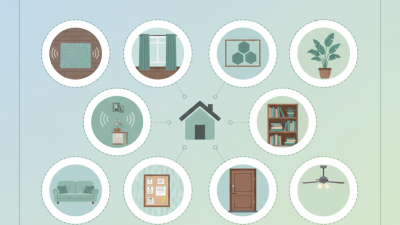
For floor impact noise, rubber or recycled-fiber underlay can reduce footsteps and furniture movement. Resilient channels help separate drywall from framing. That separation matters. For doors, solid cores, magnetic seals, and drop bottoms improve weak points around the frame. Laminated acoustic glass suits offices near traffic, although the frame and installation must match the glass performance. A strong window with poor seals still leaks sound.
Reliable sourcing requires more than comparing prices. Ask for independent test reports, thickness data, density, fire performance, and volatile organic compound information. Check the complete wall or floor assembly, not only one material. A thicker product is not automatically better. I have seen attractive specifications fail after careless installation. Gaps, rigid bridges, and untreated ventilation paths can undo expensive work. My own judgment would remain cautious until samples, drawings, and site conditions are reviewed together.
There is no universal best soundproofing material from China. The right choice depends on the noise source, wall structure, and installation space. In practical project reviews, I separate sound isolation from sound absorption. Dense barriers help block airborne noise. Porous mineral wool helps absorb sound inside a cavity. A thin foam panel may look impressive, but it often performs poorly against voices or machinery. This distinction matters.
Ask for a physical sample before placing a large order. Check its weight, thickness, flexibility, surface finish, and odor. For panels, inspect the edges and backing for gaps or uneven bonding. Request test reports showing density, sound reduction data, frequency ranges, and testing methods. Fire classification and VOC or formaldehyde information matter in indoor spaces. Do not accept unclear certificates or edited screenshots. A small sample cannot reveal long-term aging. My own checklist is not flawless. Run a trial installation on a real wall.
Supplier reliability appears through consistent communication and traceable production records. Ask about raw material sources, batch control, lead times, packaging, and replacement procedures. A capable supplier should explain technical limits without promising impossible results. Use video inspections or independent factory checks when practical. Written specifications should cover tolerances, labeling, storage, and installation conditions. One overlooked detail is adhesive compatibility. Some adhesives soften backing layers or create persistent odors. If the supplier avoids technical questions, pause the order and record every agreed specification, including the batch number.
| Material Type | Typical Product Density | Typical Sound Absorption Performance | Primary Acoustic Function | Fire and Safety Considerations | Moisture and Durability | Best-Fit Applications | Quality Documents and Tests to Request | Supplier Reliability Checks |
|---|---|---|---|---|---|---|---|---|
| Mineral Wool (Rock or Glass Wool) |
Approximately 30–120 kg/m³, depending on the product and application | Typically high absorption when correctly installed; NRC commonly about 0.70–1.00 for suitable panels or batts | Absorbs airborne sound inside wall, ceiling, floor, and machinery cavities; also helps reduce reverberation | Non-combustible grades are widely available. Verify the exact fire classification, binder content, fiber safety information, and formaldehyde emissions for the supplied product | Generally stable in dry construction. Performance can decline if compressed, wet, or poorly protected from water ingress | Stud walls, suspended ceilings, HVAC enclosures, acoustic partitions, industrial equipment rooms, and fire-rated assemblies | Independent test reports based on ISO 354 or ASTM C423 for absorption; ISO 1182, EN 13501-1, GB 8624, or ASTM E136/E84 as applicable; density, thickness, dimensional stability, and emissions data | Request batch traceability, production dates, inspection records, sample approval, packaging details, and pre-shipment inspection by an independent party |
| PET Acoustic Fiber Panels | Approximately 150–250 kg/m³ for many decorative acoustic panels | Commonly NRC about 0.40–0.95, strongly affected by thickness, edge detail, air gap, and mounting method | Controls room echo and mid-to-high frequency reflections; provides decorative wall and ceiling treatment | Fire-retardant versions are available, but “fire retardant” is not a universal classification. Confirm the exact tested construction and reaction-to-fire rating | Good resistance to everyday humidity and fiber shedding when properly manufactured; not a waterproof barrier and may stain or deform under prolonged moisture | Offices, classrooms, studios, meeting rooms, restaurants, public interiors, and decorative acoustic baffles | ISO 354 or ASTM C423 absorption report; EN 13501-1, GB 8624, or ASTM E84 fire report; recycled-content documentation if advertised; colorfastness and dimensional-stability data | Check color and thickness consistency across batches, cutting accuracy, edge quality, sample-to-production approval, carton protection, and documented incoming-material controls |
| Melamine Acoustic Foam | Approximately 8–12 kg/m³ for many flexible foam products | Often NRC about 0.60–1.00 at suitable thicknesses; thin foam mainly addresses higher frequencies | Lightweight absorption for reverberation and equipment noise; does not provide substantial airborne sound blocking by itself | Some grades have low-smoke or flame-retardant performance, while others do not. Verify the exact foam formulation and test method; avoid relying only on marketing terms | Lightweight and relatively resistant to aging in suitable indoor conditions; can be damaged by abrasion, solvents, UV exposure, or excessive heat | Equipment enclosures, recording spaces, ventilation systems, transport interiors, and locations where low weight is important | ASTM C423 or ISO 354 absorption data; ASTM E84, EN 13501-1, or GB 8624 classification; smoke and emissions information; temperature and chemical-resistance data where relevant | Confirm formulation control, batch certificates, foam color and cell-structure consistency, compression recovery, odor after unpacking, and protected storage conditions |
| Mass Loaded Vinyl (MLV) |
Approximately 1.8–5.0 kg/m², commonly specified by surface weight rather than volume density | Sound blocking depends on the complete wall or ceiling assembly; there is no universal STC improvement from the sheet alone | Adds limp mass and reduces sound transmission when combined with decoupling, airtight layers, and cavity absorption | Verify flame spread, smoke development, halogen content, plasticizer information, and indoor-air-emission data for the exact formulation | Usually durable when protected from sharp edges, excessive heat, oils, and incompatible adhesives; seams and penetrations must remain airtight | Partition upgrades, floor-ceiling systems, vehicle and machinery enclosures, pipe wraps, and compact sound-isolation assemblies | ASTM E90, ISO 10140, or ASTM E413 data for the complete tested assembly; surface-weight tolerance; tensile and tear strength; fire, VOC, and aging reports | Verify roll weight and dimensions, surface-weight consistency, odor, flexibility at the required temperature, seam compatibility, lot traceability, and packaging against deformation |
| Acoustic Polyester or Cotton Fiber Batts | Approximately 20–80 kg/m³, depending on fiber type and forming process | Typically moderate to high absorption; NRC may range from about 0.60–0.95 when thickness and air gaps are optimized | Reduces cavity resonance and room reverberation; mainly an absorptive material rather than a sound barrier | Fire performance varies considerably by fiber blend and treatment. Request a report for the finished batt, including smoke and flame behavior | Generally suitable for dry interiors. Confirm resistance to sagging, compression set, microbial growth, and moisture exposure for the intended environment | Interior partitions, ceiling clouds, acoustic screens, wall panels, and projects requiring low fiber irritation during installation | ISO 354 or ASTM C423 absorption report; fire classification; density, thickness, sag resistance, compression recovery, moisture, and emissions data | Inspect fiber uniformity, batt thickness, cut dimensions, odor, packaging cleanliness, production capacity, and ability to maintain the approved specification over repeat orders |
| Cellulose Fiber Insulation | Approximately 35–65 kg/m³ for many blown or dense-pack applications | Useful cavity absorption when installed at the specified density; performance depends heavily on installation quality and settlement control | Fills cavities and reduces airborne sound transmission through framed assemblies; also provides thermal insulation | Typically treated with fire retardants, but treatment type and required classification must be verified. Check dust, additive, and emissions information during installation | Can absorb moisture if exposed to leaks or condensation. Requires correct vapor, air-sealing, and moisture-control design; settlement can create voids | Wood-frame walls, attic floors, retrofit cavities, and projects seeking a fiber-based insulation option | Density and settlement tests; ASTM C739 or relevant local standard; fire classification; moisture content; mold resistance; emissions and additive declarations | Assess installer training, equipment calibration, packaged-weight consistency, moisture-protected storage, lot documentation, and written installation-density requirements |
| Acoustic Gypsum Board or Composite Panel | Common gypsum board core density is approximately 600–1,000 kg/m³; actual value varies by construction | Low absorption as a bare hard surface, but it can substantially improve sound isolation when used in a tested multilayer assembly | Adds mass, stiffness, damping, or resonance control to walls and ceilings; works with cavity insulation and resilient mounting systems | Verify fire-resistance rating for the complete assembly, not just the board. Check core composition, edge integrity, and formaldehyde or VOC declarations where applicable | Stable in normal indoor conditions when protected from water. Edges and joints require correct treatment to prevent cracking and sound leaks | High-performance partitions, home theaters, offices, hotels, studios, and fire-rated wall or ceiling systems | ASTM E90, ISO 10140, or local equivalent for the complete assembly; ASTM E119 or EN 1364 fire testing where required; bending strength, thickness, and moisture data | Review production tolerances, board flatness, pallet protection, breakage rates, batch coding, technical installation support, and consistency of assembly test results |
| Composite Barrier-and-Absorber System | Varies by design; commonly combines a mass layer with mineral wool, PET, foam, or a resilient decoupling layer | Potentially strong overall performance, but results must be judged from the tested wall, ceiling, floor, or enclosure assembly | Combines sound absorption, added mass, damping, decoupling, and airtight detailing for more complete sound isolation | Every layer and adhesive must be evaluated. Confirm reaction-to-fire, smoke, VOC, and compatibility data for the complete system | Depends on the weakest component, joints, adhesives, and installation environment. Moisture exposure and thermal movement should be assessed before approval | Hotels, studios, cinemas, industrial rooms, mechanical plant areas, premium residential projects, and demanding retrofit work | Full-system sound-transmission report; fire and smoke testing; VOC and odor testing; thickness, mass, adhesion, aging, and installation-detail documentation | Prefer suppliers able to provide system drawings, installation training, controlled samples, traceable subcomponents, quality plans, warranty terms, and third-party pre-shipment inspection |