
Choosing the 2026 best sound absorbing foam is not just a matter of comparing thickness or price. Global buyers need to consider the room, the noise problem, installation conditions, and product documentation. Foam can reduce reflections and reverberation inside a space, but it does not automatically block sound passing through walls. Not the same thing. That distinction is easy to miss when product descriptions promise broad results.
This guide introduces the main factors for comparing sound absorbing foam, from material types and panel shapes to thickness, density, and published acoustic test data. A simple hand press may reveal how a panel feels, but it cannot confirm how well it performs. Look for test methods and ratings that match the intended use, and check whether the supplier provides clear product specifications. Details matter. Buyers sourcing across borders should also confirm packaging, lead times, installation guidance, and applicable fire-safety requirements for their destination and building type. Requirements vary, so verify them locally rather than relying on a general claim. Even a well-rated product can disappoint if it is poorly placed or chosen for the wrong acoustic problem. This comparison offers a practical starting point, not a universal winner; the best choice depends on the space and the evidence available.
Sound-absorbing foam is usually a lightweight, open-cell material that helps reduce reflections inside a room. Sound waves enter its pores, where friction turns some acoustic energy into small amounts of heat. Less reflected energy can mean less flutter echo between hard walls. The foam does not block sound like a sealed, heavy wall. That distinction matters.
A useful reference is ASTM C423, the standard laboratory method for measuring sound absorption. Its Noise Reduction Coefficient, or NRC, averages absorption data at 250, 500, 1,000, and 2,000 hertz, then rounds the result to the nearest 0.05. An NRC of 0.60 indicates substantial absorption across those test bands, but not equal performance at every frequency. Thin foam may soften sharp handclaps while leaving bass notes rumbling. Test the actual thickness and mounting method; air gaps can change results.
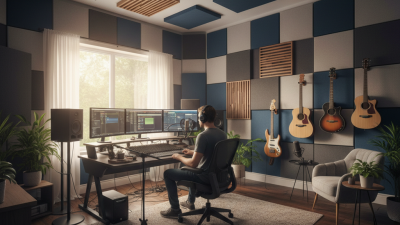
In a small office, foam panels behind a monitor may reduce reflections from a bare desk and adjacent wall. A spoken voice can sound clearer. Yet covering one wall alone may not fix a lively room with tile, glass, and a hard ceiling. Measurements are helpful, but listening from the usual seat matters too. I would not treat a rating as a promise for every room; placement and room geometry are easy to underestimate.
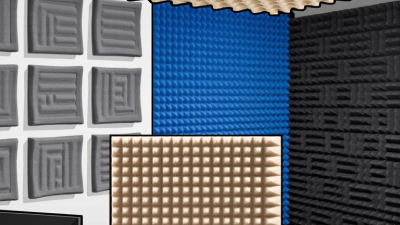
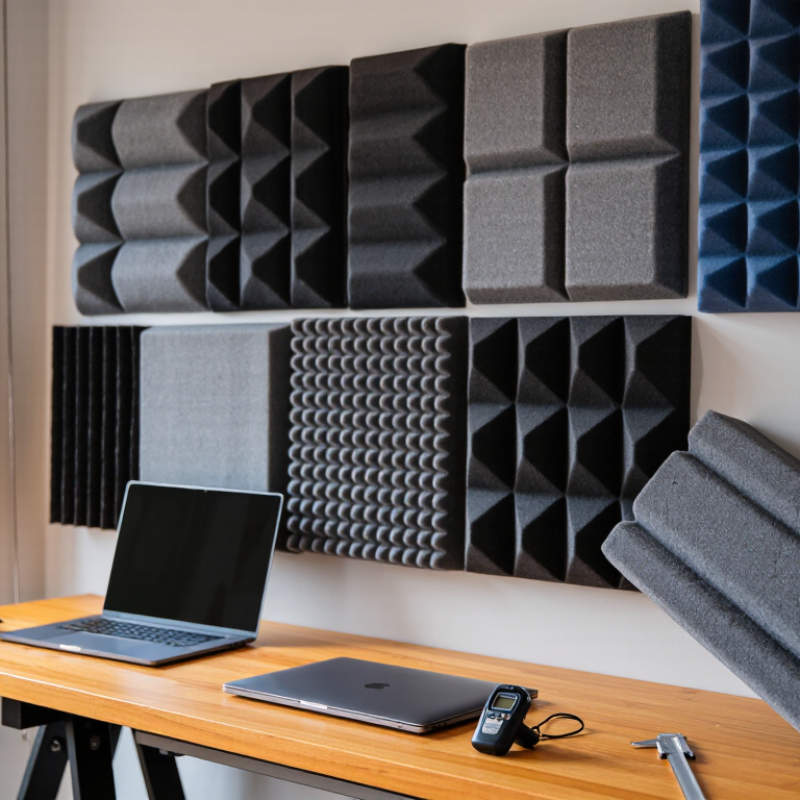
Sound-absorbing foam is commonly made from open-cell polyurethane or melamine. Polyurethane is lightweight and easy to cut; melamine is often selected where low weight and fire performance matter. The shape changes how the surface interacts with sound, but it does not guarantee a particular result. Flat panels suit walls and ceilings. Wedges and pyramids add surface area, while convoluted “egg-crate” profiles are easy to recognize. They are not automatically more effective.
Check the test data, not just the shape. ASTM C423 measures sound absorption in a reverberation room and reports the Noise Reduction Coefficient, or NRC, as a rounded average across four mid-frequency bands. ISO 354 provides another reverberation-room measurement method. These ratings describe tested samples, not every installation. Thickness, air gaps, mounting, and room conditions can change results. For example, a thin panel may reduce some reflected speech energy but absorb less low-frequency sound than a thicker assembly. Look for a stated test standard, sample thickness, and mounting details. Small gaps behind panels matter. In practice, product sheets can omit details that buyers need, so comparisons are not always as clean as they appear.
The figures below are indicative comparison ranges, not guaranteed product ratings. NRC is a single-number absorption rating derived from laboratory measurements under ASTM C423; actual results depend on thickness, density, mounting, air gap, test method, and frequency. Request the exact product’s test report before specifying it. Acoustic foam reduces room reflections and reverberation; it does not soundproof a room or block sound transmission by itself.
| Foam type | Common shape or finish | Typical thickness | Indicative NRC range | Typical acoustic behavior | Common applications and buying notes |
|---|---|---|---|---|---|
| Open-cell polyurethane (PU) foam | Flat panels, wedges, pyramids, convoluted “egg-crate” profiles | 25–100 mm | About 0.20–0.75 | Absorption generally improves as thickness increases; thinner panels are more effective at higher frequencies than at bass frequencies. | Studios, offices, control rooms, and equipment enclosures. Check fire-performance documentation and suitability for the intended indoor environment. |
| Melamine foam | Flat panels, wedges, pyramids, hanging baffles | 25–100 mm | About 0.30–0.95 | Lightweight, open-cell material that can provide strong mid- and high-frequency absorption; thicker panels and air gaps can improve lower-frequency performance. | Commercial interiors, studios, and some transport or industrial applications. Confirm the tested assembly, fire classification, and temperature limits. |
| Flexible open-cell polyester foam | Flat sheets, tiles, profiled panels | 25–100 mm | About 0.20–0.80 | Performance varies widely with fiber structure, density, thickness, and mounting; test data should be tied to the specific construction. | Interior acoustic treatment and selected vehicle or appliance applications. Verify that the material meets relevant fire, smoke, and emissions requirements. |
| Wedge-profile acoustic foam | Repeated triangular ridges, usually made from PU or melamine | 25–75 mm overall profile | About 0.20–0.75 | The profile increases exposed surface area but does not, by itself, establish a higher rating than an equivalent material and thickness. | Small rooms and wall or ceiling treatment. Compare test results for the complete panel, not just the shape or appearance. |
| Pyramid-profile acoustic foam | Raised four-sided pyramids, commonly PU or melamine | 30–100 mm overall profile | About 0.25–0.85 | Can provide useful broadband room treatment; the base thickness and mounting condition are important when comparing products. | Studios, rehearsal spaces, and listening rooms. Choose coverage and placement based on room reflections rather than appearance alone. |
| Convoluted or egg-crate foam | Rounded peaks and valleys, commonly flexible PU foam | 25–75 mm overall profile | About 0.20–0.70 | Often absorbs mid- and high-frequency sound; the valleys do not make a thin panel equivalent to a thicker flat absorber. | General-purpose room treatment and some packaging or equipment uses. Confirm whether published thickness includes the peaks. |
| Flat, smooth-faced absorber panel | Unprofiled sheet or tile; may be installed with an air gap | 25–100 mm | About 0.20–0.90 | Simple geometry supports predictable installation. A rear air space may increase absorption at lower frequencies, depending on the tested assembly. | Walls, ceilings, and modular treatment systems. Compare the complete mounting configuration in the test report. |
| Foam bass-trap form | Large corner blocks, wedges, or triangular corner pieces | 100–300 mm or more | No single NRC range is reliable | Low-frequency control depends strongly on depth, corner placement, construction, and frequency-specific test results. NRC alone can conceal bass performance. | Room corners and low-frequency problem areas. Request octave- or one-third-octave-band absorption data rather than relying only on an NRC figure. |
Choosing sound-absorbing foam starts with the room, not a catalogue headline. A small podcast booth may need control of flutter echo near a microphone, while a high-ceiling workshop needs broader reverberation management. Measure the room and identify the main problem: reflections, speech clarity, or external noise. Foam absorbs some sound energy; it does not block noise through walls.
Compare absorption data measured under ASTM C423 or ISO 354, and check how the sample was mounted. The Noise Reduction Coefficient, or NRC, gives a useful average, but it cannot show performance at every frequency. Low-frequency rumble may require thicker treatment or a designed air gap; thin tiles often leave bass problems untouched. Check fire-performance documentation and installation conditions for the intended building use.
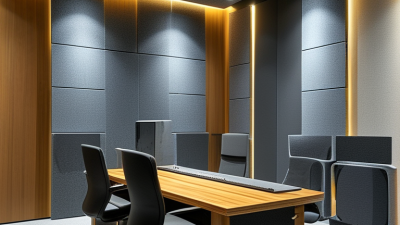
Context matters. The World Health Organization’s 2018 European environmental-noise guidelines recommend road-traffic exposure below 45 dB Lden and 40 dB Lnight. Those are outdoor health targets, not foam ratings, and they underline why absorbers should not be sold as sound barriers. For a meeting room, test speech intelligibility after installation and listen from the back row. A tidy specification still cannot predict every room. Real measurements can.
Safety requirements change by market, and a familiar product name proves little. In the United States, buyers often request ASTM E84 results, including flame-spread and smoke-developed indexes. Class A is not universal approval. It does not replace local building-code review. In Europe, EN 13501-1 classifies reaction to fire, such as Euroclass B-s1,d0. The “s1” smoke rating matters in corridors and enclosed rooms. These tests are not interchangeable. Foam that passes one method may fail another.
Material choice also affects indoor health. Polyurethane foam can release volatile organic compounds when poorly cured, heated, or aged. Request safety data sheets, emissions data, and production-batch traceability. The European Chemicals Agency’s REACH framework restricts many substances, while California buyers may examine Proposition 65 disclosures. Environmental claims need evidence. UNEP’s 2024 Global Status Report for Buildings and Construction links buildings with about 32% of global energy demand and 34% of global carbon dioxide emissions. Small material decisions still matter.
Check recycled content, end-of-life options, and packaging weight. Do not trust vague “eco” language. It happens often. For humid markets, inspect mold resistance and water absorption data. For transport projects, verify smoke toxicity and installation conditions. The World Health Organization reports that environmental noise contributes to at least one million healthy life-years lost annually in Western Europe.
Absorption performance matters, but fire behavior matters more when foam lines a ceiling or escape route. Product documentation should show tested thickness, substrate, mounting method, and laboratory date. Missing details are a warning.
Global buyers should compare suppliers through measurable performance, not attractive product photos. Ask for thickness, density, airflow resistance, and noise reduction coefficient data. A 25 mm panel may suit office walls, while machinery rooms often need thicker, shaped foam. Request laboratory reports with test methods and dates. Check whether results represent the exact material, not a similar sample. Small details matter.
Supplier evaluation should include factory experience, production capacity, quality controls, and communication speed. Ask for a pre-production sample and inspect its color, cell structure, edge cutting, odor, and surface recovery. A factory audit, video inspection, or third-party review can reveal inconsistent batches. Keep written specifications in the purchase agreement. Verbal promises are easy to misunderstand across languages.
Compare total landed cost, not only the unit price. Include tooling, packaging, freight, insurance, taxes, testing, and replacement risk. A lower quote can look brilliant. It may be incomplete. Confirm carton dimensions because compressed foam can change shipping calculations. Also request current safety and emissions documentation for the destination market. I have seen buyers focus heavily on acoustic ratings and overlook odor complaints after installation. That mistake is expensive, though careful sampling cannot remove every uncertainty.