
Please ensure Javascript is enabled for purposes of website accessibility

What Are the Best Types of Sound Baffles in 2026?

In 2026, the best sound baffles are not simply the thickest or most expensive. They are the ones suited to a room’s size, surfaces, noise levels, and daily use. A high-ceilinged dining hall may benefit from suspended baffles that reduce reflections overhead, while a small office could need wall-mounted panels near speech areas. Freestanding screens offer flexibility in shared spaces, though they may occupy valuable floor area. That matters.

Materials and installation also shape performance. Fabric-wrapped fiberglass and mineral-fiber products are common choices, but their effectiveness depends on thickness, placement, and tested acoustic ratings. Look for independent absorption data, such as an NRC rating, and check whether the product meets relevant fire and indoor-air-quality requirements for its intended setting. Ratings help, but they do not tell the whole story.

A practical comparison should consider sound absorption, durability, cleaning needs, appearance, and installation costs. For a busy classroom, washable finishes and secure mounting may matter more than a sleek profile. In a recording room, placement and frequency response deserve closer attention. Not always. Acoustic treatment can reduce echo, but it will not automatically block sound from passing between rooms. Small details count. This guide explores the leading types of sound baffles in 2026, what each does well, and where its limits become noticeable, so you can compare options with realistic expectations.
What Are the Best Types of Sound Baffles in 2026?

How Sound Baffles Reduce Noise and Reverberation

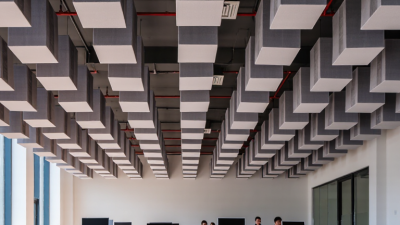
Sound baffles reduce reverberation by absorbing sound that would otherwise bounce between hard ceilings, walls, and floors. Suspended panels interrupt repeated reflections, helping speech arrive with less overlap. They do not stop sound passing through walls. That requires sound isolation.

Vertical baffles expose both faces to the room and can work well beneath high ceilings. Horizontal panels are often practical where fixtures or ceiling services limit vertical clearance. Placement matters: evenly spaced panels may not control reflections as effectively as a layout designed around the room’s noise sources and listening areas. ANSI/ASA S12.60 sets maximum unoccupied reverberation times of 0.6 seconds for classrooms up to 10,000 cubic feet and 0.7 seconds for rooms up to 20,000 cubic feet. These benchmarks show why room size and use matter.

Check the Noise Reduction Coefficient, or NRC, when comparing products. ASTM C423 measures sound absorption in a reverberation room; NRC summarizes absorption across four frequencies, from 250 to 2,000 hertz. The number is useful, but not magic. Actual results depend on baffle spacing, ceiling height, and existing surfaces. A high rating cannot guarantee clear speech in every room, and that is easy to overlook.

Key Factors for Comparing Sound Baffle Types in 2026

What Are the Best Types of Sound Baffles in 2026?
Key Factors for Comparing Sound Baffle Types in 2026

Choosing a sound baffle starts with the room, not the product label. In a high-ceiling gym, suspended vertical panels can expose more absorbing surface than wall-mounted panels. In a low office, horizontal clouds may fit better and reduce reflections above desks. Compare absorption data at relevant frequencies, especially when speech clarity matters. ISO 11654 classifies products from A to E: Class A has a weighted absorption coefficient of 0.90–1.00, while Class C ranges from 0.60–0.75. Numbers can mislead. These ratings do not predict every room’s result.

Check how the figures were tested. ASTM C423 measures sound absorption in a reverberation room, while ISO 354 specifies a similar test method. Compare like with like, and ask for frequency-by-frequency results rather than relying on one headline rating. Also consider panel depth, spacing, edge exposure, and mounting height; each affects how much sound reaches the absorber. A thin panel may look tidy, yet offer less low-frequency control than a deeper baffle.

Set a room-specific target before comparing materials. ANSI/ASA S12.60-2015 limits reverberation time in core learning spaces to 0.6 seconds for rooms up to 10,000 cubic feet, and 0.7 seconds for rooms between 10,000 and 20,000 cubic feet. That is a useful classroom benchmark, not a universal rule. Check fire performance, cleanability, durability, and installation access too. Fit matters. A careful specification still needs review after installation, because furniture and occupancy can change the acoustic result.

What Are the Best Types of Sound Baffles in 2026? — Key Factors for Comparing Sound Baffle Types in 2026

Baffle type Typical construction Acoustic performance Best suited for Key advantages Considerations What to check before specifying
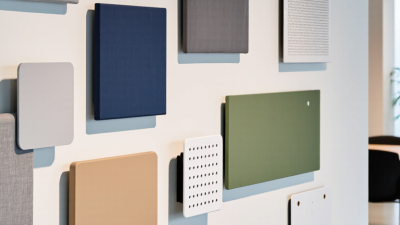
Fabric-wrapped mineral wool or fiberglass Porous fibrous core enclosed in an acoustically permeable fabric. Often provides broad frequency absorption; performance depends on core thickness, density, spacing, and mounting. Large offices, classrooms, restaurants, gyms, and other reverberant rooms. Available in many shapes and finishes; commonly effective for reducing reflected sound in large spaces. Fabric and exposed edges may need protection in areas prone to impact, dust, or moisture. Tested absorption data, fabric durability, edge protection, and applicable fire and indoor-air-quality documentation.
Polyester (PET) felt Panels made from bonded polyester fibers, sometimes with a layered or shaped profile. Absorbs sound through the porous material; results vary with thickness, layering, and air gap. Offices, learning spaces, meeting rooms, and interiors where a lightweight or sculptural finish is desired. Lightweight, available in varied colors and shapes, and generally easy to handle. Thin products may provide less low-frequency absorption than thicker assemblies; cleanability and fire performance vary by product. Published test results for the exact thickness and configuration, plus fire classification and cleaning guidance.
Acoustic foam Open-cell foam, commonly cut into flat or profiled forms and suspended or mounted. Primarily absorbs mid- and high-frequency reflections; effectiveness is affected by foam thickness and room conditions. Studios, control rooms, and technical spaces where localized reflection control is needed. Lightweight and easy to shape or install in targeted areas. May be less durable in busy public spaces; appearance, smoke behavior, and fire compliance require careful review. Fire and smoke documentation, product-specific absorption data, and suitability for the occupancy and installation location.
Perforated wood with absorptive backing Perforated or slotted wood facing over an absorptive layer, often with a backing cavity. Can combine absorption with a hard, finished surface; performance depends on perforation pattern, backing, cavity, and assembly. Auditoriums, conference rooms, hospitality spaces, and interiors requiring a wood finish. Offers a durable architectural appearance and can integrate with other interior finishes. Generally heavier and more complex to suspend than lightweight felt or foam; finish and cavity details affect results. Test data for the complete assembly, structural support requirements, finish durability, and fire-rating documentation.
Microperforated metal with absorptive backing Perforated metal facing combined with a porous absorber and, in some designs, an air cavity. Acoustic behavior depends on hole size and pattern, backing material, and cavity depth; the metal alone is not a porous absorber. Industrial, transportation, commercial, or other settings where a robust, cleanable surface is useful. Hard-wearing surface; can be appropriate where cleaning or resistance to routine contact is important. Weight, cost, and installation requirements can be higher; verify that the full assembly is designed for sound absorption. Assembly-level test data, corrosion and cleaning requirements, suspension loads, and fire documentation for backing materials.
Rigid fiberglass or mineral-fiber board Rigid or semi-rigid fibrous panels, sometimes finished with a facing, suspended individually as baffles. Porous absorption can be effective across a broad range of frequencies when the panel thickness and exposed area are suitable. Warehouses, halls, school gyms, and other spaces with high ceilings or limited wall area. Can expose multiple panel faces to sound; useful when ceiling suspension is practical. Exposed edges may be vulnerable to damage; suspension hardware and panel stability need to suit the environment. Panel durability, edge treatment, tested absorption in the intended mounting arrangement, and secure suspension details.

Selection note: Sound baffles reduce reflections and reverberation; they do not, by themselves, soundproof a room or block sound transmission through walls and ceilings. Compare test data for the complete product and installation, including absorption ratings such as NRC where available, fire performance, durability, maintenance, mounting method, ceiling height, and project requirements. Performance varies by product and test configuration.

Ceiling-Mounted Sound Baffles for Large and Open Spaces

What Are the Best Types of Sound Baffles in 2026?

Ceiling-Mounted Sound Baffles for Large and Open Spaces

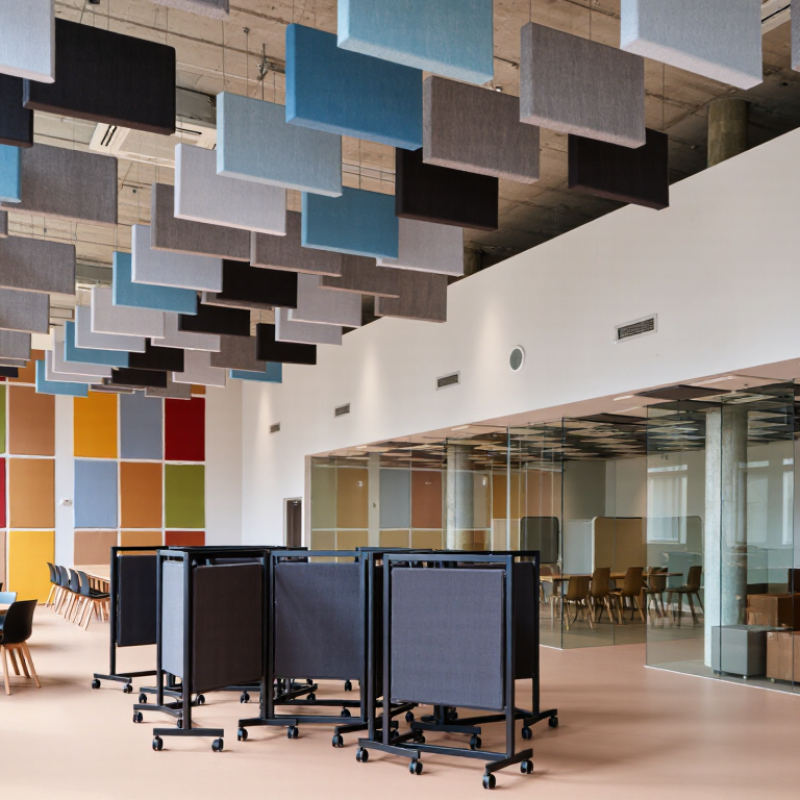
In a high-ceiling hall, conversation can bounce between hard floors, glass walls, and exposed concrete. Ceiling-mounted sound baffles interrupt those reflections and absorb some of the sound energy, helping reduce reverberation. They work especially well in open spaces where wall panels alone cannot cover enough surface. Results depend on the room, baffle spacing, and the product’s tested sound-absorption performance. More baffles do not automatically mean better acoustics.

Use reverberation time as one measure of progress. ANSI/ASA S12.60-2010/Part 1 sets a 0.6-second limit for core learning spaces up to 10,000 cubic feet, and 0.7 seconds for spaces up to 20,000 cubic feet. These classroom benchmarks are not universal targets for offices or halls, but they show why room volume matters. Still, baffles are not magic. They will not block every sound traveling across a busy room.

Tips: Ask for sound-absorption test data, such as an NRC rating measured under ASTM C423. Map lights, sprinklers, and HVAC before choosing baffle locations. Leave room for airflow and maintenance access. A small spacing change can alter coverage, so review a reflected-ceiling plan before installation. The first layout may need revision.

Wall-Mounted and Freestanding Baffles for Targeted Sound Control

What Are the Best Types of Sound Baffles in 2026?

Wall-Mounted and Freestanding Baffles for Targeted Sound Control

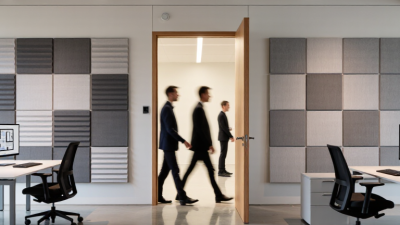
Wall-mounted baffles work well when conversations bounce between hard walls. They absorb some reflected sound, helping reduce harsh echoes in meeting rooms, classrooms, and home studios. Mount them near the surfaces causing the strongest reflections, not simply wherever wall space is empty. They do not block sound traveling between rooms. That distinction matters.

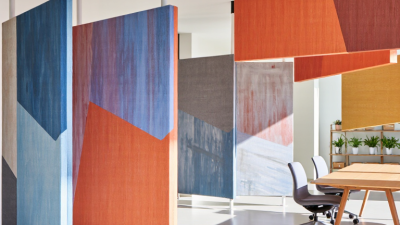
Freestanding baffles offer more flexibility in shared or changing spaces. Place them beside a workstation, between discussion areas, or near a noisy activity. Their position can be adjusted as the room’s use changes. In practice, the first layout is rarely perfect. Walk through the space and listen from different seats before settling on a placement. Baffles with stable bases and suitable acoustic materials are practical choices; check installation needs and material safety information for the specific room.

Specialty Sound Baffles for Offices, Studios, and Outdoor Areas

The best sound baffle depends on the room, not a ranking. In offices, suspended acoustic clouds work well above open desks, where voices bounce between hard ceilings and glass walls. Vertical hanging baffles can suit tall spaces and leave sprinklers or lighting accessible. Look for tested absorption data, fire-performance information, and a mounting plan that matches the ceiling structure. Small details matter.

Studios need more control. Thick, broadband absorbers can reduce reflections across a wider range of frequencies, while carefully placed baffles help tame flutter echo between parallel walls. A thin panel may quiet sharp claps but do little for low bass. That limitation is easy to overlook. Treat baffles as one part of room treatment, alongside measured listening tests and thoughtful placement.

Outdoor areas call for a different build: weather-resistant, UV-stable materials, secure fixings, and drainage that prevents trapped water. Perforated or absorptive panels can soften reflections beneath covered patios, but they will not erase traffic noise or replace a properly designed acoustic barrier. Wind exposure and maintenance also deserve attention. There is no perfect option; even a well-chosen baffle can disappoint when installed in the wrong location.