

Please ensure Javascript is enabled for purposes of website accessibility

2026 Best Sound Deadening Panels for Cars

A quiet cabin is not created by adding the thickest mat to every surface. The right sound deadening panels target vibration, road roar, and harsh resonance where they actually occur. In this 2026 guide, we compare panel materials, coverage, weight, installation demands, and value. The aim is practical: help drivers choose products that suit their vehicle and noise concerns.

Acoustics expert Leo L. Beranek summed up the goal simply: “Noise is unwanted sound.” For cars, though, unwanted sound has several sources. A door skin may buzz against a speaker’s bass, while tire noise travels through the floor and wheel arches. Butyl-based damping sheets can reduce panel vibration; foam and barrier layers address different parts of the problem. They are not interchangeable. Nor can any panel make a poorly sealed cabin silent.

Fit matters. So does preparation. Clean metal, careful trimming, and firm roller pressure can shape the result as much as the material itself. This guide looks at those details, alongside product performance and installation trade-offs. A product chart can make choices look tidier than real-world installs. It can also hide weight, odor, or awkward access behind trim. We will keep those compromises in view. Some results vary by car, and that is worth admitting. The best choice is usually the one that addresses a clear noise source without adding needless bulk or expense.
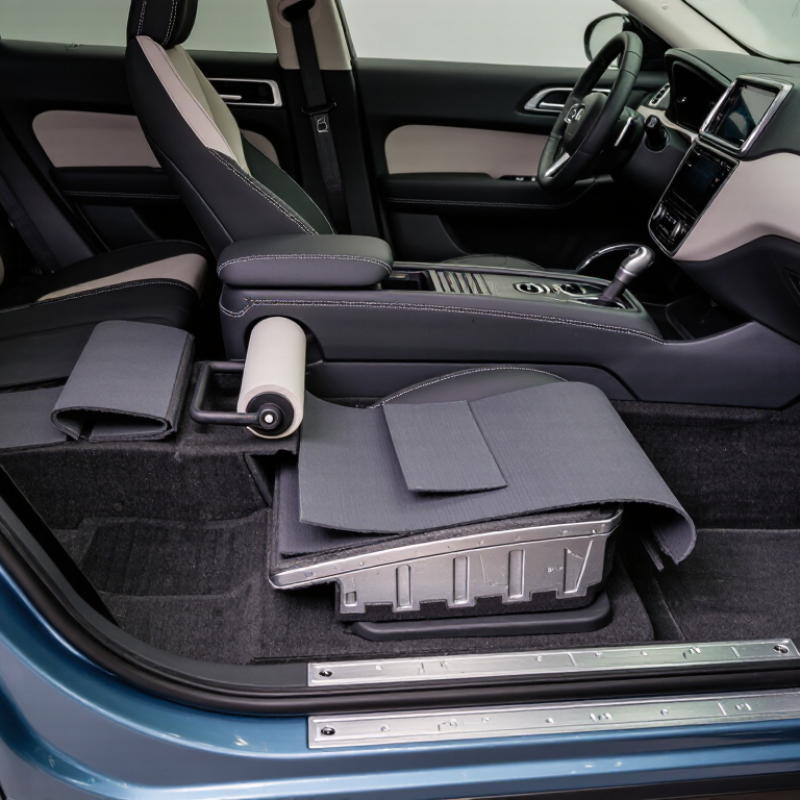
2026 Best Sound Deadening Panels for Cars

What Sound Deadening Panels Do in a Car

Sound-deadening panels reduce the vibration of a car’s metal bodywork. When tires hit rough pavement, thin door skins and floor panels can resonate like a drum. A damping panel bonded to the metal helps dissipate that vibration as heat, so less panel noise reaches the cabin. The change is often most noticeable in doors, the floor, and the trunk. Small details matter.

Panels do not make a car soundproof. They mainly control vibration; road and engine noise can also travel through glass, openings, and structural paths. Porous absorbers can soften reflected sound inside the cabin, while heavier barrier layers are intended to reduce airborne noise. These materials do different jobs. Treating one door alone may leave a clear noise path elsewhere, and added weight is a real trade-off.

For context, the U.S. National Institute for Occupational Safety and Health’s 1998 Criteria for a Recommended Standard: Occupational Noise Exposure recommends limiting workplace exposure to 85 dBA over eight hours. That guidance is not a car-cabin target, but it shows why sound level and exposure time both matter. A phone reading is only a rough check; cabin noise varies with speed, road surface, tires, and measurement position. I would compare the same route and speed before and after installation. The result may be quieter, but not magically silent.

Panel Materials, Thickness, and Key Performance Ratings

2026 Best Sound Deadening Panels for Cars

Panel choice starts with the noise source. Constrained-layer butyl mats, usually about 1.5–2.5 mm thick, reduce vibration in doors, floors, and trunk panels. They work best when bonded firmly to clean metal; coverage matters, but covering every square inch is rarely necessary. Closed-cell foam, often 3–10 mm thick, helps decouple trim and soften some airborne noise. It is not a substitute for a vibration-control layer.

Compare test data, not just thickness. ASTM E756 measures a material’s vibration-damping properties, while ISO 10534-2 provides a method for measuring sound absorption in an impedance tube. These results describe different behaviors, so a high absorption coefficient does not automatically mean better vibration damping. Look for test frequency, temperature, specimen thickness, and mounting details. Without them, a rating is hard to apply to a car door.

Fit is practical, too. A thick panel may foul a window regulator or leave clips short of their holes. Check clearances before installation. I still find thickness easy to overvalue; a well-bonded thinner mat can outperform a poorly fitted, heavier layer. Compare independent lab reports using the same test method and conditions, rather than treating one headline rating as a complete measure of cabin quietness.

2026 Best Sound Deadening Panels for Cars

Typical material thickness ranges and practical performance ratings

How to read this: Bars show representative product thickness ranges, not a universal specification. Butyl constrained-layer damping is typically best for reducing panel vibration; mass-loaded vinyl is designed to block airborne noise; closed-cell foam helps decouple surfaces; and polyester felt can absorb sound in suitable cavities. These are qualitative application ratings, not standardized scores. Results vary with product construction, coverage, installation, and vehicle location.

How to Compare Car Sound Deadening Panels in 2026

Compare panels by the job they need to do, not by thickness alone. A damping sheet bonded to a metal door can reduce panel vibration, especially when the outer skin feels loose. Closed-cell foam serves a different purpose: it can soften some airborne noise and limit small gaps. They are not interchangeable. Check the product’s intended use before comparing price per sheet.

Look for mass per area, thickness, temperature range, and adhesive details. A heavier sheet may add useful damping, but it also adds weight and can be awkward around tight door curves. Ask whether performance figures use a stated test method; numbers without context are hard to compare. Check that the adhesive suits automotive temperatures, from a cold morning to a sun-heated cabin. Small details matter.

Fit the material to the vehicle’s surfaces and your actual noise problem. Road roar through the floor may need a different treatment from a rattling door skin. Measure coverage, then leave drains, wiring, fasteners, and service openings clear. Clean, dry metal helps adhesion; dusty panels can undermine even a well-rated sheet. Installation takes patience. I would also verify the exact thickness before ordering: product photos can make a thin layer look substantial, and that is an easy mistake to make.

2026 Best Sound Deadening Panels for Cars - How to Compare Car Sound Deadening Panels in 2026

Compare panels by what they do: vibration damping reduces resonant panel noise, while barriers and absorbers help manage airborne sound. Typical thickness and weight ranges below vary by construction; they are not standardized performance ratings.

Panel type Typical construction Typical thickness Approx. added mass Main purpose Common installation areas Key advantages Things to consider
Butyl constrained-layer damping sheet Viscoelastic butyl layer, usually bonded to a thin metal or foil facing About 1.5–3 mm About 2.5–5 kg/m² (0.5–1.0 lb/ft²) Reduces vibration and resonance in metal panels Door skins, floor pans, roof panels, trunk and wheel-well sheet metal Thin and conformable; targets panel vibration directly Adds weight; clean, dry, well-prepared metal is important for adhesion. It is not an acoustic barrier by itself.
Closed-cell foam decoupler Lightweight closed-cell polyethylene or similar foam, sometimes with an adhesive backing About 3–12 mm (1/8–1/2 in) Usually under 1 kg/m² (about 0.2 lb/ft²) Separates trim from hard surfaces and helps reduce squeaks and rattles Behind door cards, interior trim, consoles and carpet areas Lightweight, moisture-resistant, and useful where parts touch or rub Does not add much sound-blocking mass; thick foam may interfere with clips, handles or trim fit.
Mass-loaded vinyl barrier Dense flexible vinyl loaded with mineral filler About 2–6 mm (1/16–1/4 in) About 2.5–10 kg/m² (0.5–2.0 lb/ft²), depending on grade Adds mass to help reduce airborne sound transmission Floor and firewall areas, typically beneath carpet and an appropriate decoupling layer Flexible barrier material; useful when airborne road or powertrain noise is the concern Can add substantial weight and thickness; seams and openings need careful treatment, and fitment space is limited.
Barrier-and-foam composite panel A dense barrier layer bonded to a foam decoupler or absorber About 6–25 mm (1/4–1 in) Varies widely; commonly about 2–8 kg/m² (0.4–1.6 lb/ft²) Combines sound blocking with decoupling or absorption Carpeted floors, cargo areas and selected firewall locations Combines multiple functions in one layer and can simplify installation Performance, mass and fit depend on the exact layer construction; check compression and clearance before installation.
Acoustic fiber absorber Porous polyester or other automotive-compatible fiber mat About 10–30 mm (3/8–1 1/4 in) Varies by density and thickness; often lighter than a mass-loaded barrier Absorbs sound within cavities and trim spaces, especially at mid and high frequencies Door cavities, quarter panels, trunk trim and other protected interior spaces Can reduce reflected sound without the mass of a heavy barrier Needs suitable protection from water and contamination; it does not replace vibration damping or a dense sound barrier.

Comparison note: Thickness, density, adhesive, temperature limits and moisture resistance differ between products. Look for documented material specifications and vehicle-fit guidance; do not compare unlike products using thickness alone. No single panel type eliminates all road, wind, engine and vibration noise.

Where to Install Panels for the Greatest Noise Reduction

For the greatest noise reduction, treat the largest vibrating surfaces first. Door skins are a practical starting point: apply damping panels to the broad, flat metal areas behind the trim, while keeping window tracks, drains, and wiring clear. Coverage does not need to be complete. A few well-placed patches can quiet a resonant panel without adding unnecessary weight. Check that the trim still fits before putting everything back.

The floor and front firewall often matter more when tire, road, or engine noise dominates. Work around seat mounts, pedals, and service openings, and use materials suited to heat near the engine compartment. Rear wheel wells and the trunk can help with tire roar; the roof is usually a lower priority unless rain noise is especially noticeable. Short test drives can reveal where sound enters. Listen with the cabin assembled, then adjust one area at a time. I would not cover every surface. That seems thorough, but the extra weight may bring little improvement. Results vary with the vehicle, and installation details matter.

Installation Requirements, Compatibility, and Limitations

Before buying sound-deadening panels, check the vehicle’s service information and measure each target area. Door skins, floors, and wheel arches have different shapes and exposure. Panels must clear window tracks, wiring, drain openings, seat mounts, and factory service points. A few millimeters can matter. Clean, dry, warm surfaces.

Installation usually needs a trim tool, gloves, a sharp knife, and a hand roller. Remove interior trim carefully, then inspect for moisture, rust, or loose factory material. Do not cover drains, ventilation paths, warning labels, or electrical connectors. Follow the panel maker’s temperature and surface-preparation instructions; cold metal or dust can weaken adhesion. Test-fit pieces before removing their backing. For work near airbags or seat-belt hardware, use the vehicle’s repair guidance or seek qualified help.

Compatibility depends on more than panel size. Thick layers may interfere with clips, trim, or moving parts, while lightweight materials may provide less vibration control. Use heat-rated products near warm areas, and avoid blocking drainage inside doors. Panels can reduce rattles and road noise, but they cannot eliminate tire, wind, or engine sound. Coverage also adds weight, and results vary by vehicle. It is tempting to cover every bare surface; that may create fit problems rather than a quieter cabin.