
Please ensure Javascript is enabled for purposes of website accessibility

7 Best Decorative Acoustic Panels for Commercial Spaces

In a busy commercial space, sound shapes how people work, talk, and feel. A restaurant may have clattering plates and hard floors; a meeting room may turn clear speech into a distracting echo. Decorative acoustic panels can soften that noise while adding color, texture, or visual structure. Their value, though, depends on more than appearance.

This guide looks at seven options for offices, hospitality settings, and other shared interiors. It considers practical details such as panel material, shape, mounting method, maintenance, and published acoustic performance. Ratings and test results can vary with installation and room conditions, so a product specification is a starting point—not a promise of the same result everywhere. Small details matter. A fabric finish might suit a quiet reception area, while a durable, wipeable surface may make more sense near a café counter. Ceiling clouds can help where wall space is limited, but they may not fit every layout or budget. There is no universal winner, and that is worth remembering. A beautiful panel can still disappoint if it is undersized, poorly placed, or chosen without considering the room’s existing surfaces. The selections below are intended to help narrow the choices, not replace project-specific advice. Check current manufacturer documentation and installation guidance before making a final decision.
7 Best Decorative Acoustic Panels for Commercial Spaces

What Decorative Acoustic Panels Are and How They Work

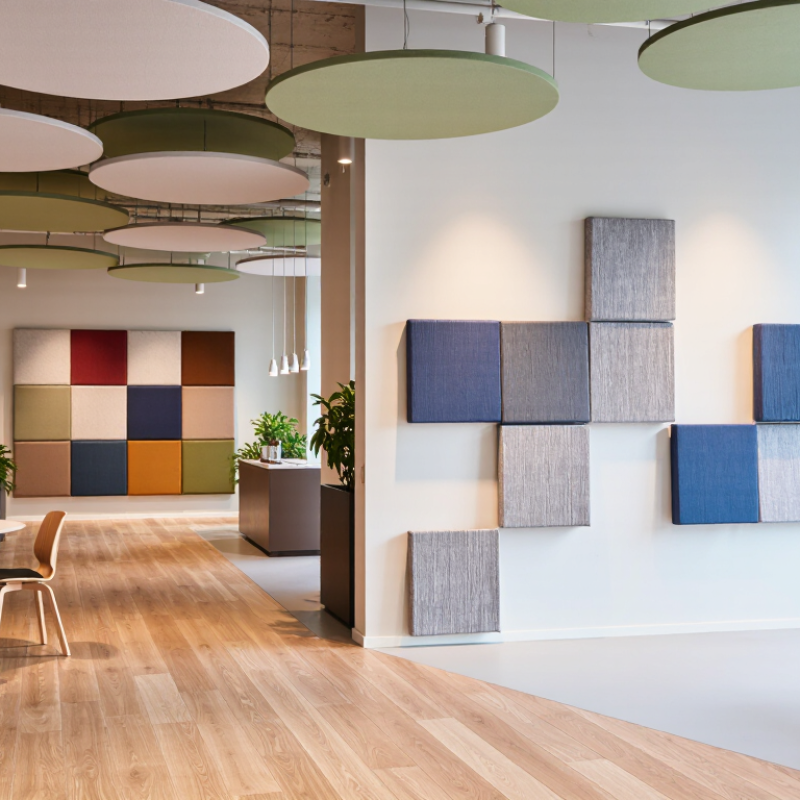
Decorative acoustic panels are sound-absorbing surfaces designed to soften reflected sound while contributing to a room’s visual design. They may use fabric-wrapped cores, perforated finishes, or textured materials. When sound waves reach a panel, some energy enters the material and is converted into a small amount of heat. Less sound returns to the room, which can reduce echo and make conversation easier to follow.

They absorb sound; they do not block it like a soundproof wall. That distinction matters in open offices, restaurants, and lobbies, where noise can still travel around a panel. ASTM C423 provides a standardized reverberation-room test for sound absorption; its results can include a Noise Reduction Coefficient, or NRC, averaged across key speech frequencies. For comparison, ANSI/ASA S12.60 sets a reverberation-time limit of 0.6 seconds for certain core learning spaces. It is a useful benchmark, not a universal commercial-space target. A practical design starts with the room’s surfaces, ceiling height, and noise sources. A panel that looks substantial may absorb less than expected, so check tested performance data before choosing a finish.

Key Factors for Choosing Panels for Commercial Spaces

Commercial acoustic panels should match the room’s actual noise problem, not just its color palette. In a busy reception area, speech often reflects off glass, tile, and exposed ceilings. For open offices, privacy and reduced distraction may matter more. ASTM C423 laboratory reports measure sound absorption; the Noise Reduction Coefficient averages results at 250, 500, 1,000, and 2,000 hertz. Compare tested values, but remember that NRC does not predict every room’s performance.

One number never tells the whole story.

Check fire performance, cleanability, mounting method, and panel durability before ordering. ASTM E84 reports surface-burning characteristics, while local project requirements determine acceptable classifications. Ask suppliers for test documentation, not just product claims. Also check whether panels can be wiped, replaced individually, and safely mounted above desks or circulation routes.

A sample panel can reveal an unexpected color shift under warm lighting. That detail is easy to miss.

Tips

Map noisy zones before selecting coverage. Add panels near reflective ceilings or walls, then assess speech clarity in the finished room. Avoid covering every surface without an acoustic review; excessive absorption can make conversation feel unnaturally dry. If possible, compare samples and arrange an on-site acoustic measurement after installation. Results depend on room shape, furnishings, and occupancy, so a specification should leave room for adjustment.

Seven Decorative Acoustic Panel Types for Commercial Interiors

Commercial interiors need acoustic treatment that works with daily use, not just a quiet showroom. Fabric-wrapped panels soften speech reflections in meeting rooms and reception areas, while PET felt panels offer lightweight shapes and color options for open offices. Perforated wood panels bring a warmer, more architectural finish to corridors or boardrooms. Their performance depends on the backing and air gap, so appearance alone is not a reliable guide.

Ceiling baffles hang vertically above busy work areas, helping control sound without covering the whole ceiling. Acoustic clouds sit horizontally and can define zones over a café table or collaboration space. Sculpted three-dimensional panels add depth to feature walls, though deep shapes may collect dust. Printed acoustic panels can carry wayfinding graphics or subtle patterns, but image quality should be checked at the actual installation size. Small samples help.

Each type suits a different surface, budget, and cleaning routine. A facility manager should review absorption data, mounting details, and maintenance needs before choosing. Panels can reduce echo; they do not fully block noise between rooms. I have seen attractive layouts fall short when too little wall area was treated. That part is easy to miss. When possible, test a sample area during normal occupancy, since an empty room can sound very different from a busy one.

7 Best Decorative Acoustic Panels for Commercial Spaces: Seven Types for Commercial Interiors

Compare common decorative panel types by construction, appearance, acoustic function, and typical commercial use.

Panel Type Typical Construction Decorative Character Acoustic Function Suitable Commercial Spaces
Fabric-Wrapped Absorptive Panels Porous fabric covering over a sound-absorbing core, commonly installed on walls or ceilings. Available in a broad range of colors, textures, shapes, and sizes; can be arranged as feature walls or coordinated layouts. Absorbs sound energy and can help reduce reverberation and conversational noise. Performance depends on core, thickness, and mounting. Offices, meeting rooms, classrooms, reception areas, and hospitality interiors.
PET Felt Panels Panels made from compressed polyester felt, often with recycled-content options depending on the product. Can be cut into geometric shapes, layered patterns, baffles, or dimensional wall features; typically has a soft, matte appearance. Provides sound absorption, particularly when panel thickness, spacing, and placement are selected for the room. Open-plan offices, collaborative areas, schools, libraries, and cafés.
Perforated Wood Panels Wood or wood-based facing with regularly spaced holes or slots, usually backed by an absorptive layer and an air cavity. Offers a natural wood finish with a clean, architectural pattern; perforation layouts can vary in scale and density. The openings allow sound to reach the backing material, where it can be absorbed; the facing alone is not a soundproofing barrier. Conference rooms, executive areas, auditoriums, restaurants, and institutional interiors.
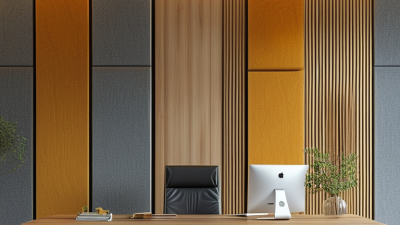
Acoustic Wood-Slat Panels Parallel wood or wood-veneer slats mounted over a dark, porous acoustic backing. Creates linear rhythm and visual warmth; slat spacing and finish influence the overall interior style. Sound passes through the gaps to the backing, which provides absorption. Results vary with the assembly and installation. Reception spaces, offices, restaurants, corridors, and meeting areas.
Printed Acoustic Panels Absorptive panel faces printed with a decorative image, graphic, or custom artwork. Combines wall art or wayfinding graphics with a finished panel surface; designs can be tailored to the interior scheme. Can reduce room reverberation when built on an absorptive core; printing or facing should be compatible with the panel design. Healthcare settings, education spaces, corporate interiors, hotels, and public waiting areas.
3D Sculpted Acoustic Panels Molded or assembled absorptive materials formed into raised, faceted, curved, or relief patterns. Adds depth, shadow, and visual texture to walls or ceilings; panels can be grouped into larger compositions. Absorption comes primarily from the porous material and installed surface area, rather than the decorative shape alone. Reception areas, creative offices, hospitality venues, and customer-facing commercial spaces.
Microperforated Metal Panels Decorative metal sheets with small perforations, typically paired with an absorptive backing or acoustic cavity. Provides a precise, contemporary appearance and can be finished in different colors or patterns. Perforations help sound reach the backing material; acoustic performance depends on the complete panel assembly and mounting. Transport facilities, offices, retail interiors, public buildings, and areas needing a durable-looking finish.

Note: Acoustic performance varies by product, panel thickness, backing, air gap, coverage, and room conditions. Check tested product data for project-specific specifications; decorative acoustic panels generally manage reverberation rather than block sound transmission between rooms.

How to Match Panel Types to Different Commercial Spaces

In open offices, fabric-wrapped acoustic panels can soften speech noise without making the room feel sealed. Place them on walls near meeting tables, where voices bounce between hard surfaces. For ceilings, suspended panels can help in spaces with exposed concrete and tall ceilings. Check the product’s absorption data and fire rating; appearance alone tells you little. A calmer room matters.

Restaurants need a different balance. PET felt panels resist everyday scuffs better than some delicate finishes, while wood-slat panels can add warmth to a dining area. But slats usually need an absorptive layer behind them to reduce echo. In lobbies, decorative baffles can break up sound from high ceilings while keeping the floor plan open. For clinics or busy corridors, prioritize cleanable surfaces and secure installation. I’ve seen attractive panels chosen before anyone checked how they would be wiped down. That is an easy mistake. Match panel coverage to the room’s actual noise, not just its style; a small test area can reveal whether the finish and sound control work together.

7 Decorative Acoustic Panel Types for Commercial Spaces

Bars show representative NRC ranges (0–1) for common panel constructions; higher values indicate greater sound absorption. Actual ratings vary with material, thickness, mounting, and test method. Match panels to room needs and confirm performance from project-specific test data.

Installation, Care, and Performance Considerations

Decorative acoustic panels perform best when their location follows a room survey, not just a color scheme.

The U.S. General Services Administration’s Sound Matters guide gives roughly 45–48 dBA as a reference range for open-plan office background sound, with lower targets for enclosed rooms. Treat these as planning references, not promises. Occupancy, HVAC noise, and room finishes change results.

For installation, request an ASTM C423 laboratory report showing the Noise Reduction Coefficient (NRC) and absorption by frequency. NRC is useful, but it can conceal weak low-frequency performance.

Keep panels clear of doors, sprinklers, and service access, and follow tested spacing and mounting details. Small gaps matter. A site check after installation can reveal hard surfaces or sound paths the drawings missed.

Care is simple, but not effortless. Dust fabric faces with a soft brush or vacuum attachment; use only cleaning methods approved for the panel material. Moisture or harsh cleaners may stain finishes or affect adhesives.

Panels absorb reflected sound; they do not block sound passing through walls.

That distinction is easy to overlook. Recheck the room after furniture changes, since a layout that once sounded calm may become noticeably louder.