Please ensure Javascript is enabled for purposes of website accessibility

China Top Sound Dampening Manufacturers How to Choose?

Choosing among China’s top Sound Dampening manufacturers requires more than comparing factory prices. It requires evidence.

The global acoustic insulation market continues to expand as buildings demand quieter offices, homes, studios, and transport facilities. Grand View Research reports that the global acoustic insulation market was valued at approximately USD 14 billion in 2022. Its forecast also indicates steady growth through 2030. MarketsandMarkets presents a similar outlook for acoustic materials, driven by urban construction, energy efficiency, and stricter indoor-comfort expectations. However, these reports use different product definitions. That detail matters.

Sound is measurable.

Reliable manufacturers should provide laboratory test results, sound transmission class data, noise reduction coefficients, material density, fire-performance information, and installation guidance. A supplier claiming “maximum silence” without test conditions deserves careful questioning. Certification, factory audits, sample testing, and documented quality control are more useful than attractive brochures. Buyers should also inspect production details, such as the thickness of foam panels, the uniformity of mineral wool, and the fit of acoustic door seals.

Julian Treasure, a sound consultant and author, has warned, “We are losing our listening.” His observation applies to manufacturing choices too. Buyers can focus heavily on decibel figures and overlook human experience, room reverberation, and installation errors. That is an imperfect approach. This guide compares China’s Sound Dampening manufacturers through technical capability, material consistency, customization, testing transparency, export experience, and after-sales support. No ranking can replace a physical sample and a project-specific acoustic assessment.

China Top Sound Dampening Manufacturers How to Choose?

What Is Sound Dampening and Why Does Manufacturer Choice Matter?

Sound dampening controls unwanted sound inside a room or structure. It reduces reflections, vibration, and noise transfer through walls, floors, or equipment. Soundproofing blocks sound from entering or leaving a space. They are related, but not identical. Noise is not uniform. A workshop may need vibration control, while an office may need softer echoes. That difference matters. This distinction helps buyers request the right material instead of accepting vague performance claims.

Manufacturer choice matters because material quality, testing, and technical support can vary widely. A capable supplier should explain how its products work in real installations. Ask for test data, acoustic ratings, density details, and temperature limits. Look for measurements from independent or properly controlled laboratories. Materials behave differently after cutting, compression, or repeated use. I have seen excellent panels perform poorly because installers left gaps around outlets and doors. Small gaps ruin results. Reliable manufacturers discuss these installation risks instead of promising perfect silence.

Price alone should not decide the purchase. During evaluation, compare test methods, product thickness, fire performance, durability, and environmental conditions. Request samples and inspect their flexibility, surface finish, and edge stability. A sample can mislead when the final assembly uses different framing or fasteners. Installation guidance matters. The supplier should provide clear handling instructions and realistic performance expectations. Be careful with absolute claims, especially when room shape and background noise remain unknown. Ask how the product performs after aging, moisture exposure, and repeated installation changes.

China Top Sound Dampening Manufacturers How to Choose? - What Is Sound Dampening and Why Does Manufacturer Choice Matter?

Evaluation Dimension What It Measures Relevant Technical Evidence Recommended Buyer Check Priority
Sound-Dampening Mechanism Whether the product absorbs airborne sound, reduces structure-borne vibration, or blocks sound transmission. Porous absorbers mainly reduce reflected sound; viscoelastic damping materials reduce panel vibration; barriers increase transmission loss through mass and airtight construction. Confirm that the proposed material addresses the actual noise path instead of relying on a general “soundproof” claim. High
Acoustic Test Data The quality and relevance of laboratory performance measurements. Common indicators include sound absorption coefficient, noise reduction coefficient, sound transmission loss, and insertion loss. Results depend on frequency, thickness, mounting, and test method. Request complete test reports showing sample construction, frequency range, test standard, laboratory details, and test date. High
Frequency Performance How effectively the solution performs across low, middle, and high frequencies. Porous materials generally perform better as thickness and air gap increase; low-frequency control often requires greater depth, mass, resilient mounting, or tuned systems. Match the material to measured or estimated noise frequencies rather than selecting only by a single average rating. High
Material Type The physical composition and intended acoustic function. Typical options include mineral wool, glass wool, polyester fiber, melamine foam, polyurethane foam, rubber, mass-loaded vinyl, and composite panels. Compare acoustic performance, density, thickness, durability, fire behavior, moisture resistance, and installation requirements together. High
Fire Performance Resistance to ignition, flame spread, smoke generation, and combustion behavior. Fire classifications vary by country and test method. Acoustic performance does not automatically indicate fire safety. Obtain certificates applicable to the destination market and verify that the tested product construction matches the supplied product. High
Environmental Resistance Ability to maintain performance under humidity, temperature variation, dust, and chemical exposure. Fibrous and foam materials can require protective facings or sealed constructions in damp, dusty, or industrial environments. Specify operating temperature, relative humidity, UV exposure, cleaning method, and any chemical contact before final selection. High
Dimensional Stability Resistance to shrinkage, warping, sagging, or loss of shape during service. Stable thickness and density help preserve predictable acoustic behavior, especially in wall, ceiling, enclosure, and equipment applications. Ask for dimensional tolerances, aging data, packaging conditions, and installation instructions. Medium
Customization Capability Ability to provide required dimensions, densities, facings, colors, adhesives, cut-outs, and assemblies. Custom geometry can improve fit and reduce acoustic leakage around seams, service openings, and equipment interfaces. Review engineering drawings, prototype procedures, sample approval steps, and change-control processes. High
Manufacturing Quality Control Consistency between batches and conformity with approved specifications. Useful controls include incoming-material inspection, density and thickness checks, appearance inspection, process records, and final sampling. Request a quality plan, inspection records, nonconformance procedure, and traceability information for production lots. High
Standards and Compliance Conformity with the technical and regulatory requirements of the project location. Acoustic, fire, chemical, and environmental requirements may be governed by different standards and authorities. Define applicable Chinese, international, or destination-market standards in the purchase specification and contract. High
Installation and Airtightness Ease of installation and the risk of performance loss caused by gaps or incorrect assembly. Small gaps, rigid bridges, untreated penetrations, and poor edge sealing can significantly reduce the effectiveness of an acoustic system. Evaluate installation manuals, joint details, fasteners, sealants, access requirements, and installer training. High
Supply Reliability Capacity to deliver consistent quantities within the required schedule. Lead time can be affected by raw-material availability, production capacity, quality approval, packaging, and export documentation. Confirm monthly capacity, standard lead time, safety stock options, packaging specifications, and contingency arrangements. Medium
Total Delivered Cost The full cost of achieving the required acoustic result. Purchase price alone excludes tooling, testing, packaging, freight, duties, installation, maintenance, and replacement costs. Compare qualified solutions by cost per installed area or completed system, not only by material price per unit. High
Technical Support and After-Sales Service Support provided during design, sampling, installation, testing, and corrective action. Acoustic results depend on system design and installation details, so responsive engineering support can reduce project risk. Assess response time, drawing review capability, sample support, site assistance, warranty terms, and claim handling. Medium

Note: Acoustic performance must be evaluated for the complete assembly and intended installation. Laboratory ratings are not directly interchangeable when test methods, mounting conditions, thicknesses, or frequency ranges differ.

Which Materials and Products Do China’s Sound Dampening Manufacturers Offer?

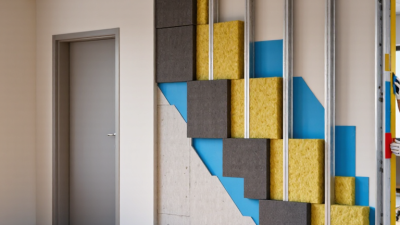
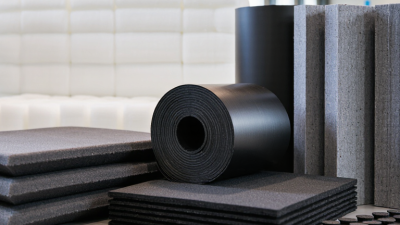
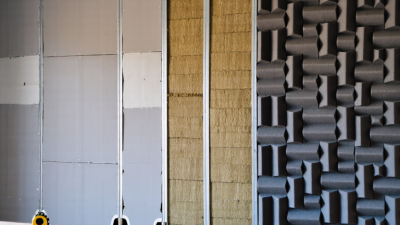
China’s sound dampening manufacturers offer materials for absorbing, blocking, and isolating unwanted noise. Common products include PET acoustic panels, polyester baffles, fiberglass boards, mineral wool panels, acoustic foam, and perforated wood systems. Each material performs differently. PET panels reduce reflected speech noise. Dense mineral wool improves absorption inside wall or ceiling assemblies. Mass-loaded vinyl adds weight and helps block airborne sound. Some factories also produce acoustic doors, noise barriers, curtains, ventilation silencers, and machine enclosures.

Practical selection requires more than checking thickness or appearance. Ask for laboratory data, including noise reduction coefficient, sound transmission class, fire rating, density, and moisture resistance. Confirm whether testing covered the complete assembly, not only one sample. Manufacturing experience matters when custom sizes, edge details, colors, or mounting systems are needed. Request production samples before placing a large order. A neat sample can still hide weak backing or poor adhesive.

Tips: Match the product to the noise source. Use absorbers for echoes, barriers for sound transfer, and isolation pads for vibration. Check installation drawings carefully. I have seen attractive panels perform poorly because gaps were left around doors and corners. Price is useful, but it should not replace verified specifications, stable quality control, and clear after-sales support. Some suppliers communicate confidently, yet their technical documents remain incomplete. That deserves a second review.

How to Evaluate Chinese Manufacturers for Quality, Capacity, and Compliance

China Top Sound Dampening Manufacturers: How to Choose?

Evaluating a Chinese sound dampening manufacturer requires more than comparing quotations. Request material samples from different production batches, not only one polished sample. Check thickness, density, surface finish, and edge bonding by hand. Ask for acoustic test reports showing frequency ranges, testing methods, and laboratory details. A low noise reduction rating at one frequency can mislead buyers. Review the raw material source and quality inspection records. Small details matter.

Capacity should match your project schedule and volume. Ask how many production lines are active, and inspect warehouse organization through a live video call or site visit. Confirm monthly output, minimum order quantity, packaging methods, and peak-season lead times. Request a pilot order before signing a large contract. Inspect random cartons from that shipment. They should show consistent dimensions and labeling. Capacity claims can sound impressive. Production evidence is stronger.

Compliance needs written proof. Verify fire performance, chemical restrictions, worker safety procedures, and export documentation for your destination market. Independent laboratory testing is more dependable than an internal statement. Check whether batch numbers connect to inspection records. Use a clear contract covering tolerances, rejected goods, corrective action, and payment stages. One weakness remains: factory audits can miss problems between visits. Keep periodic sampling and independent testing in your purchasing plan. A good supplier should accept reasonable scrutiny, even when it slows the deal.

What Questions Should You Ask Before Selecting a Sound Dampening Supplier?

China Top Sound Dampening Manufacturers: How to Choose?

Before selecting a sound dampening supplier, ask for measured results, not attractive promises. Which standard supports the data? ISO 354 measures sound absorption in reverberation rooms, while ASTM C423 reports absorption coefficients and NRC values. These figures are not interchangeable. Request the full laboratory report, test date, sample thickness, mounting method, and frequency range. Missing details should raise concern.

Ask how the material performs in your actual space. Will it reduce speech echo, equipment noise, or vibration transfer? What happens after humidity, heat, cleaning, and repeated compression? NIOSH identifies 85 dBA over eight hours as a recommended exposure limit, while OSHA permits 90 dBA under its permissible exposure limit. These figures show why workplace measurements matter. A supplier should explain where its product fits, rather than promise silence.

Request production records, batch consistency data, fire-performance documentation, and installation guidance. Can the factory provide a sample from current production? Can an independent laboratory verify it? The World Health Organization links excessive environmental noise with sleep disturbance and cardiovascular risks, so acoustic decisions deserve technical care. Cheap panels may look similar, but density and mounting can change results sharply. No supplier is perfect. I would still question vague certificates, unusually broad claims, and reports without raw data. A small pilot installation can expose problems before a full purchase.

How to Compare Quotes, Samples, Lead Times, and After-Sales Support

Choosing a sound dampening manufacturer requires more than comparing the lowest quote.

The European Environment Agency reported that over 113 million people face harmful road traffic noise above 55 dB Lden. Demand is real. So is the risk of buying weak materials.

Compare quotes line by line. Check thickness, density, fire rating, acoustic test method, packaging, tooling, and delivery terms. A low price may exclude testing or installation guidance.

Ask for laboratory reports under ISO 354 or ASTM C423, not only marketing figures.

Grand View Research’s 2024 acoustic insulation report forecasts steady market growth through 2030, but growing demand does not guarantee consistent quality. Sometimes, the cheapest quotation hides the largest rework cost.

Request samples from the same production batch. Test them in a representative wall, ceiling, or equipment enclosure. A small office sample can mislead.

Measure thickness after shipping, surface defects, odor, and fit. Confirm lead times in writing, including sample approval and peak-season delays.

After-sales support should include a named engineer, replacement procedures, installation drawings, and response targets.

Ask for two customer references with similar project conditions. I would still keep a backup supplier; forecasts can change, and even a good factory may miss one shipment.

Reliability is proven through records, not promises.