2026 Top Soundproof Foam Types for Global Buyers?
Global buyers entering the 2026 acoustic materials market need more than attractive product photos. They need clear performance evidence. Soundproof Foam is often selected for studios, offices, factories, podcast rooms, and home theaters. Yet foam does not block every noise source.
It mainly absorbs reflected sound inside a room. It can reduce echo, harshness, and speech buildup. It usually cannot stop heavy machinery, traffic vibration, or low-frequency bass passing through walls. That difference matters during international purchasing.
Acoustics researcher Dr. Peter D’Antonio describes the discipline as “both an art and a science.” His observation fits foam selection well. A wedge panel, pyramid panel, egg-crate sheet, and melamine foam each perform differently. Thickness, density, open-cell structure, fire rating, and installation method affect the result.
Small details matter.
A 50-millimeter panel may soften vocal reflections. It may not solve a 63-hertz equipment hum. Buyers should request test data, absorption coefficients, production consistency, and installation guidance. They should also check packaging quality. Crushed corners can reduce confidence before installation begins.
This guide compares leading Soundproof Foam types for global buyers in 2026. It considers acoustic use, room conditions, durability, safety documentation, and value. The ranking is not absolute. A low-cost panel may suit a voice booth, while a higher-density product may better support an industrial space.
Some expectations need correction. Foam is useful, but it is not magic. Better decisions come from matching the material to the actual noise problem.
What Is Soundproof Foam and How Does It Work?
Soundproof foam is often misunderstood. It does not truly block sound through walls. Instead, open-cell material converts part of sound energy into tiny amounts of heat. This reduces reflections, echo, and speech harshness inside a room.
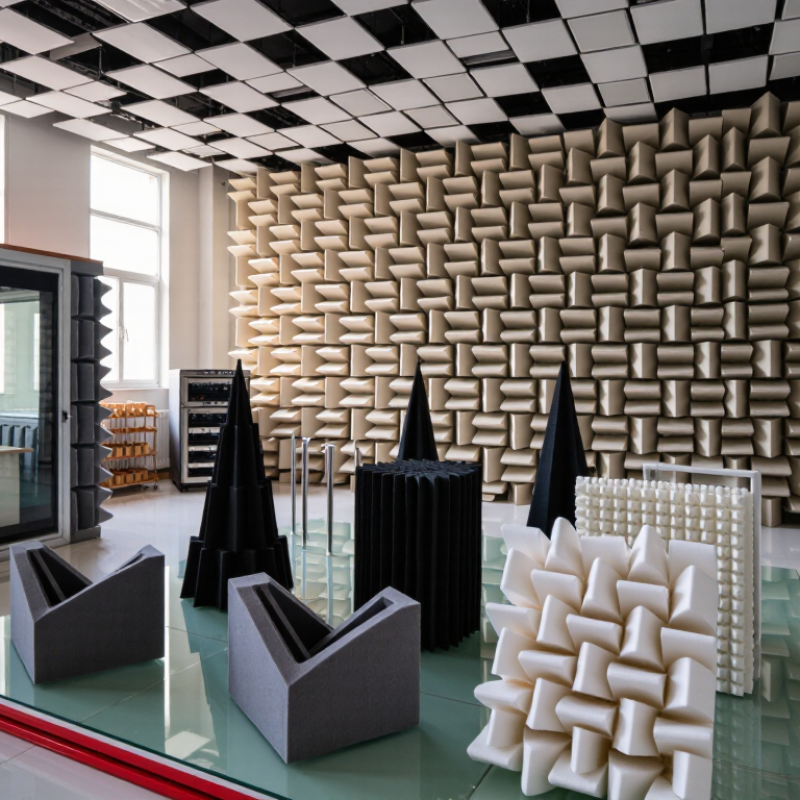
Common types include polyurethane foam, melamine foam, and flexible polyester acoustic foam. Wedge and pyramid surfaces increase exposed area, while thicker panels usually absorb lower frequencies better. A 50-millimeter panel can improve mid and high-frequency clarity, but bass still travels through walls and floors. An air gap behind the panel may improve performance. Small details matter.
The ASTM C423 test reports sound absorption through the Noise Reduction Coefficient, or NRC. An NRC of 0.80 indicates strong average absorption across selected test frequencies, not an 80% reduction in room noise. Buyers should request laboratory results, thickness data, fire-performance documentation, and installation guidance. The World Health Organization’s Environmental Noise Guidelines recommend less than 40 dB Lnight outside bedrooms, showing why room treatment alone cannot solve every noise problem. It manages reflections, not traffic, machinery, or neighboring apartments.
In practical projects, I have seen thin foam placed on every wall while doors remained hollow and leaky. The result sounded cleaner, but not quieter. That distinction is easy to miss. Foam selection should follow the noise source, frequency range, room size, and local safety requirements. Even professional specifications can be incomplete without full test conditions.
Which Soundproof Foam Types Will Lead the 2026 Global Market?
Which Soundproof Foam Types Will Lead the 2026 Global Market?
In 2026, acoustic polyurethane foam will remain popular for studios, offices, and equipment rooms. Its open-cell structure absorbs mid and high frequencies effectively. Wedge, pyramid, and egg-crate profiles will serve buyers seeking flexible installation and controlled reverberation. However, foam does not fully block sound transmission. That distinction matters.
Melamine foam may gain stronger global demand in transport, public buildings, and industrial interiors. It is lightweight, heat-resistant, and suitable where stricter fire performance is required. Polyester acoustic panels will also compete strongly, especially in schools and commercial spaces. They offer color options, easier shaping, and fewer fiber-shedding concerns. Yet, they are not always classified as foam by every supplier.
My purchasing evaluations focus on measurable performance, not appearance alone. Buyers should request absorption coefficients, test methods, density, thickness, and fire-rating documents. A 50-millimeter panel may absorb speech frequencies, while low-frequency machinery still passes through. Thicker foam, air gaps, or layered construction can improve results. Not always.
Humidity is another practical concern. Poorly selected foam can deform, discolor, or lose surface quality in tropical warehouses. Low-VOC materials may become more important as building rules tighten across regions. I have seen attractive samples fail because adhesives softened during installation. That trade-off remains. Global leaders will likely be the foam types combining verified safety, stable supply, simple fitting, and honest acoustic data.
How Do Material, Shape, and Density Affect Foam Performance?
Material, shape, and density determine how acoustic foam behaves in a real room. Polyurethane foam is lightweight and commonly used for speech studios, offices, and media rooms. Melamine foam offers lower weight and better resistance to heat in some applications. However, material alone does not guarantee effective absorption. Buyers should review independent test data, including absorption coefficients across different frequencies.
Shape changes how much surface area meets the air. Wedges and pyramids scatter reflections while increasing the working surface. Flat panels look cleaner but may absorb less high-frequency energy at the same thickness. Thicker foam usually performs better with lower frequencies, although it cannot replace bass traps in a large recording space. Small cavities behind panels can improve performance further.
Density requires careful judgment. Very soft foam may absorb higher frequencies quickly, but it can feel fragile during shipping and installation. Denser foam often lasts longer, yet excessive density can reduce airflow through the cells. That can weaken absorption. There is no universal best figure.
In practical installations, wall coverage matters as much as product selection. A few attractive panels may reduce flutter echo but leave speech uneven. I have seen buyers focus on appearance and overlook room dimensions, furniture, and ceiling height. That choice can produce disappointing results. Global buyers should also check fire ratings, humidity resistance, packaging quality, and local building requirements before ordering. Test reports help, but installation conditions still decide much of the final performance.
How Should Global Buyers Match Foam Types to Applications?
For global buyers, matching foam to the application matters more than choosing the thickest panel. Open-cell polyurethane foam suits offices, voice booths, and recording rooms because it absorbs speech and high-frequency reflections. Its wedge or pyramid surface increases exposed area. However, it does not block sound through walls.
For machinery rooms, closed-cell foam often performs better as a gasket, seal, or vibration-control layer. It resists moisture and compression more effectively. It is not a complete acoustic absorber. Polyester fiber panels offer a practical option for classrooms, transport interiors, and public spaces. They are lightweight, easy to cut, and often available in several densities. Melamine foam can provide strong absorption with low weight, but buyers should verify fire performance for each shipment and market.
Low-frequency noise needs more thoughtful treatment. Thick porous foam, corner bass traps, or an air gap behind the panel can improve performance. Thin foam on a hard wall may change the room’s echo without reducing engine noise. I have seen installations look impressive but perform poorly because the wrong frequency range was measured. Check independent test data, including absorption coefficients, thickness, density, and test standards. A stated NRC value is useful, but it does not describe every room or installation. Consider humidity, cleaning methods, UV exposure, and local fire requirements before approving samples. Small details matter. Test the actual assembly, not only the foam sheet.
2026 Top Soundproof Foam Types for Global Buyers
Match foam type to the application by comparing typical Noise Reduction Coefficient (NRC) performance.
Higher NRC indicates stronger sound absorption, while closed-cell foam is mainly used for sealing,
impact control, and vibration-related applications rather than room absorption.
Melamine foam is commonly selected for studios, industrial enclosures, and transport interiors where high absorption and low weight are important.
Polyester fiber foam suits offices, vehicles, and public spaces requiring durable, fiber-based acoustic treatment.
Open-cell polyurethane foam is practical for equipment rooms and general wall or ceiling treatment.
Closed-cell polyethylene foam is better suited to gaskets, pipe insulation, impact reduction, and sealing gaps.
Values shown are representative typical NRC levels; actual performance depends on thickness, mounting method, frequency, and installation conditions.