

Please ensure Javascript is enabled for purposes of website accessibility

What Is Fusion Bonded Epoxy Pipe?

Fusion Bonded Epoxy Pipe uses a heat-cured epoxy coating to help protect steel pipe from corrosion. Fine epoxy powder is applied to a heated, prepared surface, then melts and cures into a continuous layer. The finished coating is often thin and smooth. It is not invulnerable.

The details matter. Surface cleanliness, application temperature, coating thickness, and handling can all affect performance. Standards such as ISO 21809-2 address external coatings for pipeline transportation systems, while AWWA C213 covers fusion-bonded epoxy coatings for steel water pipe. These references help engineers specify and inspect coatings; they do not guarantee identical results in every installation. Soil chemistry, moisture, temperature, and mechanical damage still matter.

The scale of the problem is substantial. NACE International’s 2016 IMPACT study estimated global corrosion costs at US$2.5 trillion annually, or about 3.4% of global GDP. That figure covers corrosion broadly, not FBE-coated pipe alone. Still, it shows why protective systems deserve careful evaluation. Corrosion engineer Pierre R. Roberge’s technical work supports a practical takeaway: coating reliability depends on preparation, application, and service conditions together. This is a paraphrase, not a direct quotation.

A small holiday, or coating defect, can expose bare steel. That detail is easy to overlook. A useful introduction to Fusion Bonded Epoxy Pipe should therefore explain both how the coating is made and where its limits begin. Specification, inspection, and field handling deserve equal attention.
What Is Fusion Bonded Epoxy Pipe?

Definition of Fusion-Bonded Epoxy (FBE) Pipe and Its Protective Function

Fusion-bonded epoxy (FBE) pipe is steel pipe protected by a cured epoxy coating. During manufacture, finely powdered epoxy is applied to a prepared, heated pipe surface. The heat melts the powder, and curing forms a tightly bonded layer. The coating may be applied to the pipe’s exterior, interior, or both, depending on its intended service.

This layer helps protect steel from corrosion by separating it from water, oxygen, and corrosive substances in the surrounding soil or fluid. Its strong adhesion also helps resist coating movement during handling and installation. That bond matters. On a buried pipeline, for example, a sound coating can reduce direct contact between steel and damp soil. It can also help limit corrosion-related maintenance needs over time.

It is not magic. Impact, abrasion, poor surface preparation, or uneven application can leave weak spots. A small damaged edge may expose steel, even when the rest of the pipe looks intact. For that reason, coating thickness, curing, and surface condition need careful checks. Inspectors may look for visible flaws and use suitable testing to find discontinuities. FBE provides a protective barrier, but its performance depends on sound application and careful handling.

How Heat-Cured FBE Forms a Typical 300–500 μm Coating on Steel Pipe

What Is Fusion Bonded Epoxy Pipe?

How Heat-Cured FBE Forms a Typical 300–500 μm Coating on Steel Pipe

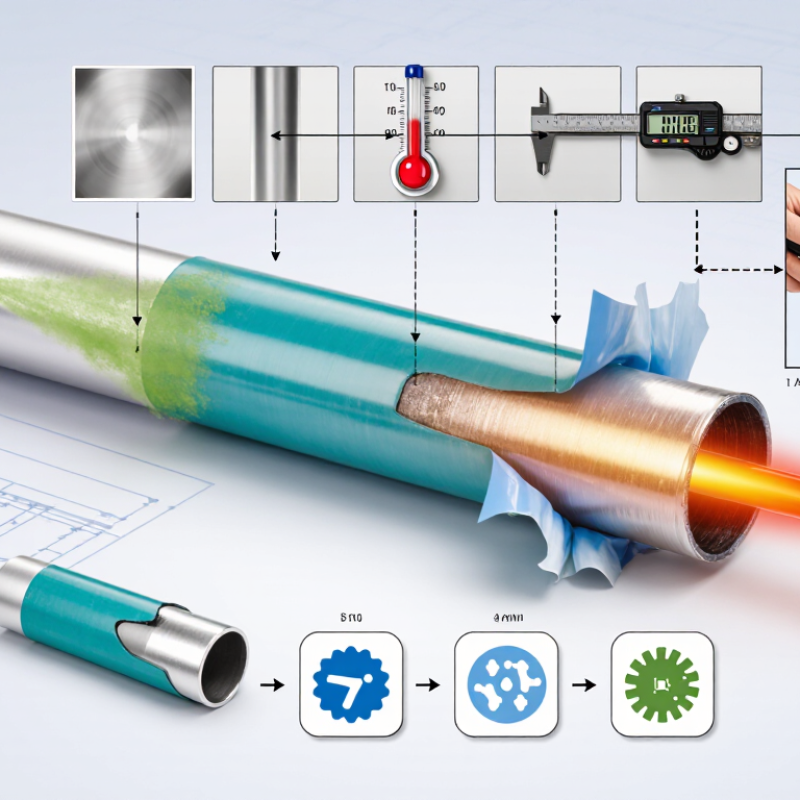
Fusion-bonded epoxy (FBE) is a dry powder coating applied to prepared steel pipe in a controlled plant environment. The pipe is heated, then charged epoxy powder is sprayed onto its surface. Heat melts the particles and starts curing; the resin cross-links into a continuous protective layer. The result is tough, but only when preparation and curing are well controlled.

A 300–500 μm thickness is common in project specifications, not a universal requirement. AMPP SP0394-2013 covers application and quality control for plant-applied FBE, while ISO 21809-2:2014 sets qualification, inspection, and testing requirements for pipeline coatings. Neither should be read as a single thickness rule for every service condition. Inspectors check dry-film thickness, continuity, and adhesion; a neat-looking surface can still hide a thin spot. That detail is easy to underestimate.

Tips: Check the project specification before accepting a thickness reading. Confirm the gauge is calibrated, and test several points around the pipe, not just the top. A small holiday or poorly prepared patch can matter more than a perfectly even average. The uncomfortable truth: thickness alone cannot prove coating quality.

What Is Fusion Bonded Epoxy Pipe? - How Heat-Cured FBE Forms a Typical 300–500 μm Coating on Steel Pipe

Aspect Typical information Why it matters
What FBE is Fusion bonded epoxy (FBE) is a thermosetting powder coating applied to prepared steel and cured using heat. The cured epoxy layer helps protect steel from corrosion and provides a durable coating surface.
Typical coating thickness About 300–500 μm (0.30–0.50 mm) for many single-layer pipeline FBE applications; the specified thickness depends on the project and coating system. Thickness is selected to meet the required service, handling, and inspection requirements.
Steel surface preparation The pipe is typically abrasive-blasted to a near-white-metal cleanliness level, commonly described as Sa 2½ or SSPC-SP 10/NACE No. 2, subject to the project specification. Removing rust, mill scale, and contaminants helps the coating bond consistently to the steel.
Surface profile A controlled abrasive-blast profile is required. The acceptable profile range is set by the coating system and applicable specification. An appropriate profile supports mechanical adhesion; an unsuitable profile can impair coating performance.
Preheating After blasting, the pipe is heated to the temperature required by the selected powder and application procedure. The set point is not universal. The hot steel melts the powder on contact and supports the flow and cure needed to form a continuous film.
Powder application FBE powder is commonly delivered to the heated pipe by an electrostatic spray system, where particles melt and spread over the surface. Uniform application helps achieve the specified thickness and avoid thin or uncovered areas.
Heat curing The coating cures through a chemical reaction initiated by heat. Required time and temperature depend on the powder formulation, pipe temperature, and process specification. Proper curing forms the thermoset coating film; under-curing or overheating can affect coating properties.
Inspection and testing Quality checks commonly include visual inspection, dry-film thickness measurement, and holiday (discontinuity) detection, with acceptance criteria defined by the applicable specification. Testing helps identify coating defects that may expose the steel to the environment.
Common use FBE is widely used as an external corrosion-protection coating on buried or submerged steel pipelines; it can also be used in other specified steel-pipe applications. The coating system should be selected for the pipe’s service conditions, installation method, and applicable project requirements.
Important qualification Thickness, preparation, application, cure, and acceptance values vary by coating type, pipe dimensions, service conditions, and governing specification. Use the project specification and coating manufacturer’s qualified application procedure for exact requirements.

FBE Pipe Coating Standards: ISO 21809-2 and AWWA C213

Fusion-bonded epoxy (FBE) pipe is steel pipe protected by a thermoset powder coating. The pipe is heated, and electrostatically charged epoxy powder melts onto prepared steel before curing into a continuous film. That film helps resist corrosion, but performance depends on careful preparation, application, and inspection.

Two standards address different service contexts. ISO 21809-2 specifies requirements for plant-applied external FBE coatings on buried or submerged pipeline systems used in petroleum and natural gas service. AWWA C213 covers FBE coatings and linings for steel water pipe and fittings, including interior and exterior surfaces. They are not interchangeable checklists. Their scopes, qualification steps, test methods, and acceptance criteria reflect different pipeline needs. Confirm the applicable edition and project requirements before specifying a coating.

On a coating line, practical checks include steel cleanliness, surface profile, preheat temperature, coating thickness, cure, and holiday detection. A tiny missed patch near a weld can matter more than a smooth-looking finish. Inspectors should record readings and verify the specified repair method, rather than relying on appearance alone. Field joints and handling damage also need clear treatment in project specifications. Standards set a baseline; they cannot resolve every exposure condition or construction detail. That gap deserves attention.

How FBE Coatings Are Tested for Adhesion, Thickness, and Holiday Defects

Fusion bonded epoxy (FBE) protects steel pipe with a cured coating bonded to its surface. A clean appearance alone cannot confirm sound protection. Inspectors assess adhesion, thickness, and holiday defects: small gaps or pinholes that expose the steel. Testing should follow the project specification, using calibrated equipment and recorded results. Small details matter.

For adhesion, a pull-off test measures the force needed to separate a test piece from the coating. The test can damage the coating, so use an approved location or sample and repair the area afterward. For thickness, a calibrated magnetic gauge measures the coating over the steel substrate. Take readings at several points around the pipe and along its length; one spot may not represent the whole surface.

Holiday testing uses a detector suited to the coating thickness and test procedure. A wet-sponge method may suit thinner coatings, while thicker layers may require a high-voltage detector. Keep the probe moving steadily and mark any alarm for inspection and repair. No test is flawless: a rushed pass can miss a pinhole, and poor calibration can create false confidence. Record the method, readings, and repaired locations.

FBE Pipe Applications in Water, Oil, Gas, and Corrosive Environments

Fusion-bonded epoxy (FBE) is a protective coating applied to steel pipe. Heat allows the epoxy powder to melt and bond to the prepared surface. The resulting layer helps limit contact between steel, moisture, and corrosive substances. Its performance depends on surface preparation, coating thickness, and careful handling. Small defects matter.

In water systems, FBE-coated pipe can help protect buried mains from damp soil and reduce corrosion risks. For drinking-water service, the lining or coating must meet the project’s applicable requirements for contact with potable water. Oil and gas pipelines often use FBE externally to protect steel in buried or demanding environments. Internal coatings may also be specified when fluid conditions and operating needs justify them. The choice is not automatic.

Corrosive environments call for closer evaluation. Engineers consider the fluid’s chemistry, temperature, pressure, soil conditions, and likely exposure time before selecting a coating system. FBE can provide durable protection, but it is not a cure-all. Scratches during transport, poor weld-area repairs, or incompatible field-joint coatings can leave vulnerable spots. That detail is easy to underestimate. Inspecting the coating before installation, then repairing damage with compatible materials, helps preserve protection across the pipeline.