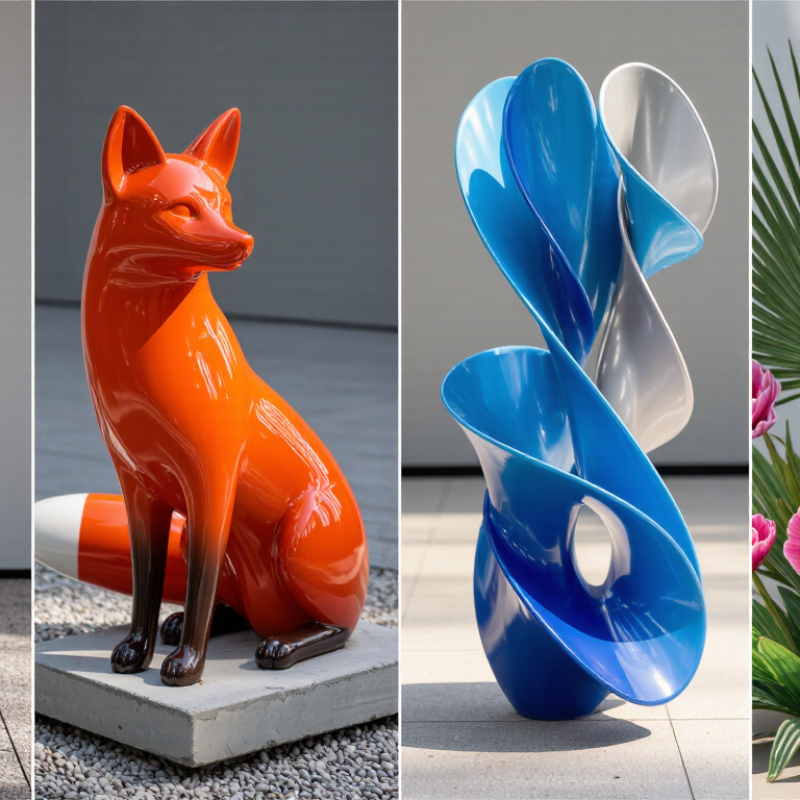
Fiberglass Sculpture spans a wide visual range: lifelike figures, oversized animals, abstract forms, botanical replicas, and shallow reliefs. Each type uses a glass-fiber-reinforced polymer shell, but its shape, finish, and structural needs differ. A glossy orange fox outside a visitor center has different demands from a pale, finely detailed figure displayed indoors. Scale matters. So does setting.
Industry context helps explain the material’s appeal, though market figures do not measure sculpture demand directly. Grand View Research estimated the global fiberglass market at about US$12.4 billion in 2023 and projected continued growth through 2030. That broad market includes many applications, not just art. Still, it reflects an established supply chain for glass fiber and resin. A sculpture’s actual performance depends on its design, fabrication, coatings, and care. Fiberglass is not maintenance-free.
This guide compares the main types by form, use, finish, and practical considerations. It also asks an important question: which details are artistic choices, and which are material constraints? No source text or verifiable expert quotation was provided, so I cannot responsibly attribute a quotation to a named Fiberglass Sculpture specialist. That gap matters. A polished introduction should not turn an invented line into expert evidence.
Fiberglass Sculpture Basics: E-Glass Fiber Density Is About 2.55 g/cm³
Fiberglass sculpture commonly appears as a hollow shell, a solid cast form, or a layered hand-built piece. Each method affects weight, detail, and repair needs. For outdoor figures, hollow shells can reduce mass while keeping broad shapes stiff. Small facial details may need extra laminate or local reinforcement.
A useful baseline is E-glass fiber density: about 2.55 g/cm³. Composite Materials Handbook-17 (CMH-17), Volume 2, gives a typical value near 2.54 g/cm³ for E-glass fiber. The small difference reflects rounding and material variation. Crucially, this is fiber density, not finished sculpture density. Resin, air gaps, coatings, and wall thickness all change the part’s actual mass. A 2.55 g/cm³ fiber does not make a sculpture that dense. That distinction is easy to miss in early estimates.
Tips: Treat density as a material baseline, then weigh a cured test panel. Record its area, thickness, and resin use. Small test coupons are less glamorous, but they can reveal a costly assumption before a full-size figure is laid up.
Solid-Cast Fiberglass Sculptures: Detailed Forms for Smaller Works
Solid-cast fiberglass sculptures suit smaller works where crisp details matter. Reinforcing fibers are embedded in resin, producing a continuous form that can capture fine ridges, folds, and facial features from a detailed mold. The method is useful for tabletop figures, small animals, and decorative reliefs. It is not automatically the best choice: a solid piece can be heavier than a hollow shell, and thick sections may conceal bubbles or uneven curing. Ask the fabricator how the sculpture is cast, finished, and supported. These details affect durability as much as the surface appearance.
Grand View Research estimated the global fiberglass market at USD 56.56 billion in 2022, with projected annual growth of 4.3% from 2023 to 2030 (Fiberglass Market Size, Share & Trends Analysis Report, 2023). This broad market figure is not specific to sculpture, but it reflects fiberglass’s established role across manufactured products. For a small artwork, careful mold design still matters more than market scale. Thin ears, fingers, or projecting edges can chip if the design lacks adequate reinforcement.
Tips: Request a close-up sample of the intended finish. Check small recesses for pinholes, and confirm how the piece will be anchored. Gloss can reveal flaws that matte coatings hide. Look closely.
A practical review should consider both appearance and handling. A solid casting may feel reassuringly substantial, yet that weight can complicate mounting. Discuss dimensions, placement, and cleaning before production. Even experienced makers can miss a tiny surface defect on a complex form, so inspect the finished piece under angled light.
Solid-Cast Fiberglass Sculptures: Example Small-Work Sizes
Solid casting can capture detailed forms in compact sculptures. The heights shown are illustrative design examples, not industry-standard size categories or market measurements.
Hollow-Molded Fiberglass Sculptures: Lightweight Shells for Large Displays
Hollow-molded fiberglass sculptures are shaped shells, not solid blocks. A mold defines the surface, while layers of fiberglass and resin create the structure. After curing, fabricators remove the piece, trim its edges, and refine visible seams. The finished sculpture is much lighter than a comparable solid form. That matters. A large bird, mascot, or abstract shape may be easier to move through a doorway and position on-site. Still, lightness does not mean weakness. Internal ribs, bonded supports, and reinforced mounting points help manage wind, lifting, and everyday contact.
For a lobby display, the hollow interior can conceal a frame or provide access to installation hardware. Outdoor pieces need extra planning: qualified fabricators or structural professionals should review the base, anchors, and site conditions. Water trapped inside can cause trouble, so drainage paths and sealed openings deserve attention. Finishes also affect maintenance. A smooth gelcoat surface is easy to wipe, but scratches may expose fibers and require prompt repair. Color matching can be imperfect. Ask for a finish sample, section details, and clear lifting instructions before approving a large piece. From a distance, the shell may look seamless; up close, its joints and supports tell a more complicated story.
Laminated FRP Sculptures: Layered Glass Reinforcement in Thermoset Resin
Laminated FRP sculptures are built by placing glass-fiber reinforcement into a mold and saturating it with thermoset resin. Each cured layer adds structure. The fibers carry much of the load, while the resin binds them and helps preserve the intended shape. Curved forms, thin fins, and hollow bodies are common applications because the material can capture detailed contours without a solid, heavy core.
Layer direction matters. A craftsperson may lay glass mat or woven fabric around a mold, adding extra reinforcement near narrow necks, projecting arms, or mounting points. Resin must wet the fibers thoroughly, but excess resin can add weight without improving strength. Small air pockets are another concern. They may weaken a section or show as blemishes beneath the finish. The surface can be sanded and coated, though a flawless sheen takes careful preparation.
There are trade-offs. Laminated FRP can be lighter than many solid materials, yet it is not immune to impact, sun exposure, or poor support. Thickness alone does not tell the whole story. Fiber placement and workmanship matter too. A hidden joint can be the weak point. Repairs may also leave a visible difference in color or texture, which is easy to underestimate when planning a sculpture for an outdoor setting.
Outdoor and Monumental Fiberglass Sculptures: UV Exposure and Wind-Load Design
Outdoor and monumental fiberglass sculptures face two persistent stresses: ultraviolet light and wind. Sunlight is relentless. UV radiation can gradually break down the resin surface, causing fading, chalking, or fine cracks. A UV-resistant coating and well-dispersed pigments help slow this process, but neither makes a sculpture maintenance-free. Inspect exposed edges and joints, where water can enter and damage may appear first.
Wind design starts with the sculpture’s height, shape, and exposed area. A broad, flat figure catches more wind than a narrow form, while gusts can create twisting forces at its base. The internal frame, attachment points, and foundation should be designed as one system, with site-specific wind conditions reviewed by a qualified structural professional. Hidden anchors matter. They need protection from moisture and enough access for inspection.
Material choices affect long-term performance, too. Dark surfaces may absorb more heat, and large pieces can expand slightly under temperature changes. Allowing for movement helps reduce stress around joints and fasteners. A design can look robust in the studio yet behave differently on an open, windy site; that possibility deserves honest review before installation. Keep a record of coating repairs and check the surface after severe weather. Even careful planning cannot predict every exposure.