

Who Are the Top Home Connectors Manufacturers in China?
Home Connectors are easy to overlook until a loose terminal interrupts a kitchen renovation or a warm connector raises concerns inside a wall box. For buyers, the details matter: contact material, wire range, retention strength, temperature performance, and consistent production. Small parts. Big consequences.
Grand View Research estimated the global electrical connector market at approximately USD 84.1 billion in 2023, with projected growth of 5.6% annually from 2024 to 2030. This figure covers electrical connectors broadly; it is not a standalone estimate for residential Home Connectors. Still, it signals a large, evolving supply chain. The report’s market context helps frame why Chinese manufacturers attract attention, but scale alone cannot confirm product quality. A polished catalog is not enough.
Connector-market analyst Ron Bishop, founder of Bishop & Associates, has emphasized in his market commentary that connector demand is closely linked to electronics production. That perspective is useful here: manufacturers must deliver repeatable performance, not just competitive prices. This guide examines leading Chinese Home Connectors manufacturers through practical factors, including product range, documented testing, manufacturing capabilities, and responsiveness to custom requirements. Look closely at the evidence. Public specifications can be incomplete, and supplier claims deserve verification. The comparison is a starting point, not a substitute for checking samples, technical documents, and production consistency.
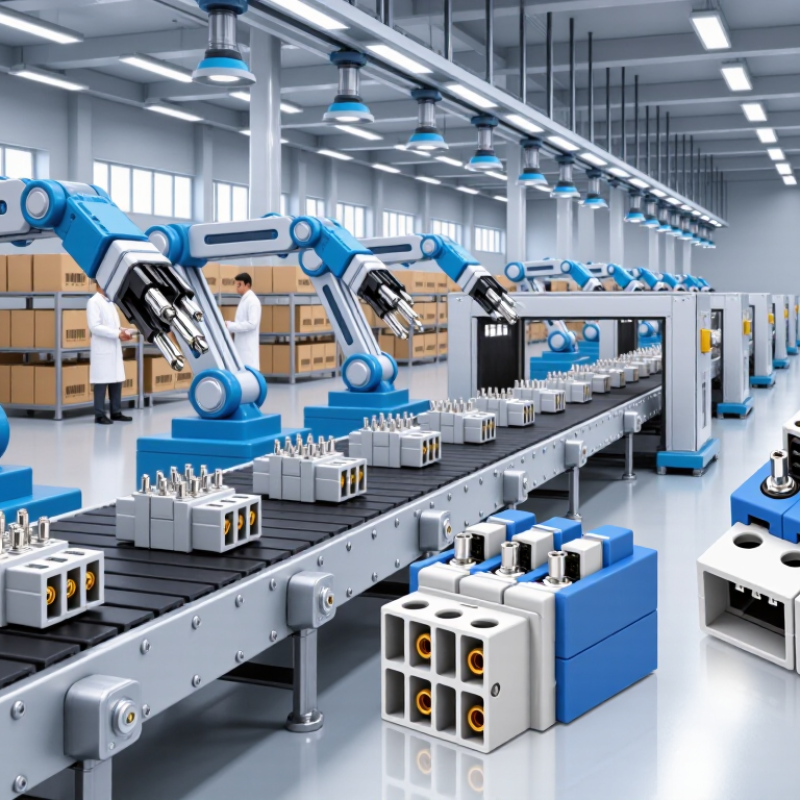
What Home Connectors Are and How They Are Used
Home connectors are components that join wires or connect a cable to a device in a house. They help carry power to outlets, light fixtures, switches, and appliances. Common types include screw terminals, push-in wire connectors, and plug-and-socket connections. Each design suits particular conductors and installation conditions. Small parts, important job.
A connector creates a stable electrical contact while helping keep wires from pulling loose. Inside a wall box, for example, a connector may join two copper conductors behind a switch. At a ceiling light, terminals connect the fixture leads to the building wiring. Some connectors allow quick release for maintenance; others are intended for a fixed connection. The exact use depends on the product’s rated voltage, current, wire size, and environment.
Fit matters. A connector must match the conductor material, size, and number of wires. Using an unsuitable type can cause a loose joint, excess heat, or intermittent power. Check the product markings and installation instructions, and have a qualified electrician handle work beyond your experience. The term “home connector” can be broad, so product descriptions may not always make the intended use obvious. That part deserves a closer look.
Who Are the Top Home Connectors Manufacturers in China? - What Home Connectors Are and How They Are Used
Home connectors are components that join electrical conductors, cables, or devices. The table below compares common connector categories and the manufacturing capabilities buyers may evaluate when sourcing from China. It does not rank or identify individual companies or brands.
| Connector Category | What It Connects | Common Home Uses | Typical Materials or Construction | Relevant Standards or Checks | Manufacturing Capabilities to Evaluate |
|---|---|---|---|---|---|
| Wire connectors and terminal blocks | Electrical wires joined to other wires or to equipment terminals. | Lighting circuits, junction boxes, control panels, and household appliances. | Conductive metal contacts in an insulating body; connection methods include screw, spring, or push-in designs. | Confirm applicable national electrical rules and product ratings. Check conductor size range, rated voltage and current, temperature rating, and suitability for the installation environment. | Metal stamping or machining, insulating-part molding, secure termination assembly, dimensional inspection, and electrical continuity testing. |
| Appliance couplers and power inlets | A power cord to an appliance or other electrical equipment. | Removable power connections for certain appliances and electronic equipment. | Molded insulating housings with metal contacts; configurations vary by appliance and market. | IEC 60320 covers appliance couplers. Verify the exact connector type, temperature class, ratings, and destination-market approvals for the intended application. | Contact forming, housing molding, assembly control, fit and retention checks, and tests for electrical and thermal performance. |
| Coaxial connectors | Coaxial cable to televisions, antennas, or signal equipment. | Television antenna and cable-signal connections in homes. | Center conductor, dielectric insulator, surrounding shield, and an outer connector body. | Check connector interface, cable compatibility, impedance, shielding, and signal-frequency requirements for the system. | Precision turning or forming, plating control, cable-termination consistency, dimensional inspection, and signal-performance testing. |
| Data and network connectors | Network cables to routers, switches, wall outlets, and connected devices. | Residential Ethernet wiring and home networking. | Insulated modular connector bodies with metal contacts; the installed link also depends on cable and termination quality. | Check the required connector interface and the applicable cabling category and installation requirements. Validate the complete link, not only the connector component. | Contact stamping and plating, precision molding, pin-position inspection, termination-process control, and connectivity testing. |
| USB connectors and receptacles | Charging or data cables to compatible devices and power supplies. | Phones, tablets, accessories, and other household electronics. | Metal contacts in an insulating housing; connector type and supported functions depend on the product design. | Confirm the specified USB connector type, power capability, data requirements, and applicable USB specifications for the product. | Fine-contact stamping, plating, tight-tolerance molding, insertion and retention checks, and power or data-function testing. |
| EV charging connectors | An electric-vehicle charging cable or charging station to an electric vehicle. | Residential electric-vehicle charging installations. | Insulated connector housing with power and signal contacts; designs vary by region and charging system. | IEC 62196 covers plugs, socket-outlets, vehicle connectors, and vehicle inlets for conductive charging. Verify the regional interface and charging-system requirements. | High-current contact manufacture, robust housing assembly, temperature-rise and mechanical checks, and validation of sealing and electrical safety where applicable. |