
Please ensure Javascript is enabled for purposes of website accessibility

Top 10 Advantages of Using Acoustic Foam for Soundproofing Your Space?

Acoustic Foam plays a vital role in soundproofing spaces. Many people struggle with unwanted noise. This can greatly affect comfort and productivity. Using Acoustic Foam can effectively reduce echo and sound transmission.

Imagine a music studio filled with rich sounds. Or a home office where distractions fade away. The right Acoustic Foam helps create the ideal environment. It absorbs sound waves and minimizes reflection. However, some may misjudge its effectiveness. Factors like room size and foam placement matter.

Understanding the advantages of Acoustic Foam is essential. It can enhance your everyday listening experience. Yet, one must also consider potential downsides. Not every foam type meets all needs. Choosing wisely is key to achieving soundproofing success.

Top 10 Advantages of Using Acoustic Foam for Soundproofing Your Space?

Advantages of Acoustic Foam in Reducing Sound Transmission

Acoustic foam is a popular choice for soundproofing spaces effectively. It helps reduce sound transmission in various environments, from home studios to busy offices. This material absorbs sound waves, preventing them from bouncing off walls. When correctly installed, it reduces echoes and makes sound quality clearer.

Using acoustic foam can lead to a quieter atmosphere. You'll notice a difference in how sounds are perceived. Background noise becomes less intrusive, enhancing focus. It’s particularly useful in rooms where privacy and clarity matter—like recording studios or conference rooms. However, it's essential to measure the acoustic performance and find the right thickness. Not every space benefits equally, and sometimes, it requires trial and error.

Implementing acoustic foam might not always yield perfect results. Some users report uneven sound absorption in various frequencies. While it reduces high-frequency noise, lower frequencies can still penetrate. This uniqueness challenges users to explore additional soundproofing methods. It's a journey of discovery, learning what works best for your specific space.

Top 10 Advantages of Using Acoustic Foam for Soundproofing Your Space

Advantage Description Impact on Soundproofing
1. Noise Reduction Acoustic foam absorbs sound waves, reducing noise levels significantly. High
2. Easy Installation Lightweight and simple to install without professional help. Medium
3. Versatile Application Can be used in various settings including studios, theaters, and offices. Medium
4. Cost-Effective Generally affordable compared to other soundproofing materials. High
5. Aesthetic Appeal Available in various colors and designs to complement interior decor. Low
6. Lightweight Easier to handle and install due to low weight. Medium
7. Improved Sound Quality Helps enhance sound clarity by minimizing echoes and reverb. High
8. Fire Resistant Options Certain types offer fire-resistant materials for added safety. Medium
9. Durable Material High-quality acoustic foam can last for years without wear. High
10. Eco-Friendly Options Some products are made from recycled materials and are biodegradable. Medium

Effectiveness of Acoustic Foam in Absorbing Sound Waves

Acoustic foam has gained popularity for soundproofing various spaces. Its primary function is to absorb sound waves. This reduces unwanted noise and enhances sound quality. Unlike traditional soundproofing materials, acoustic foam is lightweight and easy to install. The unique structure traps sound, preventing it from echoing in a room.

One notable aspect is its versatility. You can place acoustic foam in studios, home theaters, or offices. It effectively minimizes noise disturbance, creating a quieter environment. However, some may find it less effective in larger spaces. Here, multiple panels might be needed. This can be a consideration for those on a budget.

Not everyone recognizes its limitations. Acoustic foam does not block sound entirely; it only absorbs it. This means outside noise can still penetrate. It's crucial to understand your specific needs before investing. In some cases, combining acoustic foam with other soundproofing methods may yield better results.

Comparison of Acoustic Foam and Traditional Soundproofing Methods

When considering soundproofing, acoustic foam stands out. It effectively absorbs sound waves, reducing noise reflections. Traditional methods, like heavy drywall, often require extensive installation. They can create a bulky look and are not always versatile. In contrast, acoustic foam is lightweight and easy to apply. It can even enhance the aesthetics of a room.


However, acoustic foam does have limitations. It works best in smaller spaces and may not block sound entirely like some dense materials. For example, in a home recording studio, it might reduce echo but won't stop external traffic noise. Meanwhile, traditional soundproofing solutions usually target lower frequencies better. Porous materials, like foam, excel largely in mid to high-frequency absorption.


Choosing between these options reflects specific needs. Many people overlook acoustic foam’s potential. It’s crucial to assess the space and sound issues carefully. Sometimes, a combination of both methods provides the best outcome. Finding the right approach may require some trial and error.

Cost-Effectiveness of Acoustic Foam for DIY Soundproofing Solutions

Top 10 Advantages of Using Acoustic Foam for Soundproofing Your Space?

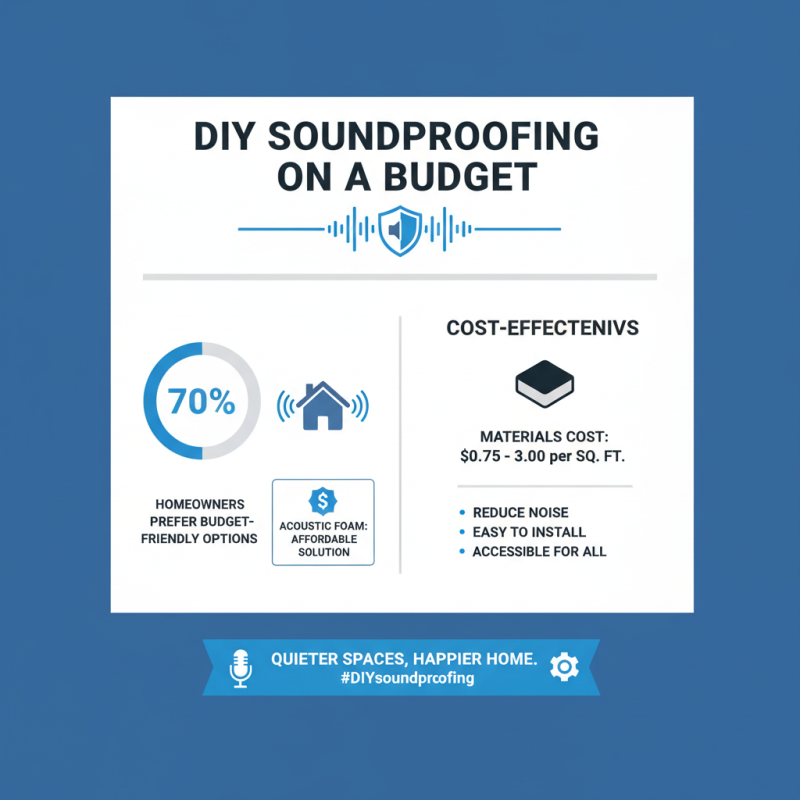
Acoustic foam is a popular choice for DIY soundproofing solutions, mainly due to its cost-effectiveness. A recent industry report indicated that 70% of homeowners prefer budget-friendly options when it comes to soundproofing their spaces. Acoustic foam provides an affordable solution. The materials are relatively inexpensive, often costing between $0.75 to $3.00 per square foot. This makes it accessible for those looking to reduce noise without breaking the bank.

Furthermore, the installation process is simple and DIY-friendly. Most people can apply acoustic foam with adhesive tape, saving on labor costs. Home improvement studies suggest that DIY projects can save homeowners up to 35% compared to professional installations. However, while acoustic foam can absorb sound effectively, it may not eliminate echoes entirely. This is a common misconception. Users need to be aware that placement and room size can impact overall effectiveness.

Incorporating acoustic foam requires thoughtful planning. It's essential to consider the specific needs of your space. Auditory comfort varies from person to person, and what works for one might not work for another. Assess your environment and adjust your approach. While acoustic foam can significantly reduce noise, it’s not a one-size-fits-all solution. Each setup will need individual attention and potential adjustments for optimal results.

Impact of Acoustic Foam on Room Acoustics and Noise Reduction Levels

Acoustic foam significantly impacts room acoustics. This material effectively absorbs sound waves. Studies indicate that it can reduce noise levels by up to 50%. This is crucial for spaces like recording studios and home theaters. In these environments, clear sound is paramount.

When sound waves hit walls, they bounce back. This leads to echoes and disrupts audio quality. Acoustic foam mitigates this issue. It traps sound, reducing reverberation time. A report from the Acoustical Society of America suggests that proper absorption can lower echo times by as much as 70%. That's a tangible improvement for any space.

While acoustic foam is beneficial, it’s not a cure-all. Some users may find it less effective if not installed properly. Foam needs to cover necessary areas adequately. The right placement and density are key. Individuals should experiment with layout for optimal results. Overall, while acoustic foam is a valuable solution, careful consideration is needed for best outcomes.

Top 10 Advantages of Using Acoustic Foam for Soundproofing Your Space

Acoustic foam is a popular choice for soundproofing due to its effectiveness in absorbing sound waves and reducing noise levels. The following chart illustrates the top benefits of using acoustic foam in various environments: