

Please ensure Javascript is enabled for purposes of website accessibility

What Are the Top 10 Rapid Injection Molding Companies?

Rapid Injection Molding has changed how product teams move from a digital model to functional plastic parts. Designs that once required lengthy tooling schedules can now reach testing, certification, and customer feedback much sooner. That speed, however, does not guarantee quality. Mold design, resin selection, part geometry, cooling performance, and process control still determine the final result.

John Bozzelli, a respected scientific-molding educator and founder of Scientific Molding, expresses this discipline through a practical principle: “You cannot control what you do not measure.” His point remains highly relevant. A capable Rapid Injection Molding company should provide more than a fast quotation. It should demonstrate engineering experience, clear material guidance, reliable dimensional inspection, and realistic production advice. Small details matter. A thin rib may warp. A poorly placed gate may leave visible flow marks. An aggressive schedule may expose weaknesses that a slower supplier would catch.

This guide examines ten leading Rapid Injection Molding companies through those practical standards. It considers tooling capabilities, prototype speed, manufacturing scale, quality systems, communication, and support after delivery. Some providers excel at complex industrial components. Others are stronger in low-volume prototypes, medical development, or on-demand digital manufacturing. No supplier is perfect. Even experienced teams can underestimate design changes, shipping constraints, or the cost of late-stage revisions.

That uncertainty deserves attention. The strongest companies are not simply the fastest. They explain trade-offs, document assumptions, and help customers avoid expensive surprises. The following selection aims to offer a balanced starting point for engineers, product managers, and buyers comparing rapid molding partners.
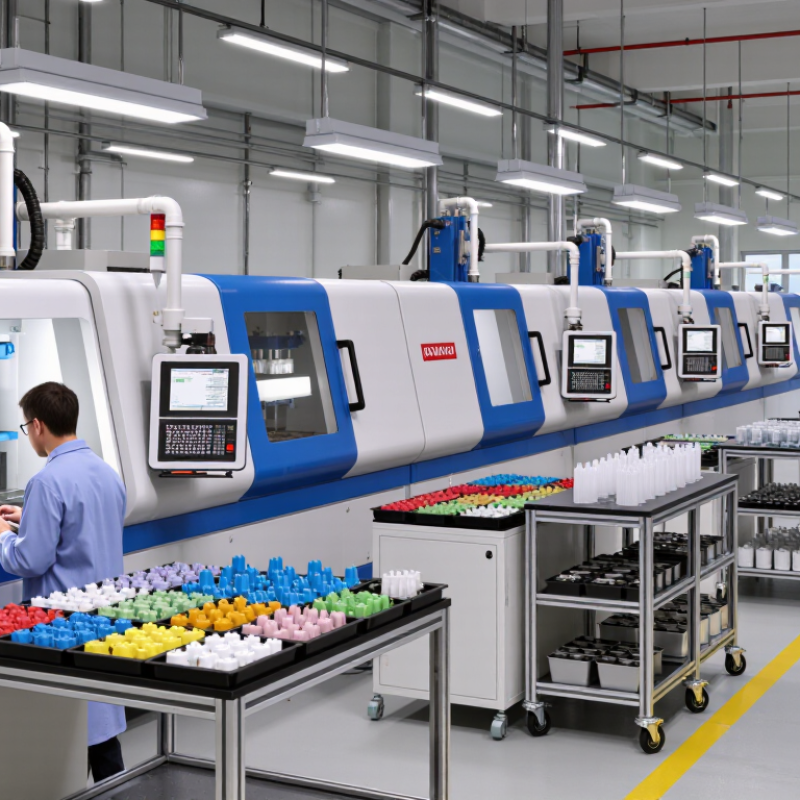
What Are the Top 10 Rapid Injection Molding Companies?

Definition and Scope of Rapid Injection Molding

Rapid injection molding is a manufacturing method for producing plastic parts quickly, often within days or a few weeks. It uses temporary or simplified molds, commonly made from aluminum or soft steel. This approach supports prototypes, pilot runs, and limited production before expensive steel tooling is approved.

The scope includes design review, mold construction, material selection, injection, inspection, and delivery. Engineers usually check wall thickness, draft angles, shrinkage, parting lines, and ejection points before machining begins. A practical supplier should explain expected cycle time, dimensional tolerance, surface finish, and revision costs. Small batches may range from dozens to several thousand parts, depending on geometry and material.

Speed is not the only measure when comparing the top 10 rapid injection molding companies. Process control matters. A reliable provider records resin grades, mold temperatures, pressure settings, and inspection results. It should also provide sample parts for functional testing. The boundary is not perfectly fixed. Some projects called “rapid” still require conventional tooling and longer validation. That difference can affect budgets and schedules. I would question any promise made without reviewing the part model, annual volume, and tolerance requirements. A fast quote is useful, but a clear manufacturing plan is more valuable.

Criteria for Evaluating Rapid Injection Molding Companies

What Are the Top 10 Rapid Injection Molding Companies?

Criteria for Evaluating Rapid Injection Molding Companies

A strong supplier is not defined by speed alone. Grand View Research estimated the global injection molding market at USD 262.2 billion in 2023. Its forecast also indicates steady growth through 2030. This expansion increases supplier choice, but it can complicate comparisons. Evaluate documented lead times, tooling capacity, and engineering support. Ask whether quoted delivery includes design review, mold trials, and inspection.

Quality evidence matters more than polished claims. Request ISO 9001 certification, material certificates, dimensional inspection reports, and traceability records. For automotive work, IATF 16949 may show deeper process control. Review first-pass yield, defect rates, corrective-action response, and sample approval procedures. A supplier should explain tolerance limits with actual measurement data. The Plastics Industry Association highlights process consistency and workforce capability as important manufacturing concerns. Still, published industry data often uses different definitions. Direct verification remains necessary.

Tips: Compare three written quotations. Check tool steel, cavity count, resin grade, and revision rules. Confirm who owns the mold. Request a small pilot run before larger production. A low price still tempts me, but it may hide weak inspection or unclear tooling terms. I would also test communication during quoting; slow answers often predict slower escalation. Perfect supplier rankings are unrealistic. The best choice depends on product risk, volume, geometry, and required evidence.

Profiles of the Top 10 Rapid Injection Molding Companies

Profiles of the Top 10 Rapid Injection Molding Companies

The leading ten providers differ more by capability than by marketing claims. One specializes in instant online quoting. Another focuses on aluminum tooling for short production runs. Others excel in medical-grade validation, automotive prototypes, insert molding, overmolding, micro parts, recycled resins, regional production, or complex engineering polymers. These profiles show why “rapid” does not mean identical. Tool design, mold-flow review, and inspection still control the final result.

Grand View Research reported that the global injection molding market exceeded USD 260 billion in 2023. The figure signals strong demand, but it does not guarantee fast delivery. The Wohlers Report 2024 valued the global additive manufacturing industry at USD 20.035 billion in 2023. That growth supports faster bridge tooling and prototype development. However, printed tooling can wear quickly. My practical view is cautious: speed matters, but repeatability matters more. A supplier should prove both with inspection records and sample parts.

Tips: Compare quoted lead time with actual tool-completion dates. Ask for steel or aluminum specifications, dimensional reports, resin traceability, and revision control. Check whether the provider supports design-for-manufacturing feedback before cutting metal. A low quote may hide limited mold life, extra finishing, or weak quality support. That is easy to miss. For the most reliable choice, review recent case evidence, tolerance capability, communication habits, and corrective-action records—not only online ratings.

Rapid Injection Molding Industry Benchmarks

This chart presents typical published benchmark midpoints for key stages of rapid injection molding projects. The figures are industry-level reference values rather than company-specific results.

Unit: business days. Actual timing varies according to part complexity, material, mold design, tooling method, and order volume.

Comparison of Services, Technologies, Quality, and Lead Times

The top 10 rapid injection molding companies should be compared by measurable performance, not advertising language. Strong providers offer design-for-manufacturing reviews, material guidance, mold-flow analysis, and clear engineering communication. Some also support bridge tooling, multi-cavity molds, insert molding, and overmolding. These services help teams move from a CAD file to stable production with fewer surprises.

Technology directly affects lead time and quality. CNC machining often suits durable aluminum tools, while advanced printing can support early prototype molds. Automated inspection, resin traceability, and documented process controls improve consistency across batches.

Ask whether each supplier provides dimensional reports, first-article samples, and corrective-action records. A practical lead-time comparison should separate design review, tool fabrication, sampling, and production. Ten business days may sound impressive, but unclear approval stages can create delays.

Fast is not always better.

Quality also depends on communication. Experienced engineers should identify thin walls, sink marks, warping risks, and difficult draft angles before tooling begins. Service coverage matters too, especially for finishing, assembly, packaging, and regional delivery. I would not rank every provider from lead time alone. That approach is too narrow. A company promising five-day samples may deliver inconsistent parts, while a slower supplier may provide better documentation and repeatability. My own evaluation would include a small pilot order, direct technical questions, and a review of actual inspection data. Forecasts can be wrong. Real samples are more convincing.

How to Choose the Right Rapid Injection Molding Partner

Choosing the right rapid injection molding partner starts with engineering fit, not a polished website. Ask whether the team can review wall thickness, draft angles, ribs, and gate locations before quoting. A useful partner explains tradeoffs in plain language. They should also provide a realistic timeline for design review, tooling, sampling, and delivery. “Fast” means little if the first parts arrive with warpage or short shots. Request sample inspection reports, material certificates, and dimensional data from comparable work. Confidentiality controls matter too, especially when your design is still changing.

Cost deserves careful analysis. Compare the complete project cost, including mold revisions, secondary operations, packaging, freight, and expedited changes. Confirm which tolerances are achievable in the selected resin. Ask how the supplier handles engineering changes after tool release. Clear ownership prevents expensive confusion. Communication is another test. Can one technical contact answer quickly? Do they flag risks before production? Some suppliers promise ten-day delivery, but the schedule may exclude weekends, approvals, or rework. Read the assumptions. Then challenge them.

Tips: Create a short scorecard covering tooling lead time, quality evidence, resin availability, communication, and after-sales support. Ask for a small pilot run before committing to volume. Check how inspection results are recorded and corrected. Do not choose on price alone. I would also leave room for doubt: early samples can look excellent while long-term process control remains unproven. A second technical review may feel slow, yet it can expose a costly blind spot.