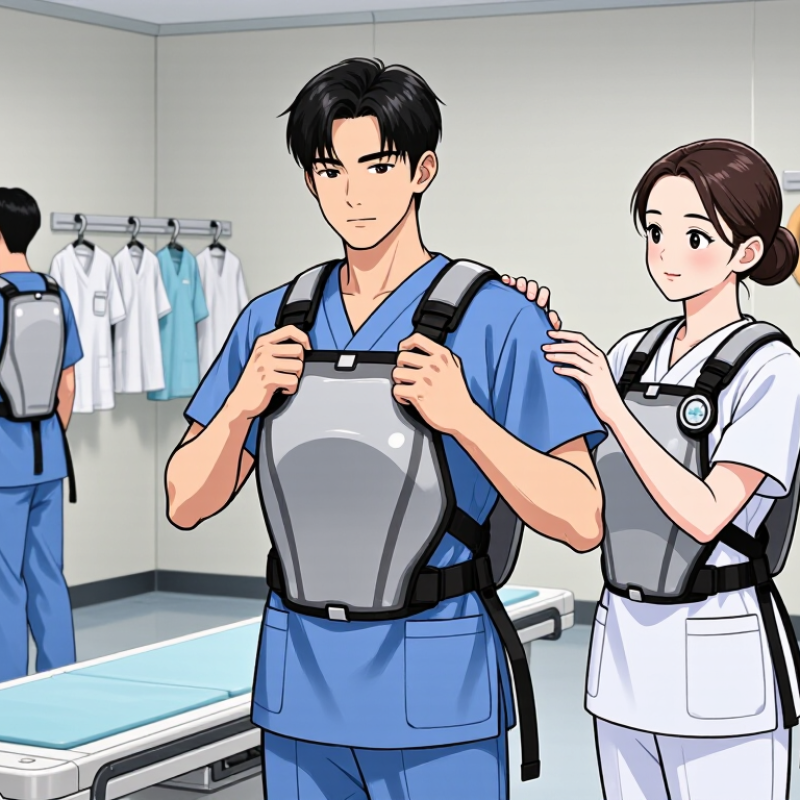
Choosing the right lead apron is a practical safety decision, not a simple purchasing task. During fluoroscopy and other X-ray procedures, scattered radiation can reach the torso, shoulders, and reproductive organs. The International Commission on Radiological Protection highlights interventional procedures as an area requiring careful occupational protection and continuous exposure management.
The scale of medical exposure also explains why equipment choices deserve attention. NCRP Report No. 160 estimated that medical imaging represented about 48% of the total effective dose received by the U.S. population in 2006. That figure does not mean every worker faces the same risk. Procedure type, distance, workload, positioning, and personal monitoring all change the exposure picture.
Fit matters.
A lead apron that feels heavy may be left open, folded, or poorly positioned. An oversized design can create gaps near the collar or waist. An undersized design may restrict movement during a demanding procedure. ICRP guidance supports combining shielding with time reduction, increased distance, optimized technique, and exposure monitoring. No apron works alone.
This guide examines seven practical considerations, including protection level, material, weight, coverage, fit, care, and inspection. It also questions a common assumption: thicker always means safer. That is not necessarily true. A poorly fitted apron may offer less useful coverage than a lighter, well-designed model. Even experienced teams can choose convenience over consistency. Reliable selection depends on documented specifications, workplace assessment, manufacturer testing, and honest feedback from the people who wear the apron every day.
Define the Purpose and Radiation Protection Requirements
Defining the purpose comes before choosing a lead apron. A fluoroscopy room creates repeated scatter exposure, while dental imaging usually involves shorter procedures. The apron must protect the torso from scattered radiation, not replace a structural barrier. Direct exposure to the primary beam requires strict positioning and appropriate equipment.
The National Council on Radiation Protection and Measurements reported an average U.S. radiation dose of 6.2 mSv per person annually. Medical imaging contributed about 3.0 mSv, according to NCRP Report No. 160. Occupational protection still follows the ALARA principle: keep exposure as low as reasonably achievable. ICRP Publication 103 recommends limiting occupational exposure to 20 mSv per year, averaged over five years. These figures do not determine one universal apron thickness. They help define the working risk.
Tip: Match protection to the procedure. Consider workload, distance, exposure direction, and staff position. A 0.25 mm lead-equivalent apron may suit lighter scatter conditions, while higher workloads may justify 0.35 or 0.50 mm protection. Check the manufacturer’s test certification and inspect seams, closures, and surface cracks regularly. The IAEA’s SSG-46 guidance emphasizes a documented radiation-risk assessment. Fit matters too. An uncomfortable apron may be left open or worn incorrectly. That defeats its purpose. Thicker is not automatically better. Weight, mobility, and pregnancy-related comfort deserve careful review. In practice, teams sometimes choose protection by habit, not measurement. That is worth reconsidering.
Choose the Appropriate Lead Equivalence and Coverage
7 Tips for Choosing the Right Lead Apron
Choose the Appropriate Lead Equivalence and Coverage
Lead equivalence describes how much radiation protection the apron provides, measured in millimeters of lead equivalent. The correct level depends on the imaging procedure, radiation energy, exposure time, and workplace protocol. A thicker apron is not automatically the best choice. It may increase weight and cause shoulder or back strain during long procedures.
Coverage matters just as much. The apron should protect the front of the torso, chest, and lower abdomen without restricting movement. During fluoroscopy, a wraparound design can provide more practical protection when staff turn or lean. Check that the front panels overlap when standing naturally. Gaps near the sides can leave unprotected areas.
Try the apron while wearing normal work clothing. Sit, bend, and reach for nearby equipment. It should cover the torso without touching the floor. Do not rely on appearance alone. Inspect the surface for creases, cracks, or damaged fasteners, and store it flat or as directed by the manufacturer. Regular imaging inspections should follow facility procedures and applicable local requirements.
Fit is easy to underestimate. A large apron may look safer but can shift during movement. A small one may leave the lower abdomen exposed. The honest lesson is that selection is rarely perfect on the first attempt. Ask a radiation safety professional to review the procedure, equivalence, fit, and coverage together.
Evaluate Apron Design, Fit, and Freedom of Movement
Choosing the Right Lead Apron: Evaluate Design, Fit, and Freedom of Movement
Tip 1: Check the protection rating before the appearance. IAEA Safety Reports Series No. 47 identifies 0.25, 0.35, and 0.5 mm lead-equivalent garments as common options. Choose the rating required by your workplace assessment. More protection can also mean more weight. That trade-off is easy to overlook.
Tip 2: Measure the wearer, not the clothing rack. The front panel should cover the chest, abdomen, and pelvic area without restricting breathing. Tip 3: Test movement in realistic positions. Raise both arms, turn sideways, and simulate a procedure. A garment that fits while standing may pull sharply when bending. Tip 4: Consider two-piece designs. They can distribute weight across the shoulders and hips, reducing pressure during long procedures. Still, poor overlap can leave uncomfortable gaps.
Tip 5: Inspect seams, closures, and internal padding. A loose hook or cracked surface needs attention. Tip 6: Weigh the apron and record its condition. NCRP Report No. 174 emphasizes managing occupational exposure through time, distance, shielding, and work practices; the garment is only one control. Tip 7: Ask staff for feedback after repeated use. Freedom of movement affects posture, concentration, and practical compliance. My own preference has changed after wearing a heavy apron for extended fluoroscopy work. It felt secure, but shoulder fatigue appeared sooner than expected. That experience challenged a simple “heavier is better” assumption. Review local radiation-safety requirements and the manufacturer’s inspection guidance before purchase.
7 Tips for Choosing the Right Lead Apron
Evaluate apron design, fit, radiation protection, and freedom of movement before making a selection.
The percentages represent a practical evaluation framework rather than laboratory test results. Confirm lead-equivalent protection, coverage, sizing, and inspection requirements against applicable regulations and the product documentation. A well-fitted apron should provide adequate protection without unnecessarily restricting movement.
Compare Materials, Weight, and Wearer Comfort
Choosing a lead apron starts with comparing protection, weight, and daily comfort. Check the stated lead-equivalence rating, not only the material name. IAEA guidance commonly identifies 0.25 to 0.5 mm lead equivalence for diagnostic and interventional protection. The correct level depends on the procedure and workplace assessment. Lead offers familiar attenuation. Lead-composite and lead-free materials may reduce weight, but performance varies by energy and design.
Weigh the apron before purchase. A heavy garment can strain the shoulders, neck, and lower back during long fluoroscopy sessions. Choose a two-piece design when staff stand for extended periods. It can distribute weight more evenly. Measure the wearer’s chest, waist, and length carefully. Loose edges may reduce coverage. Tight panels can restrict movement. Test bending, walking, and reaching before approval. Small discomfort becomes important after several hours.
Inspect stitching, overlap, and closures. Ask for independent attenuation test results and quality documentation. NCRP Report 168 emphasizes managing occupational exposure through shielding, distance, and work practices, not apparel alone. Store aprons flat or on approved hangers. Creasing can damage protective layers. Schedule visual and radiographic inspections according to local policy. My practical concern is simple: “lightest” does not always mean “best.” A lighter apron may feel better, yet poor fit or limited coverage creates a different risk. Reassess comfort with real users, not only purchasing specifications.
Inspect Quality, Care Instructions, and Long-Term Value
7 Tips for Choosing the Right Lead Apron
A lead apron can look flawless while hidden cracks weaken its protection. Inspect it under bright light before regular use. Look for creases, thinning, damaged stitching, and exposed layers. Never fold the apron for storage. Folds can create pressure points and internal fractures. Lay it flat or hang it on a broad, sturdy hanger. A trained radiation protection specialist should perform periodic imaging inspections. Visual checks alone cannot reveal every defect.
Read the care instructions before cleaning. Most aprons need gentle wiping with approved disinfectant and a soft cloth. Avoid bleach, harsh chemicals, soaking, and machine washing unless the instructions allow them. Let the surface dry fully before storage. Check the hook-and-loop fasteners, collar, and seams after cleaning. Small failures become annoying quickly. I would record inspection dates and visible changes, even when the form feels excessive.
Long-term value depends on fit, durability, and maintenance, not just purchase price. An apron that fits poorly may cause shoulder strain during long procedures. Choose a size that closes securely without restricting movement. Compare its protective rating with the work environment and professional guidance. Keep written care records for shared equipment. Replacement decisions should follow inspection results, not appearance alone. A slightly worn edge may be harmless, but guessing is not a reliable safety strategy.