
Please ensure Javascript is enabled for purposes of website accessibility

What Are Sound Deadening Panels and How Do They Improve Your Space?

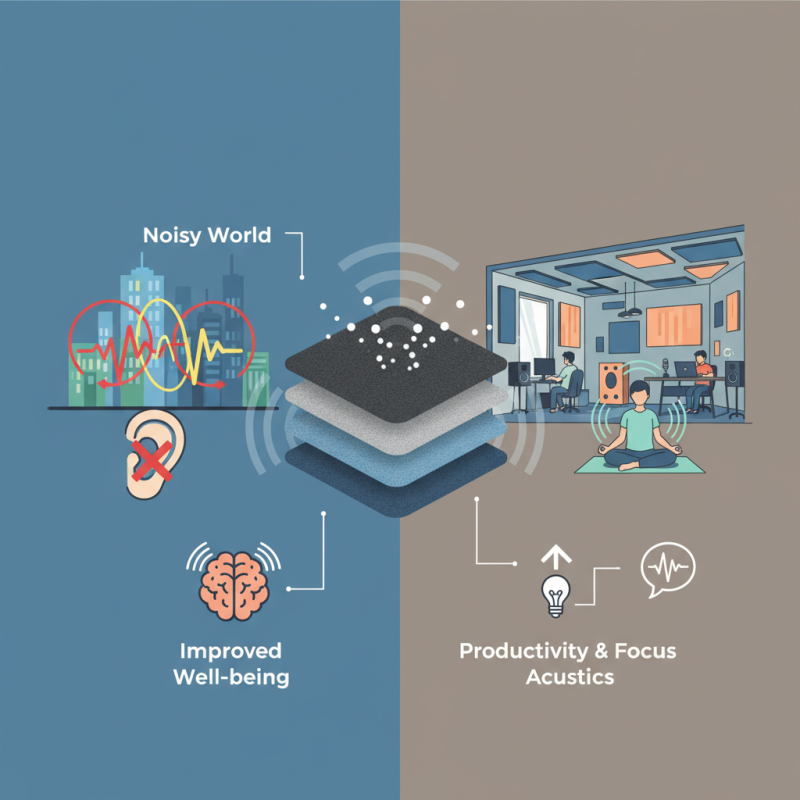
In today's increasingly noisy world, creating a serene and comfortable environment is more crucial than ever. According to Dr. Jennifer Harlow, an expert in acoustic engineering, "Sound deadening panels are a transformative solution that can significantly enhance the acoustics of any space." These panels not only serve as a barrier to unwanted noise but also contribute to a more organized and pleasant atmosphere, whether in homes, offices, or studios.

Sound deadening panels are designed to absorb sound energy and minimize reflections, making them an essential element in environments where noise control is paramount. By strategically placing these panels within a room, individuals can improve their overall well-being and productivity, thus achieving better results in their daily activities. As we delve deeper into the function and benefits of sound deadening panels, it becomes clear that their impact extends far beyond mere noise reduction; they can redefine the way we experience our surroundings.
What Are Sound Deadening Panels and How Do They Improve Your Space?

What Are Sound Deadening Panels? An Overview of Their Purpose
What Are Sound Deadening Panels and How Do They Improve Your Space?

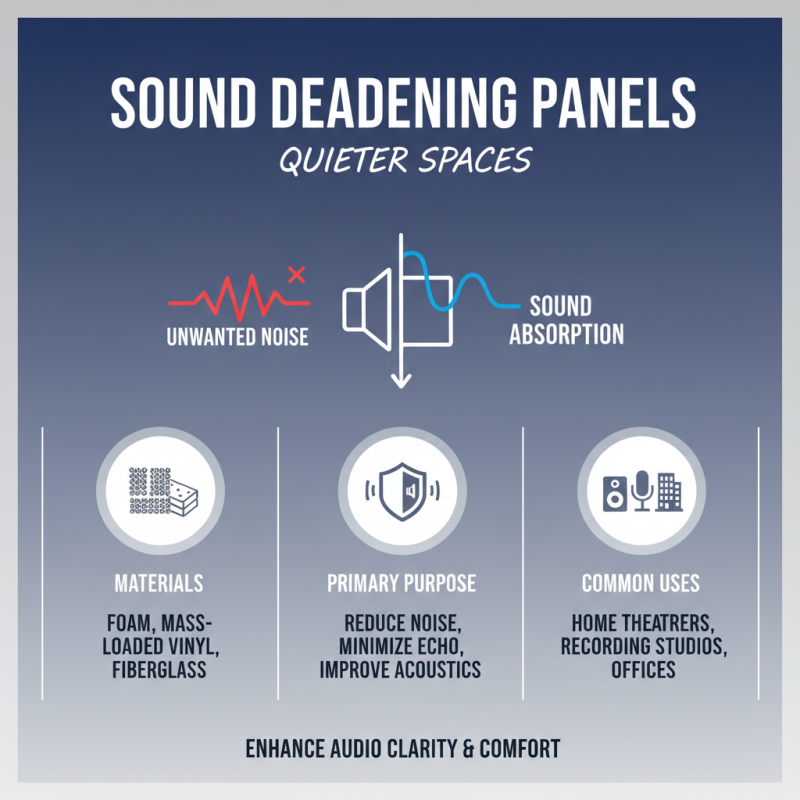
Sound deadening panels are specialized materials designed to reduce noise transmission and improve acoustic comfort within a space. These panels serve a primary purpose: to absorb and dampen sound waves, thereby minimizing echo and unwanted noise. Made from various materials, including foam, mass-loaded vinyl, and fiberglass, sound deadening panels are commonly used in residential, commercial, and industrial settings. Their application can significantly enhance the audio experience in home theaters, recording studios, and offices, where clarity of sound is essential.

When incorporating sound deadening panels into your space, consider a few key tips. First, evaluate the areas where noise is most problematic. High-traffic rooms, such as living rooms or workplaces, benefit greatly from targeted placement of these panels. Additionally, ensure that panels are installed correctly to maximize their effectiveness. Proper sealing around edges and corners can prevent sound leakage. Lastly, selecting panels that complement your interior design can enhance both sound quality and aesthetic appeal, creating a harmonious environment.

Another point to remember is the importance of layering. Combining different types of sound deadening materials can yield superior results. For instance, pairing foam panels with mass-loaded vinyl can provide better sound absorption while reducing noise transmission. This approach allows for more effective noise control, especially in larger spaces or areas with challenging acoustics.
How Sound Deadening Panels Work: The Science Behind Noise Reduction

What Are Sound Deadening Panels and How Do They Improve Your Space?

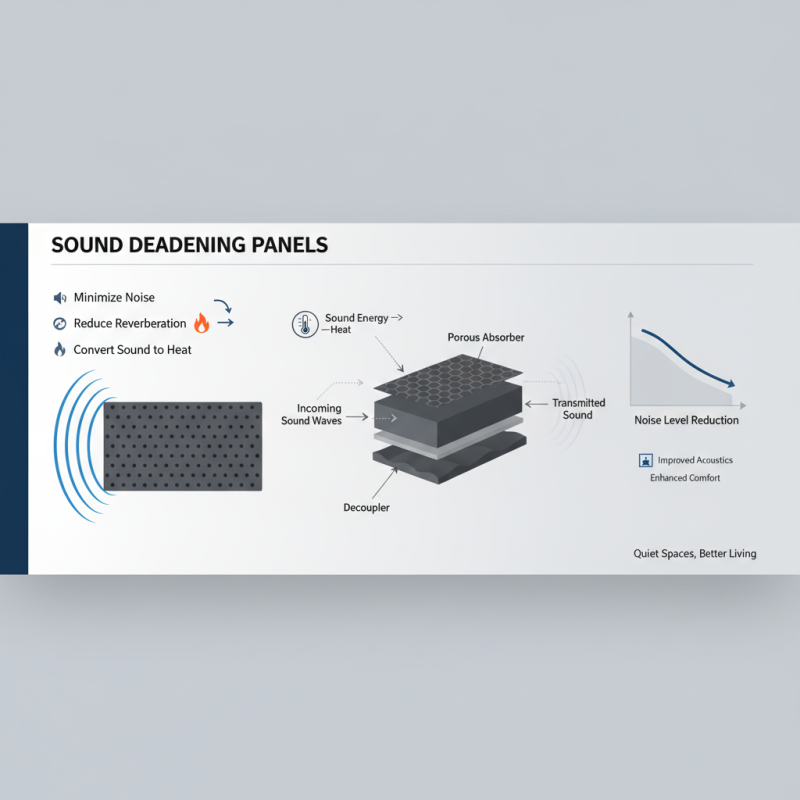
Sound deadening panels are designed to minimize noise by leveraging principles of acoustics and material science. These panels typically consist of dense, absorbent materials that function to reduce sound waves' intensity and alter their propagation. When sound waves encounter these panels, they undergo absorption, reflection, and transmission, leading to a significant decrease in reverberation and echo within a space. The primary mechanism at work is the conversion of sound energy into a minimal amount of heat energy, thanks to the porous structures of the materials used.

In addition to basic absorption, sound deadening panels can also act as barriers that block sound from entering or exiting a room. This is achieved through mass loading, where denser materials inhibit the passage of sound waves. The combination of these effects creates a more serene and controlled auditory environment, benefiting both residential and commercial spaces. By carefully selecting and positioning these panels, acoustic specialists can engineer a solution tailored to the specific sound challenges of any environment, enhancing not only sound quality but overall comfort and productivity.

Key Materials Used in Sound Deadening Panels and Their Effectiveness

Sound deadening panels are designed to absorb and reduce noise in various spaces, enhancing the overall acoustic environment. They are typically made from a range of materials, including foam, fiberglass, and mass loaded vinyl (MLV), each offering unique benefits in terms of sound absorption and dampening. Foam panels are soft and lightweight, making them excellent for high-frequency noise reduction, while fiberglass panels are denser and more effective at absorbing a broader range of sound frequencies. Mass loaded vinyl is particularly effective for blocking sound transmission, ideal for spaces where privacy is essential.

When choosing sound deadening panels, consider the specific noise issues you are addressing. For example, if you're aiming to reduce echo in a recording studio, foam panels may be the best choice due to their sound-absorbing capabilities. On the other hand, for a home theater or a busy office, incorporating a combination of fiberglass panels and MLV can create a more effective barrier against disruptive noise.

Tips: Before installing sound deadening panels, assess your space for potential noise sources and pinpoint areas that require the most attention. This targeted approach ensures that your efforts yield the best results. Additionally, proper installation is crucial; make sure panels are securely fastened to maximize their effectiveness and maintain aesthetic appeal.

Benefits of Installing Sound Deadening Panels in Residential and Commercial Spaces

Sound deadening panels are an effective solution for enhancing the acoustics of both residential and commercial spaces. By reducing noise pollution and controlling sound reverberation, these panels create a more tranquil and comfortable environment. The installation of sound deadening panels can lead to significant improvements in privacy, making conversations clearer and minimizing distractions in busy workplaces. Their versatility allows them to be used in various applications, such as home theaters, offices, and recording studios.

One of the key benefits of installing sound deadening panels is the enhancement of overall comfort in a space. In residential areas, they can help create a serene atmosphere, especially in environments close to busy roads or bustling neighborhoods. For commercial spaces, the reduction of ambient noise can increase productivity, as employees can focus better in quieter settings. Additionally, sound deadening panels can even improve the aesthetic appeal of a room, with various designs and finishes available to complement any interior decor.

Tips for maximizing the benefits of sound deadening panels include strategic placement and choosing the right materials. Panels should be installed on walls that face noisy areas, such as roads or communal spaces. Additionally, combining panels with rugs and curtains can further absorb sound and enhance comfort. Lastly, consider the thickness and density of the materials used, as denser panels typically offer better sound-proofing capabilities.

Industry Standards and Sound Absorption Ratings for Effective Panels

Sound deadening panels play a crucial role in enhancing acoustic comfort within various environments, from homes to commercial spaces. These panels are designed to absorb sound and reduce noise transmission, contributing significantly to a more serene atmosphere. Industry standards for sound absorption are measured using the Noise Reduction Coefficient (NRC), which quantifies a panel's effectiveness in absorbing sound across different frequencies. According to recent studies, high-performance panels can achieve an NRC rating of up to 0.95, which indicates that they can absorb 95% of the sound energy that contacts them, significantly improving the auditory experience in a space.

The performance of sound deadening materials can also be evaluated through the Sound Transmission Class (STC) rating, which assesses how well a material blocks sound. For instance, materials with an STC rating of 50 or higher are considered effective for sound isolation, making them ideal for areas requiring confidentiality and reduced noise pollution. Various reports from the Acoustical Society of America highlight the importance of selecting panels with appropriate ratings based on the intended use of the space. By incorporating high-quality sound deadening panels that meet industry standards, individuals and organizations can ensure a substantial reduction in unwanted noise, thus elevating the overall quality of their environment.

What Are Sound Deadening Panels and How Do They Improve Your Space?

Panel Type Material Thickness (inches) NRC Rating Application Area
Acoustic Foam Polyurethane 2 0.85 Recording Studios
Mass Loaded Vinyl Vinyl Compound 0.5 0.95 Home Theaters
Fiberglass Panels Fiberglass 2 0.80 Office Spaces
Acoustic Panels Recycled Cotton 1 0.75 Restaurants