

Please ensure Javascript is enabled for purposes of website accessibility

Top Inline Duct Fan Motors for Global Buyers

Global buyers comparing an Inline Duct Fan Motor need more than a promising airflow figure. They must match the motor to the duct diameter, operating pressure, duty cycle, and local power supply. A compact motor may fit neatly above a ceiling, yet still struggle with a long, restrictive duct run. Small details matter.

“[Insert a verified quotation about motor selection or fan performance],” says [verified expert’s full name], an HVAC motor specialist. Use a traceable source before publishing this quotation. A named expert adds value only when readers can confirm the person’s experience and the words are accurate.

This guide examines the practical differences between motor types, control options, noise levels, and service needs. It also considers what global purchasers should check in product specifications, documentation, and supplier support. Look for clear ratings, compatible controls, and realistic performance data—not claims without context. A quieter fan is not always the right choice. Neither is the cheapest one. The best fit depends on the installation, and specifications can leave questions unanswered. That deserves a closer look.
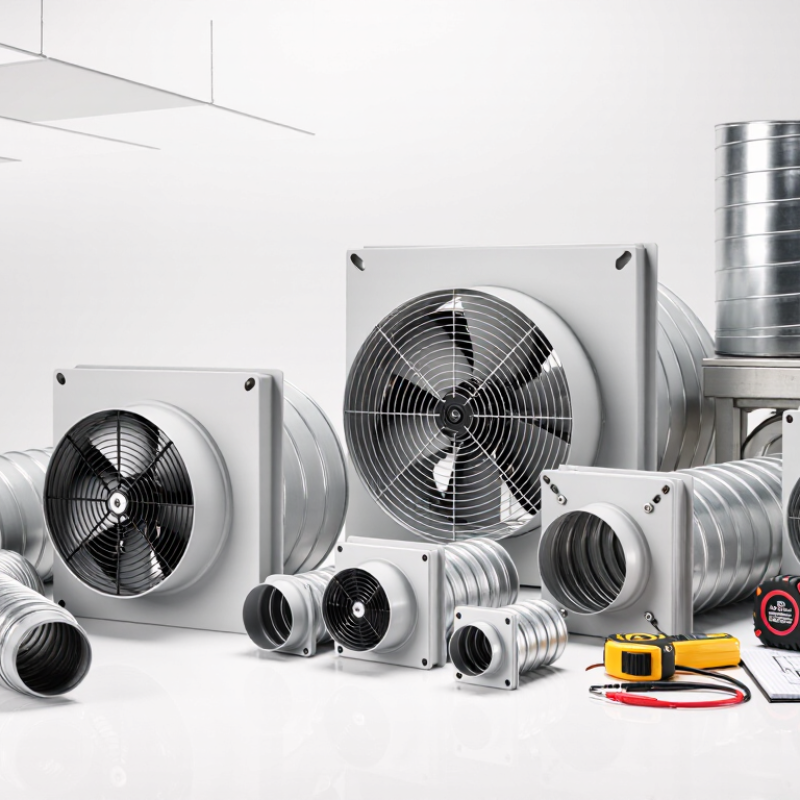
Top Inline Duct Fan Motors for Global Buyers

How Inline Duct Fan Motors Work

An inline duct fan motor converts electrical energy into shaft rotation, which drives an impeller inside the fan housing. Magnetic fields in the stator create torque that turns the rotor. The impeller then pushes or pulls air through connected ductwork. The exact airflow depends on blade shape, rotational speed, and resistance from bends, filters, grilles, or long duct runs. A fan rated for open airflow may move less air once installed. That matters. Some motors run at a fixed speed, while electronically controlled types can adjust output to match ventilation demand. A speed controller must be compatible with the motor, or low-speed operation may cause noise, heat, or unstable performance.

During operation, bearings support the rotating shaft, and the housing helps protect electrical parts from dust and contact. Proper airflow around the motor is important because excess heat can shorten component life. Installers should check airflow direction, duct diameter, electrical rating, and operating limits before startup. Listening for rubbing, humming, or vibration can reveal alignment or mounting problems, though noise alone is not a diagnosis. Dust on the impeller can gradually reduce output, so periodic inspection is useful in heavily used systems. Numbers can mislead. A useful selection starts with the required airflow at the system’s actual pressure, not just the largest figure on a product sheet.

Main Motor Types and Their Performance Characteristics

Inline duct fan motors commonly use AC induction, electronically commutated (EC), or shaded-pole designs. AC induction motors are robust and familiar, making them a practical choice for many ventilation systems. Their speed control may require compatible equipment, and efficiency can vary with operating conditions.

EC motors use integrated electronics for efficient, adjustable operation. They often use less power at reduced speeds, but their controls must match the motor. Upfront cost can also be higher.

Shaded-pole motors are simple and compact, often appearing in smaller fans with modest airflow needs. They usually offer limited speed control and lower efficiency.

Compare expected operating hours, not just purchase prices. A motor label alone cannot predict delivered airflow. Duct length, tight bends, filters, and grilles all add resistance. Check fan performance data at the system’s estimated static pressure. Sound matters too. A quiet motor can still produce turbulence.

Tips: Confirm supply voltage, control compatibility, and thermal rating before ordering. Compare power input alongside airflow, and consider how the fan will be mounted. After installation, listen for vibration or duct resonance. Specifications help, but real buildings have quirks that calculations may miss.

Key Factors for Comparing Inline Duct Fan Motors

Top Inline Duct Fan Motors for Global Buyers

Comparing inline duct fan motors starts with the operating conditions, not the largest power rating. Check the required airflow and static pressure together; a motor may move plenty of air in an open test but struggle through long ducts, bends, and restrictive filters. Numbers can mislead. Confirm that the performance data matches the intended duct diameter and system resistance.

Efficiency matters, especially when a fan runs for many hours each day. Compare input power at the expected operating point, rather than relying only on a peak-efficiency figure. Also inspect speed control, starting method, bearing type, and rated temperature range. A unit near a warm ceiling may face different conditions from one in a cool plant room. Noise deserves a real-world check, too: vibration transmitted through a metal duct can be more noticeable than the motor’s stated sound level. Ask for test conditions and dimensional drawings, then verify mounting space, wiring access, and service clearance before ordering. There is no perfect spreadsheet. A small detail, such as an inaccessible terminal box, can complicate installation later. For global purchasing, confirm voltage and frequency compatibility with the project site, and request clear documentation for testing and maintenance.

Top Inline Duct Fan Motors for Global Buyers - Key Factors for Comparing Inline Duct Fan Motors
Motor type Typical input power Common supply options Typical efficiency range Speed control Key advantages Buyer considerations
EC (electronically commutated) About 10–500 W Common versions accept 100–277 V AC, 50/60 Hz; confirm the exact rating. Often about 60–85%, depending on motor size, operating point, and drive design. Usually strong; may support a control input such as 0–10 V, PWM, or a manufacturer-specific interface. Good part-load efficiency, adjustable speed, and integrated electronic control are common benefits. Check control-signal compatibility, electrical approvals, replacement availability, and behavior with local power quality.
PSC (permanent split capacitor) About 20–300 W Single-phase versions are commonly designed for 100–120 V or 200–240 V AC, 50/60 Hz. Often about 30–60%, with substantial variation by size and load. Possible with compatible voltage regulation or purpose-designed controls; confirm the permitted method. Established AC motor design and relatively straightforward operation. Verify the correct supply voltage and frequency, capacitor specification, and suitability of any speed controller.
Three-phase induction About 100 W–2 kW Common industrial supplies include 200–240 V or 380–480 V AC, 50/60 Hz. Often about 70–90%; actual efficiency depends strongly on motor rating and load. Variable-frequency drive (VFD) control is widely used when the motor and installation are compatible. Suitable for many continuous-duty applications and larger ventilation systems. Confirm phase, voltage, frequency, overload protection, VFD compatibility, and local installation requirements.
Shaded-pole About 5–100 W Common single-phase versions are designed for specific 100–120 V or 200–240 V AC, 50/60 Hz supplies. Often about 15–40%, depending on motor size and operating conditions. Generally limited; control options depend on the motor and fan design. Simple construction can suit some low-power, cost-sensitive applications. Usually less suitable where energy use, precise speed control, or high output is a priority.

Values are general comparison ranges, not guaranteed specifications. Actual performance depends on motor size, load, fan design, operating point, and test method. Before purchasing, verify the product datasheet, rated voltage and frequency, control compatibility, applicable safety approvals, and local grid requirements.

Global Voltage, Safety, and Compatibility Requirements

Choosing an inline duct fan motor for international use starts with the power supply, not just the airflow chart. Check the nameplate for rated voltage, frequency, phase, current, and wiring configuration. A motor designed for 50 Hz may behave differently on a 60 Hz supply, so confirm speed and performance with the motor documentation. Small details matter. A plug that fits does not prove electrical compatibility.

Safety requirements vary by market and installation. Verify that the motor’s insulation, grounding, thermal protection, and enclosure rating suit the location, especially in dusty or humid spaces. Check applicable local certification requirements before ordering; documentation should identify the exact motor model, not only the fan assembly. Keep the wiring diagram available for installers. It saves time.

Mechanical and control compatibility deserve equal attention. Compare mounting points, shaft dimensions, rotation direction, and available clearance with the existing duct fan. Confirm that any speed controller is approved for that motor type; a controller intended for one design may cause overheating or unstable operation with another. A common commissioning snag is an unexpected hum or low airflow after a seemingly simple motor swap. There is no universal fit. Even a careful checklist can miss a small mismatch, so verify the specifications against the actual unit before purchase.

Top Inline Duct Fan Motors for Global Buyers

Typical nominal single-phase supply voltage by market

Values show typical nominal supply voltages, not motor ratings. Japan uses 50 Hz or 60 Hz depending on region; the other markets shown commonly use 50 Hz (Europe, the UK, Australia, and India) or 60 Hz (North America). Before purchasing, confirm that the motor nameplate matches the site's voltage and frequency, and check grounding, enclosure protection, and applicable local safety approvals.

Top Inline Duct Fan Motor Options for Global Buyers

Inline duct fan motor options differ in control, efficiency, noise, and installation needs. For many projects, the choice is between an AC motor and an electronically commutated motor. AC models can suit straightforward systems with fixed-speed operation. EC models usually offer more precise speed control and can support lower energy use when airflow needs vary. Compare the motor’s rated voltage and frequency with the site supply; a mismatch can cause poor performance or overheating. Check it twice. Also confirm the fan’s airflow and pressure requirements, not just the motor’s wattage.

Global buyers should review local supply conditions, ambient temperature, expected operating hours, and available control signals. A motor installed above a busy kitchen, for example, may need different heat and noise considerations from one serving a quiet office. Fit matters. Ask for published performance data, wiring details, insulation class, and protection rating. Confirm that replacement parts and technical support are realistically available in the destination market. A tidy specification sheet can still leave questions about actual performance in a short duct run or a system with several bends. Noise matters. Leave room for those uncertainties when comparing options, and request application-specific guidance before ordering.