

Please ensure Javascript is enabled for purposes of website accessibility

How to Choose the Best CNC Panel Bender for Your Business?

Choosing the right Cnc Panel Bender can shape production speed, part consistency, and long-term operating costs. Yet the best machine is not automatically the fastest or most automated. It must fit the panels your shop actually makes. A cabinet door, electrical enclosure, and appliance housing can demand different bend lengths, materials, and levels of precision. Small details matter. A return flange may expose a machine’s limits.

Start with real production data, not a brochure’s headline figures. Review typical panel dimensions, material types, thickness ranges, daily output, and the bends that cause rework. Then compare working capacity, tooling changes, automation options, floor space, and operator training needs. Ask suppliers to demonstrate representative parts using your own drawings and materials, where possible. Check the finished edges, angles, cycle times, and repeatability—not just a polished sample prepared in advance.

There is no universal winner. A high-capacity model may leave a small shop paying for unused features, while a basic machine may constrain future orders. Service access matters, too. A production line cannot wait comfortably for a hard-to-source component. Request clear information about maintenance, warranty coverage, installation, and local technical support. Verify each claim in writing. Numbers can look reassuring. They still need context. This guide explains how to weigh performance, cost, and support against your actual workflow, so your decision is practical rather than driven by impressive specifications alone. Even a careful comparison has uncertainty; production needs can change, and that deserves an honest look.
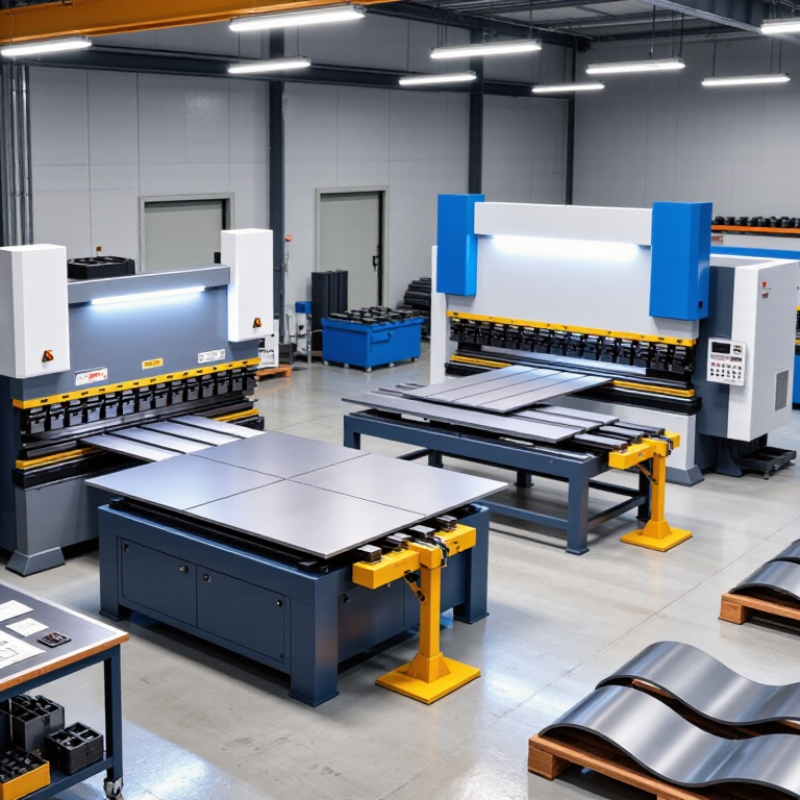
How to Choose the Best CNC Panel Bender for Your Business?

Define Your Production Needs and Panel Bending Requirements

Before comparing CNC panel benders, map the work you actually produce. Record panel length, width, material type, thickness, and the smallest flange your parts require. Include both routine orders and occasional awkward jobs. The forecast may be wrong. Still, real production records are more useful than a best-case estimate.

Next, define output and quality targets. How many panels must be completed per shift? What bend-angle variation can your assemblies tolerate? Note common sequences, return flanges, corner reliefs, and whether parts need multiple setups. A machine may handle a large panel but struggle with a short flange or a difficult profile. Ask for a trial using representative parts, not just a simple sample. Measure the finished angles and dimensions.

Consider changeovers and daily operation, too. Frequent small batches make setup time important, while long runs may reward faster cycle times. Check how tooling changes, part loading, and programming fit your current workflow. Leave space for material handling and the operator’s working area. A spreadsheet helps, but it can hide inconvenient details, such as mixed material thicknesses or irregular blanks. Review actual parts with production staff before setting specifications; they often notice requirements missing from the sales forecast.

Compare Bending Capacity, Accuracy, and Machine Specifications

A CNC panel bender should match the parts your shop actually runs, not just its largest advertised capacity. Check maximum sheet length, thickness, and material type against current jobs, including stainless steel or coated panels. Capacity also depends on flange height, bend direction, and tool clearance. A thick blank may fit the table yet fail at a narrow return. Small details matter.

Accuracy deserves the same scrutiny. Compare repeatability and bend-angle tolerances, but ask how the machine measures and corrects springback. Material batches can behave differently, even when their thickness looks identical. In a shop trial, run a familiar part and measure several bends with the same gauge. Test it in person. A catalog tolerance is useful, but it is not a guarantee for every material or part geometry.

Then review the full specifications: cycle time, tooling range, programming method, power requirements, and floor-space needs. Ask how long changeovers take when switching between short runs, and whether operators can adjust a program without disrupting production. One comparison is easy to overlook: rated speed may assume ideal conditions. That can make a machine look faster on paper than it feels on a busy shift. Build your decision around representative parts, not an impressive single number.

Check Material Compatibility, Tooling, and Part Complexity

Choosing a CNC panel bender starts with the sheet, not the machine’s headline capacity. Match the equipment to your regular materials, thickness range, and tensile strength. Mild steel, stainless steel, and aluminum behave differently during forming. Springback can shift a flange by a few degrees, while a coated surface may need gentler contact. Details matter. Ask for confirmed capacity across your actual material range, rather than relying on one maximum-thickness figure. A trial using your own sheet can reveal marking, inconsistent angles, or feeding problems before purchase.

Tooling must suit both the bend sequence and the finished part. Check whether common profiles, narrow returns, hems, and varying flange heights can be formed without frequent tool changes. Part complexity matters just as much. Deep boxes, short flanges, cutouts near bend lines, and small panels can create collisions or reduce gripping space. Test real parts. Review drawings with the machine supplier and run a first-off sample, especially for parts with several bends or tight tolerances. I would not treat one successful sample as proof; material batches and operators can change results. Record setup time, angle variation, and surface condition across a small production run. Note any awkward manual adjustments too; they are easy to overlook.

How to Choose the Best CNC Panel Bender for Your Business? - Check Material Compatibility, Tooling, and Part Complexity

Use this comparison as a purchasing checklist. Material and thickness limits vary by machine configuration, tool setup, bend length, and part geometry; confirm the rated capacity and sample-bend results with the supplier.

Evaluation Factor What to Check Typical Application Guidance Questions to Ask Before Buying
Material compatibility Confirm the machine is configured for the alloys and surface finishes used in your production. Mild steel, stainless steel, and aluminum are commonly processed on panel benders, but their forming behavior differs. Stainless steel generally requires attention to springback and surface marking; aluminum alloy and temper affect crack risk and bend radius. Can the machine bend our exact alloy, temper, and finish? Can we run production material samples and inspect for cracking, marking, and dimensional variation?
Sheet thickness Compare your minimum, most common, and maximum thickness with the machine’s rated range for each material. A machine’s maximum capacity is not necessarily available across every material, bend length, or tool configuration. Thicker or stronger sheet may require reduced bend length or a different setup. What are the rated thickness limits for each material? Are the ratings stated for the full working length, and what conditions or tooling do they assume?
Blank and bend dimensions Check maximum and minimum blank size, working length, bend height, and allowable flange dimensions. Large panels may exceed the machine’s working area, while narrow flanges or short bends may be limited by tool access and part handling. Confirm the usable range with actual drawings. Can the machine handle our largest and smallest parts? Which dimensions are constrained by the clamps, tools, or automatic handling system?
Tooling flexibility Review standard and optional tools, tool-change time, tool access, and the range of bend types supported. Universal or adjustable tooling can reduce changeovers for varied jobs. Dedicated tools may be more suitable for repeat production or special profiles. Tool selection must match the part’s geometry and material. Which tools are included? How are tool changes performed, and can the setup form hems, returns, or other profiles required by our drawings?
Part complexity Test parts with multiple flanges, reverse bends, short returns, hems, or closely spaced features. Complex profiles can be limited by tool clearance, collision risk, bend sequence, and the ability to reposition or support the panel. A successful test should include the complete bend sequence, not only a single bend. Can the machine run our most complex part without collisions or manual rework? Can the supplier demonstrate a complete cycle using our CAD data?
Accuracy and repeatability Evaluate bend-angle consistency, dimensional repeatability, compensation features, and inspection results. Results depend on material variation, thickness consistency, tooling condition, and machine setup. A production trial using the intended material is more informative than a nominal accuracy figure alone. What tolerances can be demonstrated on our parts? How does the control compensate for springback and variations between material batches?
Production volume and mix Estimate annual quantities, batch sizes, changeover frequency, and the number of distinct part numbers. High-volume repeat work may benefit from fast automatic tool changes and integrated handling. High-mix, low-volume production places greater value on flexible tooling, quick programming, and short changeovers. What cycle time and changeover time can be demonstrated for a representative job mix? How much operator involvement is needed between batches?
Automation and integration Check compatibility with CAD/CAM workflows, upstream cutting, part handling, and downstream operations. Automated loading or unloading can improve throughput when part sizes and production volume justify it. Integration needs to account for software, material flow, floor space, and operator access. Which file formats and software workflows are supported? Can the machine connect to our existing production process, and what additional equipment is required?
Floor space and utilities Review the machine footprint, access for loading, installation requirements, and required electrical or air supply. Allow space for material staging, part movement, maintenance access, and any loading or unloading equipment—not just the machine footprint. What are the installation and utility requirements? What clearance is needed for safe operation, service, and handling our largest panels?
Operator support and service Assess training, maintenance needs, spare-parts availability, and local technical support. Reliable production depends on trained operators, scheduled maintenance, and timely access to support and wear parts. Include these ongoing needs in the ownership-cost comparison. What training is provided? Which maintenance tasks are routine, what parts should be stocked, and what response time is available for service?
Purchase decision Compare the complete production solution rather than price or maximum capacity alone. A suitable machine should meet material and geometry requirements, support the expected job mix, and fit the available floor space, staffing, and budget. Can the supplier provide a documented test using our parts, material, and expected production sequence before final selection?

Evaluate Automation, Software, and Factory Integration

How to Choose the Best CNC Panel Bender for Your Business?
Evaluate Automation, Software, and Factory Integration

A CNC panel bender should fit your production flow, not just promise a fast cycle. Check how it handles real parts: mixed batch sizes, material changes, and awkward flanges. Ask operators to run a sample job from your own CAD files. Data matters.

Software can save time when it imports drawings, suggests bend sequences, and simulates tool or part collisions before production. Confirm that edits reach the machine reliably and that operators can review setup instructions at the control. The International Federation of Robotics’ World Robotics 2024 report counted 4.28 million industrial robots operating worldwide in 2023, a 10% annual increase. This points to wider automation, but it is not evidence that every shop needs a fully automated cell. Deloitte’s 2024 Smart Manufacturing and Operations Survey found that 86% of surveyed manufacturing executives expected smart manufacturing to support competitiveness over the following five years.

Factory integration deserves a practical test. Check whether the bender can exchange job data with your CAD/CAM, ERP, or MES systems, and whether it records cycle times, alarms, and part status. Ask how it behaves when network access fails or a drawing changes mid-shift. Test it live. A polished demo may hide the work needed to clean part data, train staff, and maintain interfaces. That work is easy to underestimate. Compare changeover time and usable output on representative jobs, not only the fastest quoted cycle.

Assess Total Cost, Service Support, and Supplier Reliability

How to Choose the Best CNC Panel Bender for Your Business?

Assess Total Cost, Service Support, and Supplier Reliability

A low purchase price can hide expensive gaps. Compare the full cost: tooling, installation, operator training, software, energy, maintenance, and planned downtime. Ask suppliers to itemize these costs over a realistic ownership period. Check what a service visit costs, too. A delayed spare part can leave a shift waiting.

Service quality matters because even a capable machine needs support. Siemens’ 2024 True Cost of Downtime report estimates downtime costs the world’s 500 largest companies about $1.4 trillion annually, or 11% of their revenue. This figure covers multiple industries, not panel benders alone. Still, it shows why response times, spare-parts availability, and remote diagnostics belong in your evaluation. Get service commitments in writing, including response windows and escalation steps.

Supplier reliability takes more than a polished demonstration. Ask for references from businesses with similar materials, batch sizes, and production schedules. Visit a working installation if possible. Watch a real changeover, not just a perfect sample run. Review training plans and parts availability for common wear items. A useful comparison is a simple spreadsheet, though it can miss the hassle of coordinating service across shifts. I may give downtime too much weight; your actual risk depends on your workflow. Weigh that risk against documented support and the total cost, not promises alone.