

How to Choose PU Sandwich Panels in 2026?
Choosing PU sandwich panels in 2026 requires more than comparing prices or insulation values. These panels influence energy use, indoor comfort, construction speed, and long-term maintenance. A reliable decision begins with the building’s purpose, climate, structural layout, and expected service life.
Look closely at the panel core, facing materials, joint design, thickness, and surface finish. Thermal conductivity matters, but it is not the whole story. A cold-storage wall may need tight joints and carefully protected seals. A factory roof may require stronger facings, better drainage, and resistance to repeated temperature changes. Fire performance must also match applicable local building requirements. Ask suppliers for current technical data, test reports, installation guidance, and traceable product information.
Small details matter.
Experienced contractors often notice problems that brochures overlook. Misaligned joints, damaged edges, or compressed seals can reduce real-world performance. Even accurate calculations may fail when installation conditions change. That is why sample inspection, supplier communication, and site-specific evaluation remain essential. No product suits every project perfectly. The best PU sandwich panels balance thermal efficiency, mechanical strength, safety performance, environmental exposure, budget, and future maintenance. This guide examines those factors carefully, while acknowledging one practical truth: product selection is only as reliable as the evidence behind it and the workmanship supporting it.
What Are PU Sandwich Panels and How Do They Work?
How to Choose PU Sandwich Panels in 2026?
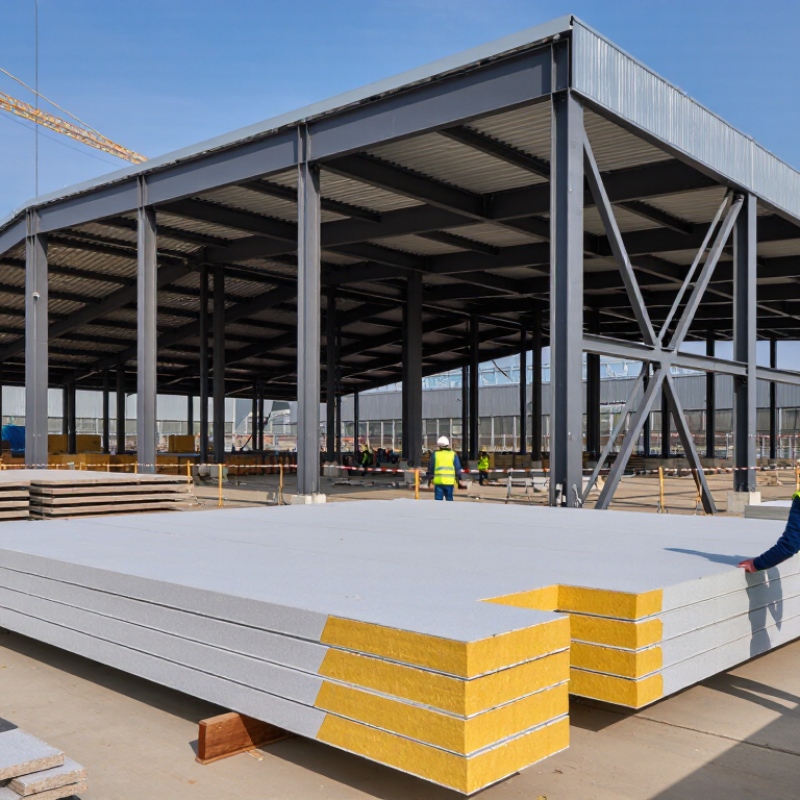
PU sandwich panels combine two protective facings with a rigid polyurethane core. The core contains closed cells that slow heat movement through the wall or roof. The facings provide stiffness, impact protection, and a cleaner installation surface.
In practical terms, the panel works like a continuous thermal blanket. Its performance depends on thickness, density, joint design, and installation quality. Typical polyurethane insulation can reach thermal conductivity near 0.020–0.025 W/m·K, although tested values vary by product and temperature. The IEA’s 2024 Global Status Report for Buildings and Construction states that buildings consume about 30% of global final energy. That figure explains why thermal continuity matters in 2026. A low U-value alone can mislead. Gaps around fasteners and poorly sealed joints may create cold bridges, condensation, and energy loss. I have seen drawings look perfect while site details failed.
Tips: Check declared thermal resistance under the relevant test standard. Review fire classification, moisture resistance, facing thickness, and joint tolerances. Ask for third-party test reports, not only sales literature. Consider the building’s humidity, cleaning routines, and maintenance access. A food facility needs different detailing than a dry warehouse. The panel is not the whole envelope. This is often forgotten.
Sources: International Energy Agency, Global Status Report for Buildings and Construction 2024; EN 14509, Self-supporting Double Skin Metal Faced Insulating Panels.
How to Choose PU Sandwich Panels in 2026? - What Are PU Sandwich Panels and How Do They Work?
A practical comparison of polyurethane insulated panels for walls, roofs, cold rooms and controlled environments
| Selection Dimension | Typical PU Panel Data | How It Works | What to Check Before Purchase |
|---|---|---|---|
| Basic construction | Two metal facings bonded to a rigid polyurethane or polyisocyanurate foam core. | The foam core reduces heat transfer, while the facings provide protection, stiffness and weather resistance. | Confirm the core type, facing material, coating system, joint design and panel manufacturing tolerances. |
| Common core type | PUR is widely used for thermal insulation; PIR is commonly selected where improved fire performance is required. | The closed-cell foam structure traps low-conductivity gas and limits heat movement through the panel. | Do not treat PUR and PIR as identical. Review the exact tested product classification and installation conditions. |
| Typical density | Approximately 35–45 kg/m³ for many rigid PU panel cores; actual values vary by product and test method. | Lower density can reduce weight, while density, formulation and cellular structure influence strength and insulation performance. | Use the declared density and mechanical test results rather than selecting by density alone. |
| Thermal conductivity | Typically about 0.020–0.028 W/(m·K), depending on core formulation, thickness, temperature and aging. | Lower thermal conductivity means less insulation thickness is needed to achieve a target U-value. | Compare declared aged values and use the same test standard when reviewing different products. |
| Typical panel thickness | Common commercial thicknesses are approximately 40–200 mm; thicker panels are used for colder or more energy-sensitive spaces. | Increasing thickness generally increases thermal resistance and reduces heat flow, subject to joints and thermal bridges. | Select thickness from the required U-value, indoor temperature, climate, condensation risk and energy code. |
| Thermal resistance | A 100 mm panel may provide roughly R-4.0 to R-5.0 m²·K/W for the core, depending on conductivity and aging. | Thermal resistance is approximately thickness divided by thermal conductivity; joints, fasteners and facings affect the installed result. | Compare whole-panel or assembled-system U-values, not only the published foam-core R-value. |
| Facing materials | Common options include pre-painted galvanized steel, aluminum and stainless steel; facing thickness is often about 0.40–0.80 mm. | The outer face resists weather and impact, while the inner face protects the insulated space and supports hygienic cleaning. | Check corrosion exposure, coating durability, cleaning chemicals, impact requirements and required face thickness. |
| Moisture behavior | Closed-cell PU foam generally has low water absorption, but panel joints, cut edges and penetrations can admit moisture. | Continuous facings and properly sealed interlocking joints help limit air leakage and vapor movement. | Specify joint seals, flashing, vapor-control details, drainage and protection for exposed cut edges. |
| Fire performance | Performance varies significantly between PUR and PIR systems and depends on facings, joints, thickness and installation. | The foam is combustible, while the complete assembly may achieve a tested reaction-to-fire or fire-resistance classification. | Request assembly-specific test reports and classifications under the code or standard applicable to the project. |
| Structural capacity | Panels can provide useful spanning capacity, but values depend on thickness, span, support spacing, wind, snow and load direction. | Composite action between facings and the foam core allows the panel to resist bending and transfer loads to supports. | Use manufacturer load tables or project-specific engineering calculations; account for deflection and fastener capacity. |
| Typical applications | Industrial buildings, warehouses, food-processing areas, cold rooms, logistics facilities, commercial buildings and controlled environments. | Factory-made insulated elements reduce site assembly time compared with separately installing structure, insulation and cladding. | Match panel type to temperature range, hygiene level, humidity, traffic, cleaning regime and fire strategy. |
| Best overall selection approach | Choose by complete-system performance rather than price or insulation thickness alone. | Energy performance depends on the core, facings, joints, fasteners, openings and installation quality working together. | Verify thermal, fire, structural, hygienic, moisture, durability and compliance requirements before ordering. |