

Please ensure Javascript is enabled for purposes of website accessibility

How to Choose a Paper Food Box Machine?

Choosing a Paper Food Box Machine is a production decision, not just a price comparison. The right equipment must match box dimensions, board grade, daily volume, and available floor space. A sample box helps reveal details a brochure may miss: corner sharpness, lid fit, glue lines, and whether the finished box stays square after stacking.

The scale of the paper sector gives useful context. FAO’s 2022 forestry statistics report roughly 401 million tonnes of global paper and paperboard production. This figure is not a machine-sales forecast, but it shows why reliable converting equipment matters across a large supply chain. Walter Soroka, author of Fundamentals of Packaging Technology, describes packaging as “a coordinated system of preparing goods for transport, warehousing, logistics, sale, and end use.” That principle applies to machine selection, too: the box must work beyond the forming station.

Ask suppliers for production figures using your intended board, box style, and operating conditions. Check changeover time, reject rate, tooling costs, operator training, and after-sales support. Request a live trial. Watch the machine run. A fast cycle rate means little if frequent adjustments create waste or delay.

One caution: quoted output is often an ideal figure. Real shifts include setup, cleaning, and material changes. Buyers should compare measured performance, not just headline speed. The best choice is usually the machine that makes consistent boxes with manageable downtime—not the one with the most impressive brochure.
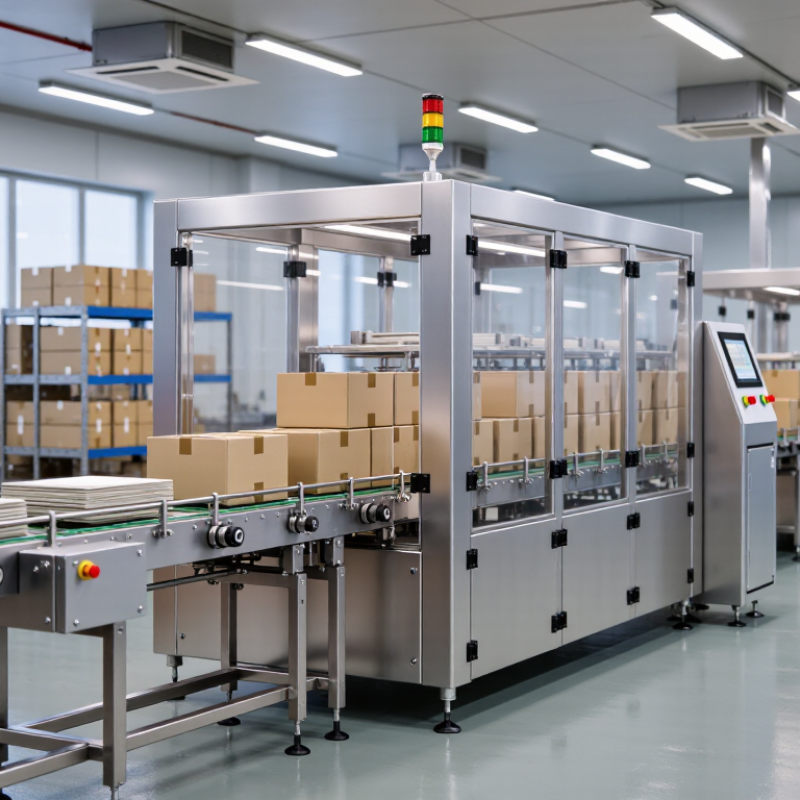
How to Choose a Paper Food Box Machine?

Identify Your Paper Food Box Production Requirements

Before comparing a paper food box machine, define the production job clearly. Estimate average and peak boxes per hour, and note how many shifts the line will run. List every box style, including its dimensions, depth, lid design, and locking method. Check the paperboard grade and thickness you expect to use. Measure your largest and smallest formats. Small details matter.

Tips: Bring actual samples or clear drawings when discussing machine specifications. Ask whether quoted output includes feeding, forming, and stacking time. Check how long a size change takes, and whether one operator can manage it. Leave room for a compressor, material storage, and finished-box handling. A cramped layout slows work.

A machine that handles today’s order may struggle with next year’s mix. Still, avoid paying for capacity you cannot use. Request a trial with your own board and box design, then inspect corners, folds, and glue or locking points. Record rejected boxes and changeover time. A quoted speed is not always usable speed; real results depend on material consistency, setup, and operator skill.

How to Choose a Paper Food Box Machine? — Identify Your Production Requirements

How to read this chart: The example rated speeds are calculated from an 8-hour shift with 75% productive time (6 productive hours): 3,000 boxes per shift requires 500 boxes/hour, 6,000 requires 1,000, and 12,000 requires 2,000. Use your own shift length and expected downtime to estimate a suitable machine capacity; allow for changeovers, rejects, and future demand when comparing machines.

Compare Machine Types, Output Capacity, and Automation Levels

How to Choose a Paper Food Box Machine?

Compare machine types by the box styles and materials they can handle. A simple forming unit may suit one standard size, while a multi-station machine can support more varied production. Check the usable paperboard weight, coating compatibility, and forming dimensions against your actual packaging samples. A machine that handles a broad range on paper may still need careful adjustments for a particular board.

Rated output is only a starting point. Ask whether the figure reflects finished boxes per minute or machine cycles, then allow for feeding, changeovers, and rejected pieces. Small details matter. A line rated for high volume may not be worthwhile if orders vary weekly. Semi-automatic equipment usually needs more operator attention but can be easier to adapt; higher automation can reduce repetitive handling, yet adds setup and maintenance demands. I would compare realistic shift output, not just the number in a brochure. That distinction is easy to miss.

Tips: Request a sample run using your own board and box design. Record setup time, usable output, and the number of workers needed. Leave room for uncertainty: early production often runs slower than the target rate.

How to Choose a Paper Food Box Machine? Compare Machine Types, Output Capacity, and Automation Levels

Machine Type Typical Output Capacity Automation Level Best Suited For Key Advantages Points to Check
Manual or Bench-Top Forming Machine About 5–20 boxes per minute Low; operators typically load blanks and handle finished boxes Prototypes, small businesses, short production runs, and product testing Lower initial investment, compact footprint, and straightforward operation Labor requirements, consistency between operators, tooling options, and whether heating and forming are controlled separately
Semi-Automatic Forming Machine About 20–40 boxes per minute Partial; forming is powered, while feeding or collection may require manual handling Small to medium production runs with a limited range of box sizes Greater repeatability than manual equipment without the complexity of a fully integrated line Actual cycle rate for the intended box, operator workload, changeover time, and safety controls
Automatic Single-Station Forming Machine About 30–60 boxes per minute High; automatic feeding, forming, and discharge are commonly integrated Regular production of one or a small number of standard box designs Reduced manual handling and more consistent production during longer runs Blank-feeding reliability, compatible material specifications, tooling cost, and the time needed to change formats
Automatic Multi-Station or Rotary Forming Machine About 60–150 boxes per minute High; multiple forming operations run in sequence with automated transfer Medium to high-volume production of compatible box styles Higher potential output and continuous production when feeding and downstream handling are well matched Product-specific speed, maintenance needs, tooling complexity, footprint, and the effect of material or box-size changes on output
Integrated Box-Making Line Varies by line configuration; verify the complete line rate Very high; may combine blank feeding, forming, inspection, counting, and packaging Large-scale production with standardized products and coordinated downstream processes Can reduce transfers between separate machines and support consistent end-to-end production Line balancing, floor space, utility requirements, control-system integration, staffing, and service support

Capacity figures are indicative planning ranges, not guaranteed specifications. Actual output depends on box dimensions and shape, material type and thickness, coating, tooling, operator and maintenance conditions, and the machine’s feed and discharge setup. Request a production trial using your own approved blanks and finished-box specifications before comparing quoted speeds.

Check Compatibility with Box Designs and Paper Materials

Start with the actual box design, not the machine’s advertised speed. Record the blank’s length and width, wall height, corner style, crease positions, and finished rim dimensions. A square meal box and a tapered bowl may need different forming tools, even if their blanks look similar. Small details matter. Ask whether dies can be changed efficiently and whether the machine maintains alignment during repeat runs.

Match the machine to the paper you plan to use. Compare the paper’s weight, stiffness, coating, and grain direction; these affect how cleanly it creases and forms. A light sheet may buckle around deep corners, while a stiff or coated sheet may resist folding. Paper behavior varies. Ask the supplier to run your intended material, rather than relying only on a sample made with another grade. Check that printed or laminated areas do not interfere with forming or sealing.

Bring physical samples and drawings to a machine trial. Measure finished boxes for rim shape, corner gaps, and consistent dimensions, then test them with the intended filling process. A neat CAD drawing can still miss a troublesome fold or a lid that fits too tightly. That is easy to overlook. If you expect frequent design changes, confirm the available tooling range and changeover steps before purchase; flexibility on paper may not mean quick adjustments on the factory floor.

Evaluate Key Features, Safety Standards, and Maintenance Needs

A paper food box machine should match the boxes you actually plan to produce. Check its forming range, output rate, and adjustment process. Can operators change box sizes without lengthy tool changes? Ask for a live demonstration using your paper stock, not just a sample run on ideal material. Watch the corners, folds, and adhesive or heat seals closely. Small details matter. A sensor that detects misfeeds can reduce waste, while accessible controls make routine adjustments less error-prone. Still, a fast machine is not automatically the best choice; steady output may matter more than peak speed.

Safety needs more than a label on the frame. Look for fixed guards around moving parts, clear emergency stops, and safe access for cleaning and jam removal. Ask for the machine’s risk assessment, electrical documentation, and food-contact material records. Confirm that these meet the requirements in your operating location and suit the paper, ink, and coatings used. Maintenance can be less glamorous. Check whether lubrication points, wear parts, and cleaning areas are easy to reach. Request a written service schedule and spare-parts list before purchase. In practice, even a sensible schedule may be missed during busy shifts, so simple daily checks help. A loose guide or paper-dust buildup can quietly affect box quality.

Compare Total Costs, Supplier Support, and Long-Term Value

A paper food box machine should be judged by more than its purchase price. Include tooling, delivery, installation, operator training, spare parts, energy use, and expected paper waste. Then estimate the cost per acceptable box at your planned production rate, not the machine’s advertised maximum. A shift may lose time during setup or size changes. Small costs add up.

Tips: Ask for a production trial using your paper stock and box dimensions. Record output, rejected boxes, and changeover time. Check service response hours, spare-part availability, warranty limits, and whether technicians can support your site. Request references from buyers with similar production needs.

Long-term value depends on consistent output and dependable support. Compare maintenance schedules and the cost of common wear parts, such as cutting blades and forming components. Ask how software or tooling changes are handled if your product range expands. A lower quote may still be sensible for a simple operation, but only if downtime risks are understood. One estimate will never be perfect; paper quality, staff experience, and order patterns can change the numbers. Revisit the calculation with real production records after installation.