

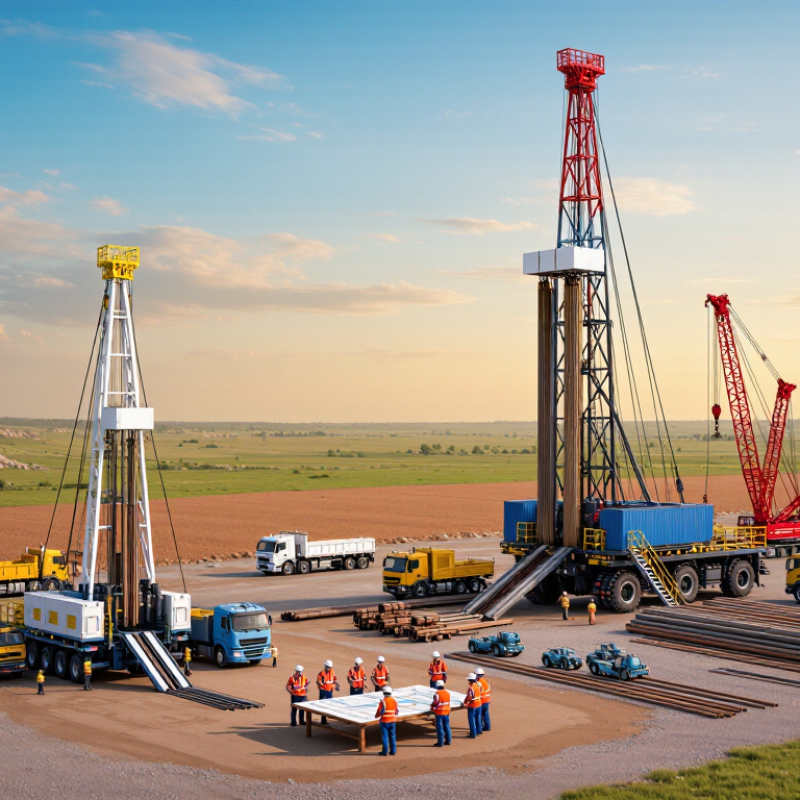
Choosing a drilling rig starts with the ground, not the catalogue. Rotary rigs suit deep, continuous holes in rock. Percussion rigs work well in fractured, shallow formations. Auger rigs handle unconsolidated soil with limited water control. Directional rigs add steering for wells that must reach offset targets. The best match depends on geology, depth, diameter, access, and sample quality. A compact crawler may reach a tight site, yet sacrifice torque and lifting capacity. Small detail, major consequence.
Application changes the decision.
Water-well drilling often needs reliable circulation and clean borehole control. Mining exploration prioritizes core recovery, depth capability, and low deviation. Geotechnical work favors mobility, rapid setup, and repeatable sampling. Geothermal projects demand high-temperature components and stronger pumps.
IRENA’s Renewable Capacity Statistics 2024 records about 14.9 gigawatts of global geothermal capacity at the end of 2023. That installed base reflects demanding drilling conditions, not only larger machines. The International Energy Agency reported expected upstream oil and gas investment of about $570 billion in 2024.
Before purchase, compare pullback force, rotary torque, mast height, compressor output, and fuel use. Ask operators how the rig behaves after eight wet hours. Test maintenance access, noise, transport limits, and spare-part availability. Do not trust rated depth alone; it often assumes ideal ground and new tooling. No checklist is perfect. A site trial may expose assumptions that a specification sheet hides. A cheaper rig can become expensive when every metre takes longer.