

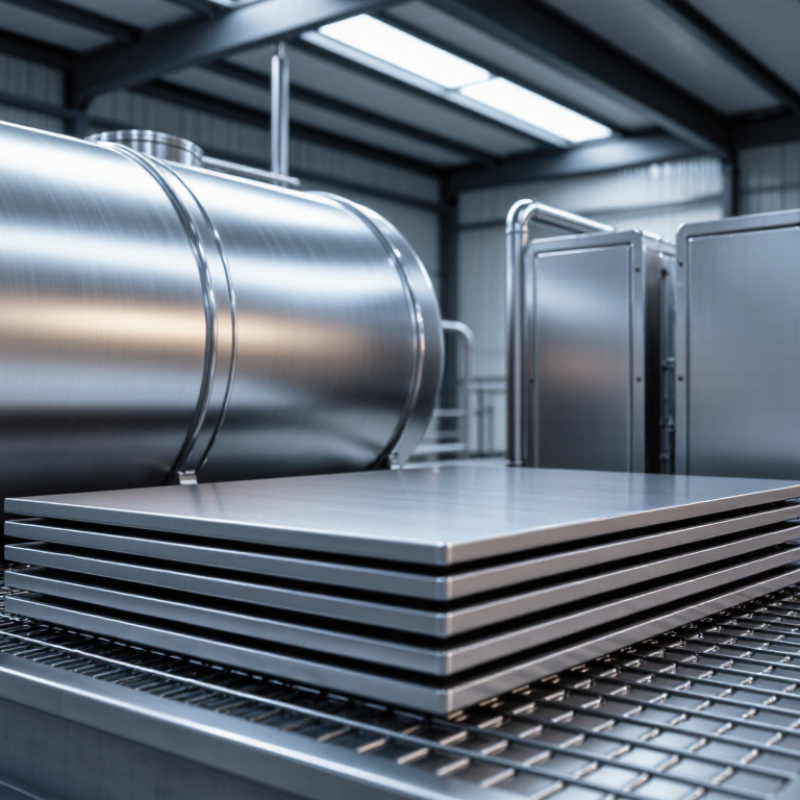
304 stainless plate serves many global industries because it combines corrosion resistance, fabrication ease, and dependable strength. Its chromium-nickel composition performs well in humid factories, commercial kitchens, and clean processing areas. Fabricators commonly cut, bend, and weld it into tanks, covers, platforms, and machine frames.
Food and beverage plants use 304 plate for hoppers, conveyors, worktables, and storage vessels. Smooth surfaces support practical cleaning routines and reduce places where residue can collect. Pharmaceutical facilities also select it for equipment panels, process vessels, and controlled production rooms. Surface finish still matters. Poor finishing can create cleaning difficulties, even when the material itself is suitable.
Chemical processing, water treatment, construction, and transportation projects use 304 plate for ducts, enclosures, walkways, and structural components. Marine and coastal applications require more careful review because salt exposure can cause pitting, especially around welds and crevices. It is not a universal answer. That assumption can fail. Engineers should assess temperature, chemicals, chloride levels, plate thickness, and joining methods before approval. In field work, protecting the surface during cutting and installation also matters. A small iron particle can later leave a misleading rust mark, making a sound material appear defective.