

Please ensure Javascript is enabled for purposes of website accessibility

China Best Ball End Mill Manufacturer for Global Buyers

Choosing a China-based ball end mill manufacturer involves more than comparing prices or browsing a polished catalog. A Ball End End Mill must match the material, machine, and finishing requirements of the job. For example, machining a curved mold surface places different demands on cutting geometry than finishing a small die cavity. Flute count, corner radius, carbide grade, coating, and tool runout can all affect the result. Small details matter.

For global buyers, a reliable supplier should explain these specifications clearly and provide practical evidence, such as inspection records, sample tools, and consistent packaging details. Ask how the manufacturer checks diameter and cutting-edge quality, and whether it can support custom shank sizes or coatings. These questions help reveal whether a product suits your process, rather than merely fitting a product listing. Still, one sample cannot prove long-term consistency. Trial runs under your own cutting conditions remain useful.

This guide explores what buyers can assess when comparing Chinese manufacturers, from production capabilities and quality controls to communication, lead times, and export experience. It also considers how tool geometry affects surface finish and machining stability. No single supplier fits every workshop. A careful evaluation should connect technical claims with measurable results, clear documentation, and responsive support. That takes time, but it can prevent avoidable tool changes and disappointing finishes.
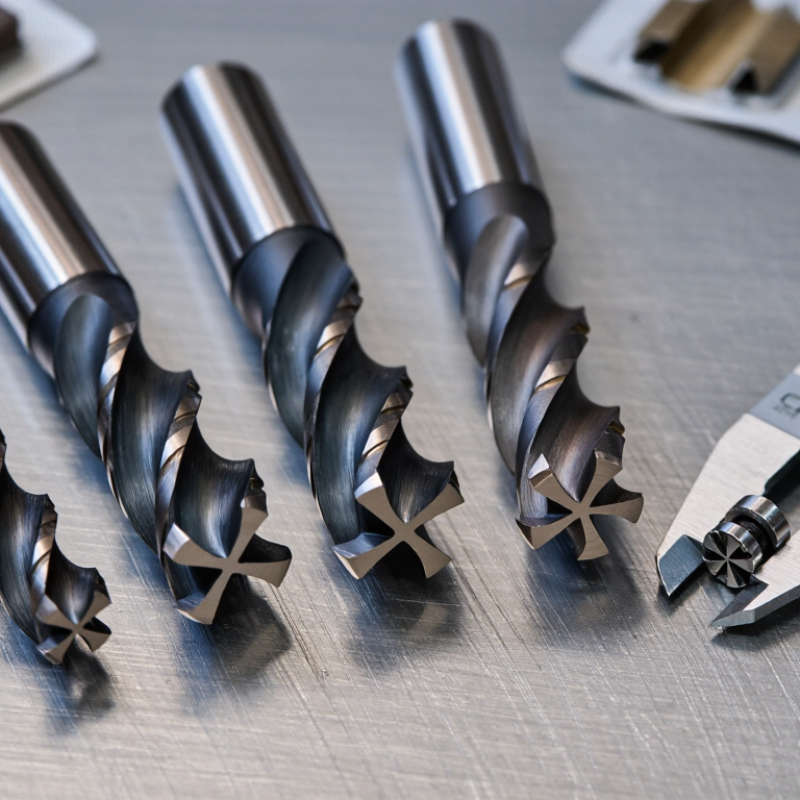
China Best Ball End Mill Manufacturer for Global Buyers

Ball End Mills: Design, Geometry, and Core Functions

A ball end mill has a rounded cutting tip that forms a smooth transition between its end and side edges. This geometry suits contoured surfaces, curved pockets, and three-dimensional finishing. The cutting radius determines the smallest concave feature the tool can reach. Check that radius against the part drawing before machining.

The flute shape carries chips away while the cutting edges engage the workpiece. Helix angle, flute count, and core thickness affect chip flow, edge strength, and tool rigidity. More flutes can support a finer finish, but they leave less room for chips. That trade-off matters in deep or narrow cavities. Small details count.

At the very tip, cutting speed approaches zero, so rubbing and heat can become concerns. A tilted toolpath can move contact away from the center and improve cutting action. Stepover also shapes the visible scallop pattern: smaller steps usually leave a smoother surface, but increase machining time. In the shop, setup rigidity and workpiece material can change the result more than a catalog description suggests. Geometry gives a useful starting point, not a guarantee. Even careful settings sometimes need adjustment after a test pass.

How Chinese Manufacturers Produce Ball End Mills

Ball end mills are commonly made from solid carbide or high-speed steel, depending on the cutting task. Production starts with selecting a material blank and checking its dimensions. Carbide blanks are typically formed from fine powders, then pressed and sintered into a dense shape. The blank must be consistent. Small variations can affect tool life.

Computer-controlled grinding shapes the flutes, cutting edges, and rounded tip. The ball radius needs careful control because it determines the tool’s contact with the workpiece. Flute geometry also influences chip removal and cutting stability. Some manufacturers apply a wear-resistant coating after grinding. The choice depends on the material being machined and operating conditions; a coating is not automatically better for every job.

Quality checks may include measuring diameter, ball profile, edge condition, and runout. Inspectors can use optical equipment to examine the curved tip, while gauges check key dimensions. A neat surface is not proof of accuracy. Testing tools in real machining conditions can reveal issues that inspection misses, though test results vary with the machine, workpiece, and setup. Even careful production has limits. A buyer should match the tool specifications to the intended operation, rather than relying on appearance alone.

Materials, Coatings, and Quality Control Standards

A reliable ball end mill starts with the right substrate. Solid carbide offers rigidity and wear resistance for precise finishing, especially on hardened steels and stainless alloys. High-speed steel can suit lower cutting speeds or jobs where toughness matters more than long tool life. Match grain structure and hardness to the workpiece; a harder tool is not automatically a better tool.

Coatings help manage heat and friction, but selection depends on the application. TiAlN-based coatings can perform well in hotter cutting conditions, while other coating systems may suit softer materials. Ask manufacturers how they test coating thickness, adhesion, and surface consistency. Quality checks should also cover ball radius, flute geometry, shank dimensions, and runout.

Small details matter. A slight runout error can leave visible marks on a curved surface. Inspection results are useful only when measurement methods and tolerances are clearly stated.

Tips: Request a sample and its inspection report before placing a large order. Check the tool under magnification for chipped edges or uneven coating. Then test it using your actual workpiece and cutting conditions. One limitation is easy to overlook: no coating or material can compensate for poor toolpath planning.

How Global Buyers Evaluate a Ball End Mill Manufacturer

China Best Ball End Mill Manufacturer for Global Buyers

How Global Buyers Evaluate a Ball End Mill Manufacturer

Global buyers should evaluate a ball end mill manufacturer by process control, not catalogue claims. On a 3D-profiled steel mold, a small mismatch in radius or flute geometry can leave visible steps. Ask how the supplier controls tool dimensions, carbide grade, coating consistency, and edge preparation across batches. Reliable answers include inspection methods and records, not only promises. Small details matter.

Tips: Request a sample suited to your workpiece, spindle speed, and coolant setup. Compare surface finish, tool wear, and cycle time under the same conditions. Ask for a tolerance report and clarify how runout is measured. A sample alone is not proof.

Check whether technical support can discuss chip evacuation, tool overhang, and corner quality in practical terms. Confirm lead times, packaging, and how dimensional deviations are handled before ordering. Polished communication can still miss a detail, so keep specifications in writing and ask follow-up questions. No supplier fits every application. I would look twice at a low unit price if setup costs or inconsistent batches could erase the savings.

Export Services, Customization, and Supplier Communication

For global buyers, export service starts before a ball end mill leaves the factory. A clear quotation should specify diameter, flute length, shank size, coating, tolerance, and packing method. Buyers can then compare like with like and reduce costly clarification during production. Small details travel.

Customization works best when both sides share the machining context. Send the workpiece material, machine type, toolpath, and target finish, not just a drawing. A supplier can recommend geometry, but trial results still matter. No specification sheet captures every shop-floor nuance; I would verify critical dimensions and cutting conditions with a sample before approving a large order. That step takes time, but prevents avoidable surprises.

Communication also protects delivery schedules. UNCTAD’s Review of Maritime Transport 2024 notes that more than 80% of world trade by volume moves by sea, making packaging and shipment visibility important to export planning. The WTO’s April 2024 Global Trade Outlook projected merchandise trade volume growth of 2.6% in 2024 and 3.3% in 2025. These are forecasts, not guarantees. Ask for production milestones, inspection records, carton dimensions, and tracking details in writing. A practical supplier should flag delays early and answer technical questions with specific measurements, not vague reassurance.

China Best Ball End Mill Manufacturer for Global Buyers - Export Services, Customization, and Supplier Communication

Buyer Requirement Typical Options or Information What to Confirm with the Supplier
Tool material Solid carbide and high-speed steel are common material categories. Solid carbide is often selected for high-speed machining and rigidity; high-speed steel may suit less demanding applications. Confirm the material grade, workpiece material, machine capability, and recommended cutting conditions.
Cutting geometry Two-flute and multi-flute designs are available. A Ball Nose End Mill has a rounded cutting end for 3D contours, radiused surfaces, and finishing operations. Specify flute count, neck or reach length, overall length, and whether roughing or finishing is the priority.
Dimensions Common specification fields include cutting diameter, ball radius, shank diameter, flute length, and overall length. Metric and inch-based specifications can be requested. Provide a drawing or dimensioned specification. Confirm tolerances and measurement methods before production.
Coating and surface treatment Uncoated tools and coatings such as TiAlN or AlTiN are offered in the market. Suitable coating choice depends on the workpiece, cutting temperature, and machining conditions. Ask for the coating type, intended application, and compatibility with the material being machined.
Customization Custom diameter, radius, flute length, shank size, overall length, geometry, and packaging may be available subject to the supplier's production capability. Submit a drawing, required quantity, material, application, and any inspection or marking requirements.
Quality documentation Buyers may request dimensional inspection records, material information, coating details, or a sample for evaluation. Agree on the inspection scope, acceptance criteria, sample approval process, and documents required before ordering.
Export quotation A quotation commonly identifies the specification, quantity, unit price, currency, packaging, lead time, and delivery term. Confirm the named place of delivery, shipping method, quotation validity, payment terms, and which party arranges freight and export clearance.
Packaging and shipment Tools are generally packed to protect cutting edges during handling and transport. Carton or pallet arrangements depend on order size and shipping requirements. Confirm packaging quantity, labeling, destination details, shipping documents, and any import or marking requirements.
Supplier communication Clear communication typically covers technical clarification, quotation follow-up, sample approval, production updates, and shipment tracking. Agree on a primary contact, response channel, update frequency, and the documents or photos to be shared at each stage.
Order planning Production lead time and minimum order quantity vary by specification, customization, and current capacity. Request confirmation of lead time and quantity requirements for the exact specification before placing the order.

Buyer note: Product availability, tolerances, lead times, and export arrangements vary by supplier and order. Confirm all specifications and commercial terms in writing before purchase.