

Please ensure Javascript is enabled for purposes of website accessibility

10 Best Welding Tube Manufacturers for Global Buyers

Selecting a Welding Tube manufacturer is not just a price comparison. Buyers need to match tube dimensions, material grades, welding processes, and inspection methods to the demands of their application. A polished sample can look convincing. Consistent performance over repeated production runs matters more.

Welding-metallurgy expert John C. Lippold’s published work offers a useful principle: “Reliable welds depend on compatible materials and controlled procedures.” This is a concise summary, not a direct quotation. For global buyers, the idea translates into practical questions: Can the supplier provide material traceability? Are welds inspected using suitable methods? Can production records and dimensional checks be shared? Details such as cut-edge condition, seam consistency, and packaging protection deserve attention. Small gaps can become costly after shipment.

This guide reviews ten manufacturers through factors that buyers can assess: product range, technical capability, quality controls, export experience, and customer support. Availability and certifications should still be verified directly, since facilities, standards, and lead times can change. No ranking replaces an audit. A supplier may excel in one region yet struggle with a buyer’s exact specification. That deserves a closer look. Treat this list as a starting point, then compare drawings, samples, inspection reports, and delivery terms before making a decision.
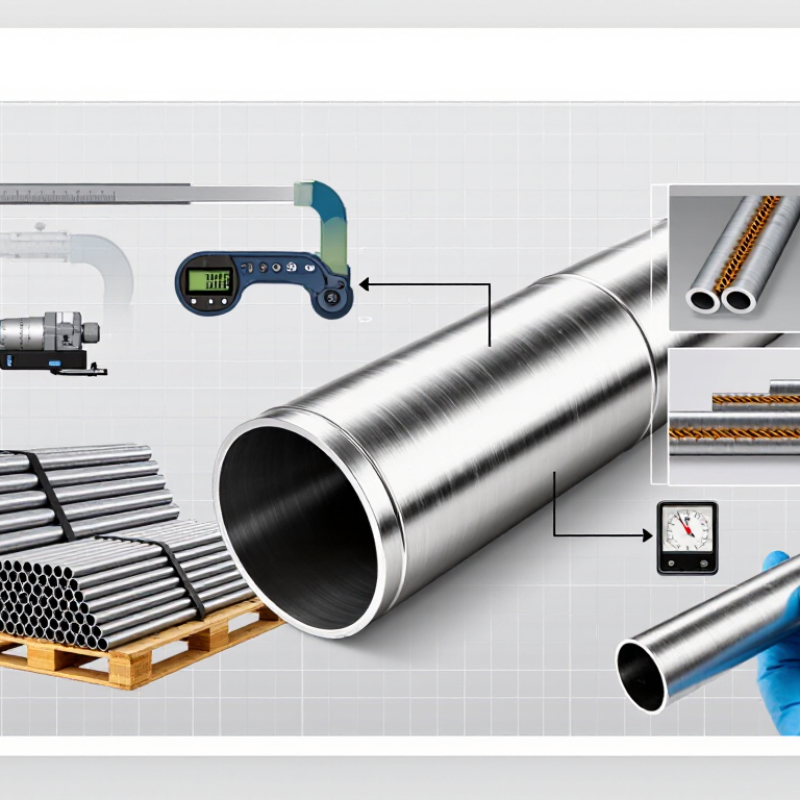
10 Best Welding Tube Manufacturers for Global Buyers

What Are Welding Tubes and How Are They Made?

Welded tubes are hollow steel products made by shaping flat strip or plate and joining its edges. They are used in structures, machinery, transport, and fluid systems. Unlike seamless tubes, they contain a welded seam, which must meet the product’s specified quality requirements. The World Steel Association’s World Steel in Figures 2025 reports 1,882.6 million tonnes of crude steel production in 2024. This is not a welded-tube output figure; it provides upstream context for the scale of steel supply.

Manufacturing usually begins with steel coil, which is slit to width and passed through forming rolls. The rolls gradually shape it into a round tube. The edges are then joined, commonly by electric resistance or high-frequency welding; larger products may use other processes. The seam matters. After welding, the tube may be sized, cut to length, and inspected. Checks can include dimensional measurement, visual examination, and nondestructive testing, depending on the specification and application.

A clean-looking seam is reassuring, but it cannot prove consistent wall thickness or sound weld quality. Buyers should compare material grade, outside diameter, wall thickness, tolerances, and inspection records against the relevant product standard. Standards such as ASTM A500 or EN 10219 apply to particular product categories, not every welded tube. Not always. A reflective surface can distract from the details that matter: ask how the seam and dimensions were verified, and review the test documentation before comparing quotations.

Welded Tube Manufacturing: Typical Upper-End Outside Diameters

Typical upper-end outside diameters vary by manufacturing facility, material, and specification. ERW means electric resistance welded; LSAW means longitudinal submerged arc welded; SSAW means helical or spiral submerged arc welded. The values shown are indicative industry ranges, not universal limits.

How to Evaluate Welding Tube Manufacturers

A reliable welding tube manufacturer should demonstrate control over the whole process, from incoming steel inspection to finished-tube testing. Ask how operators manage weld alignment, heat input, and surface defects. Request sample inspection records, not only a capability sheet. Check whether reported wall thickness and outside diameter tolerances match your drawing and application. Small details matter. A tube may look smooth yet still require closer inspection at the weld seam.

Tips: Send a clear drawing and expected order volume. Ask for a sample with its material and test records. Confirm how the supplier handles dimensional checks, weld inspection, and batch traceability. If a response is vague, ask for a specific example.

Compare manufacturers using consistent questions. Review production capacity against your schedule, but do not treat a large facility as proof of dependable delivery. Ask about lead times, packaging, and how changes to specifications are approved. For critical service, discuss suitable non-destructive testing and acceptance criteria with a qualified engineer. A factory visit or independent inspection can clarify what documents cannot. Even strong suppliers may have occasional process gaps; how openly they explain and correct them is worth examining. A minor discrepancy is not always a reason to reject a supplier, but it should prompt follow-up before production begins.

Profiles of 10 Welding Tube Manufacturers for Global Buyers

The ten profiles show how welding tube manufacturers differ beyond price. A coastal ERW mill suits high-volume carbon-steel orders. A stainless specialist offers clean, thin-wall tubing for food equipment. An automotive supplier focuses on tight dimensions and repeatable batches. A structural-tube producer handles heavier sections for construction. A custom shop accepts short runs and unusual sizes. An energy-sector manufacturer emphasizes traceability and inspection records. An integrated steelmaker can coordinate material supply and forming. An export-focused producer may offer broader packing options. An alloy-tube specialist serves demanding temperature conditions. A service-center-led fabricator may provide quicker regional delivery.

These are capability profiles, not verified rankings. The World Steel Association’s World Steel in Figures 2024 reports 1,888.2 million tonnes of crude steel production in 2023. That scale illustrates the raw-material base, but it does not measure welded-tube output. Buyers should request current test certificates, dimensional tolerances, weld inspection details, and sample results. A polished catalog is not proof of consistent production. I would still compare actual delivery records.

Tips: Send every candidate the same specification and ask for a sample cut. Check the seam, wall thickness, and end finish yourself. Small differences matter. Keep the comparison honest.

How to Compare Manufacturers by Quality, Capacity, and Service

When comparing tube manufacturers, inspect the evidence behind their quality claims. Ask for material test certificates, heat-number traceability, dimensional records, and test results for the tube’s intended use. For pressure applications, confirm the inspection plan covers wall thickness, weld integrity, and required testing. A certificate alone is not proof of consistent production. Request sample records from recent batches.

Capacity means more than a large factory. Check monthly output, available forming and welding lines, shift patterns, and how the supplier handles urgent orders. The American Welding Society’s 2023 workforce data projected demand for about 330,000 welding professionals in the United States by 2028. That makes staffing and skills continuity relevant questions, not minor details. Ask how absences, maintenance, or material delays affect delivery dates.

Service shows up when specifications change or a shipment arrives out of tolerance. Look for a named technical contact, clear response times, and a documented corrective-action process. World Steel Association statistics recorded 1,882.6 million tonnes of global crude-steel production in 2024; buyers still need to verify where each tube’s material came from. Request a trial order and measure the delivered tubes yourself. It takes time. Yet even a polished audit can miss a weak handoff between production and packing.

10 Best Welding Tube Manufacturers for Global Buyers - How to Compare Manufacturers by Quality, Capacity, and Service

Buyer comparison scorecard: use these criteria to assess shortlisted manufacturers. The suggested weights are a practical evaluation framework, not published supplier ratings. Applicable product standards depend on the tube’s intended use.
No. Comparison Dimension What to Compare Evidence to Request Suggested Weight
1 Product-standard compliance Confirm that the offered tube is made to the standard and grade required for its application. Examples include ASTM A500 for structural tubing, ASTM A53 for pipe, API 5L for line pipe, and EN 10219 for cold-formed welded structural hollow sections. Current certificates, product-specific declarations, and sample inspection documents. Check the precise edition and grade required by the purchase specification. 15%
2 Quality management and traceability Assess documented controls for incoming material, production, inspection, nonconforming product, and batch identification. ISO 9001 certification indicates a quality management system; it does not by itself certify a particular tube product. Valid certification within its stated scope, traceability examples, and a redacted quality-control plan. 12%
3 Weld integrity and inspection Compare the welding route and inspection plan with the product specification. ERW/HFW and SAW are distinct processes; required testing and acceptance criteria depend on the product standard and order. Welding procedure information, inspection records, and details of applicable visual, dimensional, or nondestructive testing. 15%
4 Dimensional consistency Check the available outside dimensions, wall thicknesses, lengths, and tolerance requirements against the specified product standard and drawings. Do not assume one tolerance applies to all tube types. Inspection results for a comparable production lot and the measuring methods used for critical dimensions. 10%
5 Material and test documentation Confirm that material grade, heat or batch identification, and required test results can be linked to the delivered tubes. EN 10204 Type 3.1 is one commonly specified inspection-document type; confirm whether it is required for the order. A sample certificate matched to the ordered grade, plus the manufacturer’s procedure for retaining and linking records. 10%
6 Production capacity and product range Compare verified capacity for the specific diameter, wall thickness, steel grade, finish, and quantity you need. A headline annual capacity may cover a broader product mix and may not represent available capacity for your order. Applicable production-line range, current schedule, minimum order quantity, and a capacity confirmation for the requested specification. 10%
7 Lead time and delivery reliability Compare quoted production and dispatch timelines, how delivery dates are confirmed, and how delays are communicated. Lead times vary with specification, order size, raw-material availability, and shipping arrangements. A written schedule covering production, inspection, packing, and dispatch, with assumptions and any delivery milestones. 8%
8 Customization and finishing Check whether the manufacturer can meet the required cut length, end preparation, surface condition, coating, or other drawing requirements for the intended application. Written confirmation against the drawing or specification, available options, tolerances, and any associated minimum quantities. 7%
9 Export packaging and logistics support Evaluate whether packaging, marking, loading, and shipping-document arrangements suit the destination and transport mode. Confirm any destination-specific import or regulatory requirements separately. Packing specification, shipment-marking sample, document list, and a quotation stating the delivery term and named place. 7%
10 Communication and after-sales service Compare response clarity, technical support, order-update frequency, complaint handling, and willingness to resolve documented quality issues. Named contact roles, a written claim-handling process, sample order updates, and agreed response expectations. 6%
Total Suggested Weight 100%

Key Considerations for Global Sourcing and Supplier Selection

Global buyers should compare welding tube manufacturers by verified process control, not brochure claims alone. Confirm the tube material, outside diameter, wall thickness, length tolerance, and surface finish against the intended application. Ask how weld seams are monitored and how dimensional checks are recorded. Details matter. A useful supplier can explain its inspection methods and provide recent test records for the relevant product range. Review sample tubes with calipers, checking ovality, straightness, and visible seam consistency. One sample cannot prove every batch, though it can reveal gaps worth discussing.

Assess traceability, production capacity, and communication before placing a large order. Request material certificates and batch identification, then confirm how nonconforming products are isolated and reported. Where possible, arrange a factory audit or independent inspection suited to the order’s risk and value. Check whether the supplier can maintain specifications across repeat shipments, not just deliver one successful trial. Lead times need scrutiny. Include packaging, corrosion protection, loading methods, and shipping documents in the quotation review. Clear written acceptance criteria reduce disputes, but they do not replace regular quality checks. A rushed selection can look efficient until a delayed shipment or inconsistent wall thickness disrupts fabrication. Compare the full cost, including inspection and freight, rather than choosing on unit price alone.