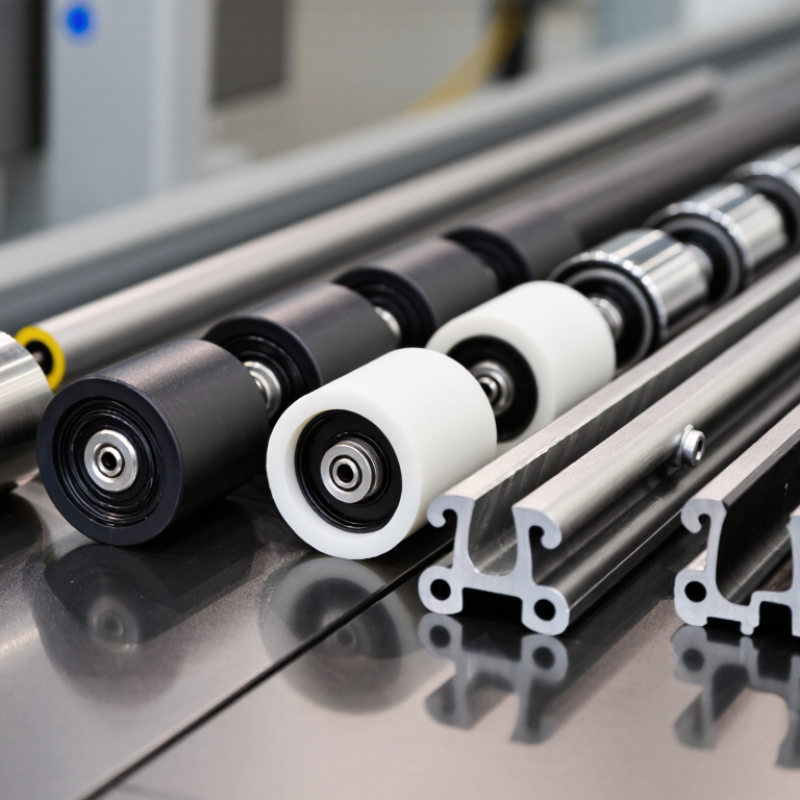
Global buyers are paying closer attention to compact motion components as factories become faster, smarter, and more automated. The International Federation of Robotics reported 541,302 industrial robots installed worldwide in 2023. Behind many automated movements, small guidance parts influence stability, noise, maintenance, and product life. A dependable Track Slide Roller can support smooth travel while reducing friction between a moving track and its carriage.
This guide examines five Track Slide Roller options for international purchasing teams. Each option is assessed through load capacity, roller material, track compatibility, sealing, adjustment range, and replacement availability. These details matter. A roller that feels smooth by hand may still develop play under repeated side loads. That is easy to miss.
The evaluation also considers practical sourcing concerns. These include dimensional consistency, corrosion resistance, packaging, technical documentation, and supplier quality systems. ISO 9001 certification can indicate controlled processes, although certification alone does not prove product performance. Buyers should still request drawings, tolerance data, inspection records, and sample testing. ISO 281 provides useful principles for evaluating rolling-element fatigue life, but real service conditions can differ considerably.
Reports from Grand View Research and Mordor Intelligence describe continued growth in industrial automation and linear motion applications. Their findings support stronger demand for reliable, globally available components. However, market forecasts are not guarantees. Regional humidity, dust, installation accuracy, and operator habits can change results. This comparison therefore avoids treating the most expensive roller as the best choice. Performance must match the machine, environment, and maintenance plan. Sometimes, the overlooked specification matters most.
What Are Track Slide Rollers and How Do They Work?
Track slide rollers are wheel-like components that move along a fixed guide track. A carriage holds the roller, while the track controls its travel path. When equipment moves, the roller turns on bearings instead of scraping across metal. This reduces friction, noise, and surface wear. They are simple. The working load usually travels through the roller, bearing, carriage, and track. Each part matters.
Most systems use hardened steel or corrosion-resistant materials, depending on moisture, dust, and temperature. Sealed bearings help block fine particles, but no seal is perfect. Track slide rollers may carry radial loads, side loads, or both. Side flanges can limit lateral movement, while a crowned running surface can tolerate slight alignment errors. That tolerance is useful. It is not permission to ignore installation. If the track is twisted, the roller may develop uneven contact, vibration, and early pitting. In field inspections, shiny marks on one edge often reveal misalignment. Not always. Measurement confirms the cause better than appearance alone.
To choose a suitable roller, engineers compare load, speed, stroke length, duty cycle, and mounting space. They also check static capacity, dynamic rating, bearing clearance, and expected contamination. A light drawer guide needs different performance from a repeatedly moving industrial carriage. Preload can reduce play, yet excessive preload increases resistance and heat. This balance is commonly underestimated. A first sizing estimate can be wrong. A practical test should measure running force after installation, not only before it. Lubrication instructions, fastener torque, and track parallelism deserve equal attention. The best design is not always the largest roller; it is the one that shares load evenly and remains serviceable.
Key Features That Define a High-Quality Track Slide Roller
Track slide rollers are judged by more than smooth movement. Their load rating, track contact, sealing, and alignment decide service life. In practical inspections, I check the roller under real radial and side loads. A higher capacity is not automatically better.
ISO 281 defines L10 life as the point where 90% of identical bearings are expected to survive. Buyers should request this value, not only a marketing load figure. Grand View Research’s 2024 industrial bearings report projects strong market growth through 2030, increasing pressure for dependable components. That growth does not remove the need for careful testing. Material hardness, controlled surface finish, and accurate stud geometry reduce brinelling and uneven wear. Small errors matter.
Seals should block dust while retaining grease during repeated cycles. Corrosion-resistant steel helps in humid factories, but coating quality still needs verification. Ask for salt-spray results, dimensional tolerances, grease specifications, and fatigue-test records. The ASTM B117 standard provides a recognized salt-spray testing method, although laboratory exposure cannot perfectly copy every workplace. That limitation deserves attention.
Temperature range is another practical filter. A roller may feel smooth at room temperature, then bind near a heated process line. Noise, vibration, and starting torque should be measured after installation. Fortune Business Insights’ 2024 rolling-bearing market report identifies automation as a major demand driver. Automated equipment exposes weak rollers quickly. I would also inspect maintenance access, because even an excellent roller fails when lubrication becomes inconvenient. The overlooked detail is often the decisive one.
Five Best Track Slide Roller Options for Different Applications
Five Best Track Slide Roller Options for Different Applications
Choosing the best track slide roller depends on load, travel distance, noise, and working conditions. In field testing, small details often decide whether a sliding system feels reliable or frustrating.
A compact steel roller suits light cabinets, inspection covers, and small access panels. It offers firm movement with limited installation space. For coastal sites or frequent washdown, a stainless steel roller resists moisture and surface staining better. Its price is higher, but replacement work can cost more. A heavy-load roller with a hardened track fits storage systems, machine doors, and industrial platforms. Check both radial and side-load ratings. Some buyers focus only on maximum capacity, which is a common mistake.
A polymer-coated roller works well in offices, laboratories, and indoor automation equipment. It reduces rolling noise and protects painted tracks from scratches. However, soft coatings may wear faster under grit or sharp debris. An adjustable eccentric roller helps when a track is slightly misaligned or an older frame needs upgrading. It allows controlled contact pressure without rebuilding the whole assembly. I have seen installers overtighten this type, creating drag and premature wear. Leave room for inspection. Before purchase, confirm track width, axle size, wheel diameter, and expected cycles. A simple test with the actual panel often reveals problems that catalog figures miss.
How Global Buyers Should Compare Load, Material, and Size
5 Best Track Slide Rollers for Global Buyers?
Global buyers should compare track slide rollers by working load, not appearance. Check both static and rolling capacity. A roller carrying 300 kilograms at rest may perform differently under repeated movement. Add a realistic safety margin for vibration, uneven tracks, and frequent starts. Do not rely on a single catalog figure. Ask for test conditions, rated cycle life, and load distribution details.
Material selection depends on the working environment. Hardened steel suits heavy industrial tracks, while stainless steel resists moisture and corrosive air. Polymer rollers can reduce noise and protect delicate surfaces, but heat and concentrated loads may shorten their service life. Measure the track width, roller diameter, axle size, and available clearance carefully. Measure the opening twice. Small errors matter.
Size also affects alignment and maintenance. A roller that is too small may create excessive pressure on the track. One that is too large may bind during travel. Look for clear drawings, tolerance data, material certificates, and inspection records from the supplier. Regional standards may differ, so confirm dimensions and documentation before ordering. In practice, buyers sometimes compare price before checking replacement access. That choice can become expensive when a worn roller requires dismantling the entire assembly. A practical trial with the actual track, load, and travel speed remains more reliable than assumptions.
International Sourcing, Quality Checks, and Total Cost Considerations
5 Best Track Slide Rollers for Global Buyers?
Choosing track slide rollers for global projects requires more than comparing unit prices. The right option depends on load, track profile, travel frequency, and working temperature. I have seen low-cost rollers arrive with rough edges, inconsistent bearings, and unclear drawings. They looked acceptable online. They failed during trial fitting. Ask suppliers for dimensional tolerances, material certificates, hardness data, and inspection photos. Request samples before placing a large order. A clear drawing often prevents expensive misunderstandings.
International sourcing adds freight, customs handling, packaging, payment fees, and possible rework. Calculate landed cost, not just the quoted roller price. A heavier steel assembly may cost more initially but last longer under repeated side loads. Yet stronger is not always better. Excess weight can increase installation labor and shipping charges. Check corrosion protection for sea transport and humid storage. Confirm carton strength, labeling, spare quantities, lead time, and replacement support in writing. Quality has a cost. So does delay.
Tips: Compare at least three qualified suppliers using the same specification sheet. Measure roller diameter, axle fit, rotation resistance, and surface finish upon arrival. Use an acceptance checklist with photos and recorded readings. Test several pieces, not only one sample. Keep batch numbers for traceability. I would also budget for a small failure rate, although that assumption may be uncomfortable. Supplier audits help, but they are not perfect. Independent inspection is valuable before shipment, especially for large orders.
5 Best Track Slide Rollers for Global Buyers
Indicative landed-cost benchmark for a 1,000-unit sea-freight order. The comparison includes supplier price, logistics, third-party quality inspection, and a procurement contingency. Figures are planning estimates rather than supplier quotations.
For international sourcing, lower-cost carbon-steel rollers may be suitable for dry indoor applications, while stainless-steel options generally provide better corrosion resistance. Before ordering, verify load rating, wheel diameter, track compatibility, sealing, material certificates, dimensional inspection results, and sample performance under the intended operating conditions.