

Please ensure Javascript is enabled for purposes of website accessibility

2026 Best Legal Alternatives to Drone Jamming for Buyers?

For buyers assessing the 2026 market, Drone Jamming may sound like a direct answer to unwanted drone activity. Yet interfering with aircraft communications or navigation can create serious safety risks and may violate local law. Rules differ by country and site, so buyers should confirm requirements with relevant aviation and security authorities before choosing any system.

Legal alternatives focus on awareness, prevention, and proportionate response. Detection tools can alert trained staff to a drone’s presence without disrupting its operation. Buyers can also consider clear site policies, privacy safeguards, secure perimeters, and manufacturer-approved geofencing features where available. At a warehouse, for example, a mapped alert and a designated response contact may be more useful than an unverified alarm. Simple procedures matter.

Look beyond advertised range. Ask vendors how they validate alerts, protect collected data, and support lawful deployment. Check whether equipment works in the actual environment, including around buildings and other radio devices. Request demonstrations, written limitations, and staff training. No option is perfect. False alerts happen. A useful purchasing plan should explain who reviews an alert, when authorities are contacted, and how incidents are documented. It should also account for visitors, neighboring properties, and emergency access. These details are easy to overlook, and I would not treat a feature list as proof of effectiveness. The best choice is a compliant, documented approach that fits the site and can be reviewed as rules and risks change.
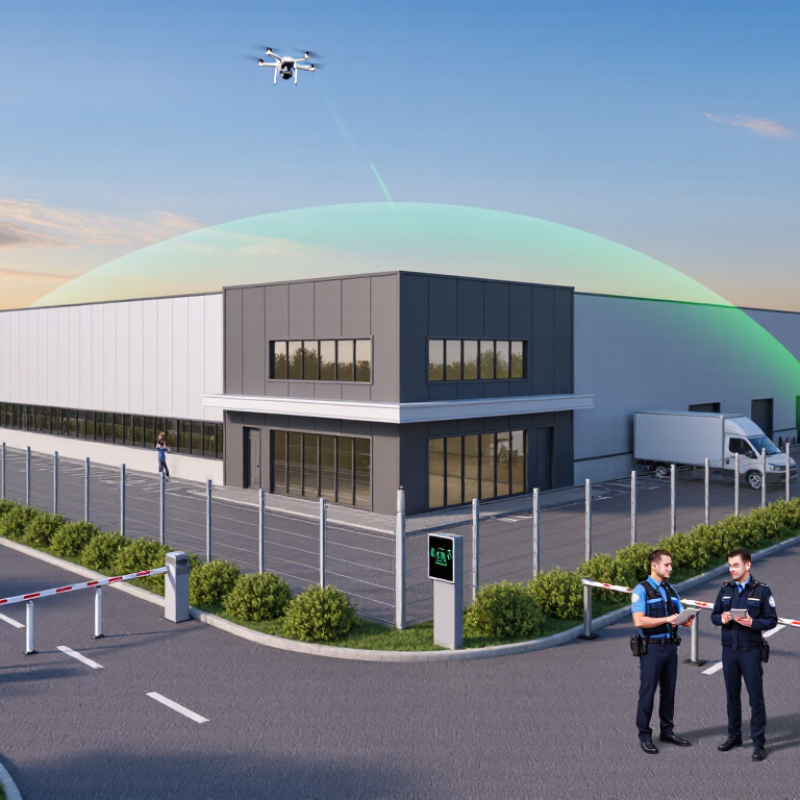
2026 Best Legal Alternatives to Drone Jamming for Buyers?

How to Assess Drone Risks and Buyer Requirements

Buying a lawful alternative to drone jamming starts with the site, not a feature list. Map sensitive areas, public access, nearby airports, and routine flight paths. A warehouse roof, hospital courtyard, and remote utility site face different risks. Define what matters: early warning, visual confirmation, or a documented incident record. These are different buying needs.

The FAA’s 2023 UAS by the Numbers report counted 855,860 registered drones in the United States. Registration totals do not show how many flights threaten a particular site, but they illustrate the scale of drone activity buyers may need to assess. Ask vendors how their systems distinguish drones from birds, weather, or ordinary radio signals. Request trial results from a setting resembling yours, including false alerts, detection range, and performance in rain or clutter. Numbers need context.

Check whether the proposed sensors and response procedures fit applicable rules and privacy requirements. Passive radio-frequency monitoring, radar, and cameras can serve different purposes; none should be assumed suitable everywhere. Confirm who reviews alerts, how evidence is stored, and who may contact authorities. Test alert handoffs during a busy shift, not just a quiet demonstration. I would not treat a polished demo as proof. Real sites are messier, and a buyer’s risk assessment may still miss an edge case.

Which Drone Detection Methods Are Legal in Your Jurisdiction

Drone detection rules differ by country, state, and even site. A method permitted at a private warehouse may face stricter limits near an airport or public road. Before installing equipment, check local aviation, communications, privacy, and property rules. Ask the relevant regulator or qualified local counsel when the rules are unclear.

Passive radio-frequency monitoring may identify signals associated with a drone, but collecting or storing communications can raise separate legal concerns. Radar and acoustic sensors may detect movement or sound without transmitting signals, yet they can still capture information about nearby people or property. Visual observation, including trained staff using binoculars, is often a practical starting point. Keep records. That matters.

Use only equipment approved for your jurisdiction, and define what data it collects before deployment. A camera aimed at a facility entrance is different from one covering neighboring homes. Set short retention periods, restrict staff access, and document who reviews alerts. No checklist is perfect. Local rules change, and a sensor’s technical capability does not automatically make its use lawful. Recheck requirements before expanding coverage or sharing detection data.

2026 Best Legal Alternatives to Drone Jamming for Buyers

Which drone detection methods are legal in your jurisdiction? Start with the local rules: unauthorized radio interference is generally prohibited in all four jurisdictions shown.

Practical alternatives: Consider passive RF detection, radar, optical or thermal cameras, and acoustic sensors. These detect or track drones rather than jam their communications.

Detection is not automatically lawful in every setting. Check local requirements for radio equipment, surveillance and data protection, site access, and aviation operations. The chart is a high-level legal baseline, not legal advice; specific exceptions and authorizations may apply.

Sources: United States, 47 U.S.C. § 333; United Kingdom, Wireless Telegraphy Act 2006, § 68; Canada, Radiocommunication Act, §§ 4 and 9; Australia, Radiocommunications Act 1992, § 194. Values are coded 1 = unauthorized jamming is generally prohibited; 0 = not indicated. This is a summary of statutory baselines, not a ranking.

What Non-Disruptive Measures Can Reduce Drone Risks

Drone risk reduction does not require disrupting a flight. Begin with a site-specific assessment: note public access points, rooflines, loading bays, and areas where people gather. Improve lighting and secure access to rooftops or restricted work zones. For indoor courtyards, professionally designed netting may help protect people and equipment when permitted and properly maintained. A camera can miss a low, fast approach. No single measure is complete.

Tips: Assign a trained staff member to observe, record time and location, and follow a written reporting procedure. Keep the response calm and predictable.

Clear procedures matter as much as equipment. Tell staff whom to contact if a drone creates an immediate safety concern, and discourage anyone from confronting the operator or attempting to interfere with the aircraft. Review camera placement to avoid unnecessary recording of neighboring homes or public spaces. Check local aviation, privacy, and property requirements before installing equipment or changing site procedures; rules vary by location. After an incident or near miss, review what happened and adjust the plan. A blind spot may remain, so revisit the assessment as the site changes.

2026 Best Legal Alternatives to Drone Jamming for Buyers? — What Non-Disruptive Measures Can Reduce Drone Risks

Measure What It Does Best-Fit Uses Key Limitations Buyer Considerations
Passive radio-frequency (RF) detection Monitors radio signals that may be associated with a drone or its control link, without transmitting interference. Sites where early awareness and alerts are useful, such as campuses, event venues, and industrial facilities. May not detect autonomous drones, unfamiliar signal types, or aircraft operating with little or no detectable radio activity. Results can be affected by local RF conditions. Ask about coverage, false-alarm handling, data retention, and how the system distinguishes drone-related signals from ordinary wireless activity.
Radar detection Uses reflected radio waves to identify and track objects in the monitored airspace. Large or open sites that need detection beyond the immediate perimeter. Small drones, birds, buildings, terrain, and other objects can complicate detection or classification. Performance depends on placement and the environment. Assess the site with a qualified provider and confirm applicable rules for operating radar equipment and sharing collected data.
Electro-optical and thermal cameras Provide visual or heat-based observation to help verify an alert and document an event. Facilities with clear sightlines, security staff, and a need for visual confirmation. Line of sight, weather, lighting, distance, and camera resolution affect results. A camera alone may not provide reliable early warning. Plan camera placement, operator procedures, privacy safeguards, and retention periods for recorded footage.
Acoustic detection Uses microphones and signal analysis to identify sounds that may be associated with drone operation. Smaller areas where acoustic monitoring can complement other detection methods. Wind, traffic, machinery, crowds, and distance can reduce reliability. It may be less useful in noisy environments. Test during representative site conditions and treat acoustic alerts as indicators that may require verification.
Layered detection and human verification Combines available sensors with a documented process for reviewing alerts and escalating confirmed concerns. Higher-risk sites that need more dependable awareness than a single sensor can provide. Requires integration, trained staff, maintenance, and clear responsibility for responding to alerts. Set verification steps, escalation contacts, audit logs, and procedures for avoiding unsafe or unauthorized responses.
Physical protection and covered spaces Reduces exposure by moving sensitive activities indoors or using suitable overhead protection where feasible. Loading areas, outdoor gatherings, storage zones, and other locations with identifiable assets or activities. Structural changes can be costly and may not be practical for every area. Any covering must meet building, fire, and safety requirements. Prioritize critical assets and consult qualified building and safety professionals before installing protective structures.
Site layout and access controls Limits access to sensitive areas and improves visibility, lighting, and staff awareness around exposed locations. Sites where people, equipment, or operations can be relocated or protected through ordinary security planning. These measures do not prevent a drone from entering airspace and may offer limited protection against a determined threat. Use them as part of a broader risk assessment, not as a substitute for detection, incident planning, or emergency procedures.
Staff training and incident procedures Helps personnel recognize and report suspicious activity, protect people, preserve evidence, and contact the appropriate authorities. Any organization with staff, visitors, outdoor operations, or critical activities. Training cannot physically stop a drone and must be kept current as roles, sites, and local procedures change. Provide a clear reporting channel, safe-distance guidance, incident documentation steps, and named escalation contacts.
Coordination with aviation and public-safety authorities Supports lawful reporting, incident assessment, and coordination with authorities that have relevant responsibilities. Repeated incidents, events, sensitive facilities, or situations involving immediate safety concerns. Response options and authority vary by jurisdiction and circumstance; reporting does not guarantee immediate intervention. Identify the correct local contacts in advance and follow official instructions. Do not attempt to seize, damage, or interfere with an aircraft.
Geofencing and flight-management controls for owned drones Can help an organization manage its own drone operations by defining operational boundaries and restricting flights where supported. Organizations operating their own drones near people, facilities, or controlled operating areas. It does not stop third-party drones, and availability or behavior depends on the aircraft, software, location data, and applicable rules. Use only within the operator’s authority and applicable aviation rules; do not assume it creates an enforceable boundary for other aircraft.

Important: Laws governing radio-frequency interference, counter-drone actions, surveillance, and aviation vary by jurisdiction. Buyers should verify local requirements with qualified legal counsel and relevant authorities before deployment. Detection and protective measures do not guarantee prevention or identification of every drone.

How to Compare Compliant Drone Mitigation Services and Tools

2026 Best Legal Alternatives to Drone Jamming for Buyers?

Comparing compliant drone mitigation services starts with your site’s actual risks. A quiet warehouse roof needs different coverage from a crowded event entrance. Ask providers what they can detect, how they verify alerts, and who receives them. Detection is not the same as authorization to intervene. Confirm that any response stays within local rules and your organization’s approved procedures.

Look for clear performance details: coverage maps, detection ranges under real site conditions, false-alarm handling, and reporting times. Ask how systems distinguish aircraft from birds or nearby equipment. Check data retention, privacy controls, staff training, maintenance, and service availability. Request a site assessment and a demonstration using realistic, authorized test scenarios. The proposal should name limitations, not hide them. I’d compare at least two plans; pricing alone can be misleading.

Tips: Ask for written role boundaries. Confirm escalation contacts before deployment. Review sample incident reports. Check who can access recorded data. If a provider promises guaranteed detection, ask what that means in wind, rain, or dense buildings. Small details matter. Local requirements vary, so have qualified counsel or the relevant authorities review the proposed workflow before purchase.

What Buyers Should Verify Before Selecting a Solution

Before choosing a lawful alternative to drone jamming, define the problem clearly. Is the concern an aircraft near a restricted site, repeated nuisance flights, or simply poor visibility? Different problems call for different tools. Passive detection can combine visual observation, approved radar, and radio-frequency monitoring. Ask what each sensor can actually identify, and where it may miss a small aircraft. A neat dashboard is not proof of reliable coverage.

Verify local permissions before collecting or storing data. Detection systems may capture communications, images, or personal information. Ask how long records are retained, who can access them, and whether privacy controls can be tested. Request written documentation for operating limits, maintenance needs, and performance in rain or urban clutter. Test the system at the actual site, not only in a clear field. That matters.

Also check what happens after an alert. A practical plan may include notifying site security, documenting the event, and contacting the appropriate authorities. Confirm who owns each step, including after-hours response. Ask for a supervised demonstration using authorized test conditions. Watch how quickly staff understand the alert, not just how quickly software displays it. Claims can sound tidy. Real sites are not. No checklist catches everything, so buyers should record unresolved gaps and revisit them after deployment.