10 Best SS Steel Water Tanks for Global Buyers?
Choosing the right Ss Steel Water Tanks requires more than comparing prices and advertised capacity. Global buyers must examine material quality, welding precision, hygiene, insulation, delivery conditions, and after-sales support. A tank may look polished in product photos but still hide weak joints, poor fittings, or unclear steel grades. Details matter.
This guide reviews 10 best Ss Steel Water Tanks for different commercial, industrial, agricultural, and residential needs. Each option is assessed through practical purchasing considerations, including stainless steel type, corrosion resistance, structural design, maintenance access, and customization flexibility. Tank size alone does not determine value. Installation space, local climate, water usage, and transportation limits can change the best choice.
Real sourcing is rarely perfect. Supplier information may be incomplete, and product specifications can vary between regions. Buyers should verify certificates, inspection records, warranty terms, and compliance requirements before placing an order. A reliable manufacturer should explain its production process clearly and provide drawings or technical data when requested. Look closely at the seams.
The following selection is intended to support informed comparison, not replace professional engineering advice. It highlights strengths, possible limitations, and suitable applications for each tank. Whether you need a compact rooftop unit or a large modular storage system, careful evaluation can reduce leakage risks, cleaning difficulties, and unexpected installation costs. Some compromises may remain, but transparent information makes them easier to manage.
What Makes Stainless Steel Water Tanks Suitable for Global Use
Stainless steel water tanks suit global projects because water quality, climate, and maintenance conditions vary widely. In coastal areas, salt-laden air can attack ordinary metal surfaces quickly. Properly selected stainless steel resists corrosion and keeps the tank interior easier to inspect. Grades such as 304 and 316 serve different exposure levels. Grade 316 often fits marine or chloride-rich environments better. Material selection still requires local water testing. That step is often skipped.
From field installation experience, hygienic design matters as much as steel grade. Smooth internal surfaces leave fewer places for sediment and microbial growth to collect. Welds should be clean, continuous, and passivated when required by the specification. A tight lid blocks dust, insects, and sunlight. Insulation helps stabilize water temperature in hot or freezing regions. Tanks also need safe access, drainage, overflow control, and anchoring. Small details protect daily reliability.
Global buyers should check potable-water approvals, welding records, leak-test reports, and traceable material certificates. Requirements differ between countries, so one certificate cannot answer every question. Shipping dimensions and local lifting equipment deserve equal attention. Stainless steel is not maintenance-free. Protection is not automatic. Chloride deposits, damaged fittings, and poor cleaning can still cause trouble. We recommend a written inspection schedule, though real sites sometimes need adjustments. That is the honest part. A well-designed tank supports long service, but workmanship and operating practice remain decisive.
Key Standards for Comparing the 10 Best SS Steel Water Tanks
Comparing the 10 best SS steel water tanks requires more than checking capacity and surface shine. The WHO/UNICEF Joint Monitoring Programme reported that 2.2 billion people lacked safely managed drinking water in 2022. Material integrity therefore deserves serious attention. Verify stainless-steel grades against EN 10088 or ASTM A240, then confirm chemical composition through mill certificates. A bright surface can still hide poor welds.
Hygiene standards should guide the shortlist. NSF/ANSI/CAN 61 evaluates materials and components that contact drinking water. Check whether certification covers the complete tank, not only a gasket or valve. Inspect internal welds, corners, manways, and drain outlets. Poorly finished welds can retain sediment like dust inside a narrow bottle. Ask for surface-finish records, passivation details, and pressure-test results. Details matter.
Corrosion resistance also depends on the installation environment. ISO 9223 classifies atmospheric corrosivity, but it cannot replace a site-specific water analysis. Chloride levels, temperature, cleaning chemicals, and coastal air may change performance. A 304-grade tank may suit one building, while a 316-grade option may be safer near salt exposure. This is not always predictable. Some comparison tables simplify it too much. Review maintenance access, insulation, overflow design, and replacement-part availability before judging the lowest price. The Global Water Intelligence market reports also show growing pressure on water infrastructure investment, making lifecycle cost more meaningful than purchase cost alone.
10 Best SS Steel Water Tanks for Global Buyers — Key Standards for Comparison
Comparison metric: Indicative Pitting Resistance Equivalent Number (PREN) for stainless-steel grades commonly considered for potable-water tank fabrication. PREN is calculated as Cr + 3.3Mo + 16N; a higher value generally indicates better resistance to localized corrosion. Actual tank performance also depends on fabrication quality, weld finishing, water chemistry, and certification.
How to use this chart: Grades such as 304 and 304L are widely used for general potable-water service, while 316 and 316L provide stronger resistance in chloride-containing water. Duplex 2205, 904L, and high-alloy 254-type stainless steel offer higher corrosion-resistance potential but may require more specialized welding and fabrication controls. Buyers should verify the material certificate, applicable EN 10088 or ASTM material specification, weld-passivation procedure, and potable-water approval such as NSF/ANSI/CAN 61, WRAS, or ACS where required by the destination market.
Top SS Steel Water Tank Types by Capacity, Design, and Application
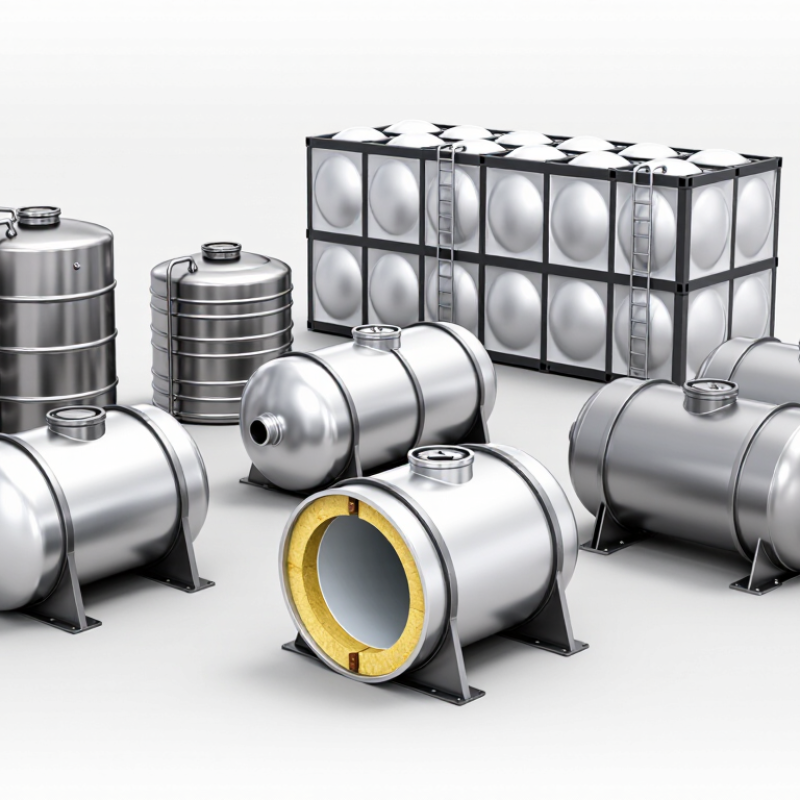
For global buyers, the best SS steel water tank depends on capacity, design, and application. Small tanks, from 500 to 2,000 liters, suit homes, cafés, and compact utility rooms. Their narrow footprints simplify installation, but access openings still need inspection space. Medium tanks, from 3,000 to 20,000 liters, support apartments, workshops, and farms. Large modular tanks can exceed 100,000 liters for hospitals, factories, and municipal storage.
Design affects maintenance as much as volume. Vertical cylindrical tanks save floor space and reduce structural complexity. Horizontal tanks work well under low ceilings or beside service buildings. Panel tanks are easier to transport through narrow routes, although joint inspection becomes more important. A sound design includes food-contact suitable stainless steel, smooth internal welds, a secure cover, overflow control, drain access, and a readable level indicator. Stainless steel grade should match water chemistry. Grade 304 often suits general potable water, while grade 316 may better resist chloride exposure.
Application changes the specification. Drinking water systems need hygienic surfaces and controlled cleaning procedures. Fire reserve tanks require reliable outlet sizing and emergency access. Industrial process water may demand thicker walls, insulation, or specialized fittings. A site survey should check foundation loading, local temperature, delivery access, and maintenance clearance. One overlooked detail can delay installation. In practice, a polished tank is not automatically a reliable tank; weld quality, pressure testing, and documentation deserve equal attention. Some projects also choose excessive capacity, creating stagnant water and unnecessary cost. That choice deserves reconsideration.
How to Evaluate Tank Materials, Durability, and Maintenance Needs
Choosing among the 10 best stainless steel water tanks starts with the steel grade, not the polished surface. Food-grade applications usually require corrosion-resistant stainless steel, with verified composition and weld quality. Ask for material certificates, thickness records, and testing documents from the supplier. A tank may look excellent and still hide weak seams. In field inspections, weld discoloration, rough joints, and trapped moisture often predict early problems. Not every shiny tank is durable.
Durability depends on design and surroundings. Check the wall thickness, reinforcement rings, roof structure, access cover, and foundation load. A coastal site needs stronger salt resistance than an inland warehouse. Examine internal corners carefully; poor geometry can leave stagnant water and support deposits. For outdoor tanks, inspect ultraviolet-resistant coatings on non-steel parts. Confirm that fittings can handle temperature changes. I would also review the warranty, but never treat it as proof of performance.
Maintenance should be practical for the people using the tank. The access opening must allow safe inspection, while drains should remove sediment without awkward tools. Set cleaning intervals according to water quality, temperature, and usage. A copied calendar may be wrong. Record leaks, odors, valve stiffness, and changes in water appearance. Small defects are easier to correct. Even experienced teams can miss corrosion beneath gaskets or around bolts. Independent inspection before installation is worth considering, especially for large systems. Verify every claim against test reports and site conditions.
Global Buying Factors: Certifications, Shipping, Installation, and Cost
For global buyers, certification should match the tank’s destination and intended water use. Check standards for potable water, welding quality, pressure, and corrosion resistance. NSF/ANSI 61, CE marking, or local approvals may apply, but requirements differ by country. Ask for factory test reports, material certificates, weld inspection records, and traceable batch numbers. A certificate is not enough. Verify its issuing body and validity.
Shipping requires more than comparing freight quotes. Confirm tank dimensions, packed weight, container limits, port charges, insurance, and customs documents. Large stainless steel sections may need special handling. Protect polished surfaces with foam and sealed wrapping. I have seen small packaging failures create costly scratches and delays. Check every detail. Incoterms should be written clearly, including responsibility for unloading and inland transport.
Installation costs can change the original budget quickly. Include foundations, lifting equipment, piping, valves, insulation, labor, testing, and local permits. The site needs a level base and enough clearance for maintenance. Stainless steel grades such as 304 or 316 should match the water chemistry and environment. A lower purchase price may hide weak support or expensive replacement parts. Do not trust estimates without drawings and a complete scope. I would not pretend every forecast is accurate; exchange rates, port congestion, and site conditions can shift the final cost. Get a written warranty, spare-parts plan, and remote technical support before payment.